
Session Information
Session Type: Poster Session C
Session Time: 10:30AM-12:30PM
Background/Purpose: Juvenile idiopathic arthritis (JIA) is a life-long disease that often requires escalation of therapy to achieve disease control. The goal of this project was to identify and prioritize information adolescents and parents want to know before making a decision regarding a treatment change.
Methods: We utilized nominal group technique (NGT), a structured process using group consensus methodology, to identify information patients want to have before making a medication change for JIA. Participants were recruited from our local clinic and through online patient research groups consisting of adolescents (age 14-18) with JIA and parents of children with JIA. We conducted 2 parent (P) NGT by virtual conference, 1 adolescent (A) NGT by virtual conference, and 1 adolescent NGT via web-based asynchronous platform. Sessions were scheduled for 60-90 minutes, were audio-recorded and transcribed, and participants were offered $25 gift cards for their participation. Consent was implied with participation, and documentation of informed consent was waived. Participants were provided a situation where they or their child had been diagnosed with JIA, had at least been treated with methotrexate, and at a clinic visit the possibility of a medication change is considered. They were asked to write down all ideas for the question “what information do you want to know before you make a decision with your rheumatology provider to change your current medication regimen?”. Qualitative responses to the questions were collected from each participant, reviewed as a group, and then each participant selected and ranked their top 5 responses in order of importance. The responses were then grouped into themes and scored both separately and together for parents and adolescents based on ranking and frequency of occurrence.
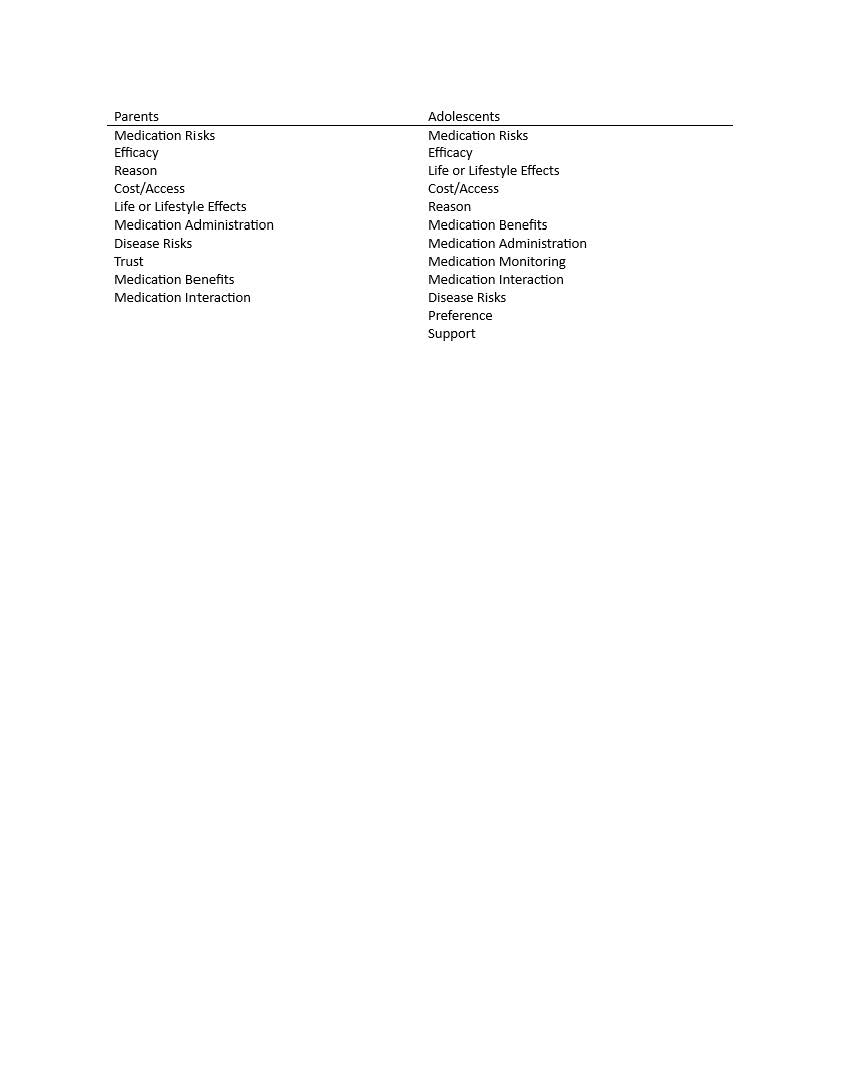
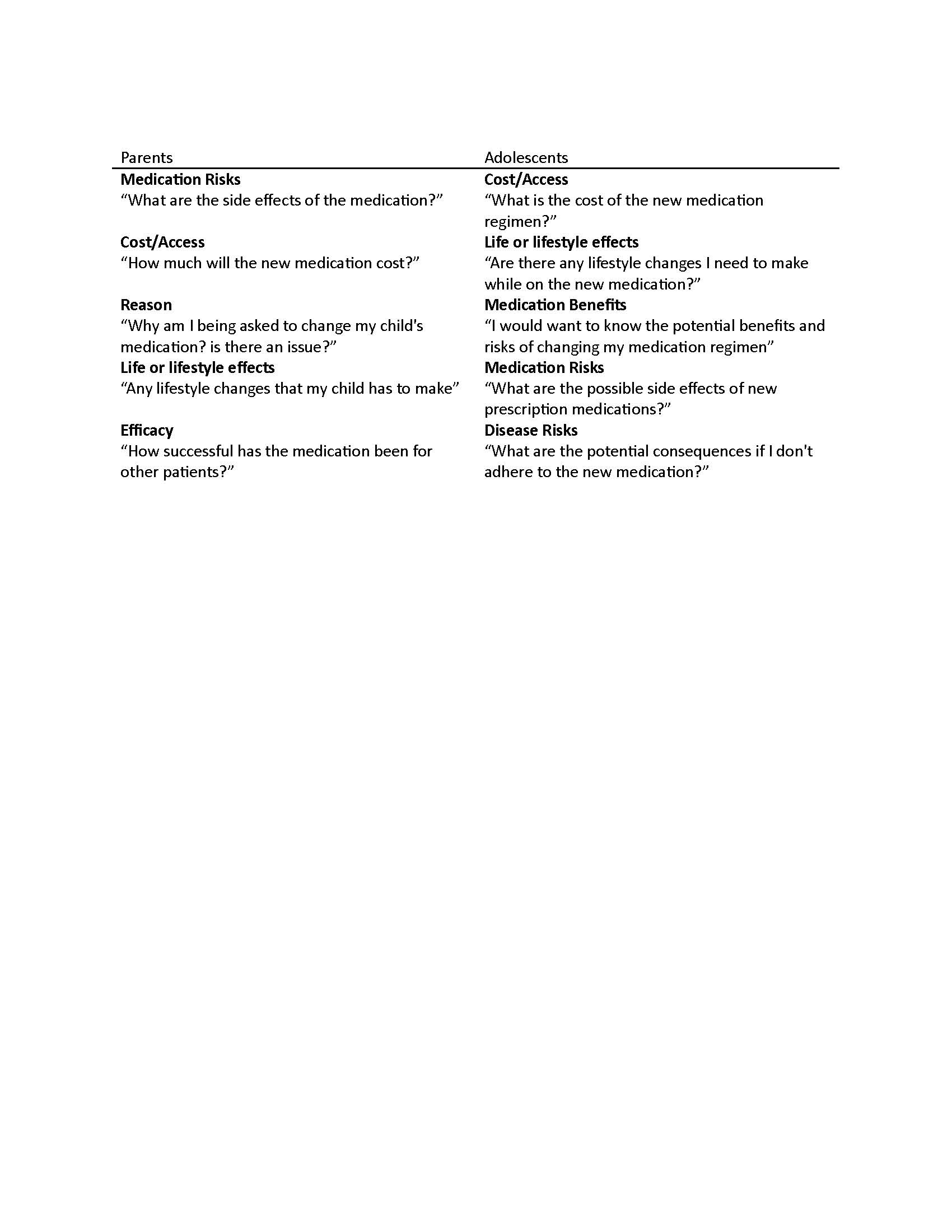
Results: There were 21 parent participants (n=12 first session, n=9 second session) and 22 adolescent participants (8 live, 14 asynchronous). The top 5 highest total scoring themes were the same for parents and adolescents, although in slightly different order; medication risks (1st both), efficacy (2nd both), reason (P 3rd, A 5th), cost/access (4th both), life or lifestyle effects (A 3rd, P 5th). However, there were more themes reported by adolescents (Table 1) and the themes from the top 5 statements for each group were different (Table 2). The most frequently reported themes were also different between groups with adolescents providing the most responses related to medication administration and parents providing the most responses related to efficacy.
Conclusion: When asked about important information for medication decision making, parents and adolescents with JIA report similar themes that were prioritized differently within each group. These results confirm the need to identify and address parent and adolescent priorities individually to support pediatric-oriented shared decision making. Future work will utilize this initial data to develop a preference assessment tool.
To cite this abstract in AMA style:
Mannion M, Timmerman L, Smitherman E, Curtis J, O'Beirne R. Nominal Group Technique to Identify What Adolescents with JIA and Parents of Children with JIA Consider When Making Treatment Change Decisions [abstract]. Arthritis Rheumatol. 2024; 76 (suppl 9). https://acrabstracts.org/abstract/nominal-group-technique-to-identify-what-adolescents-with-jia-and-parents-of-children-with-jia-consider-when-making-treatment-change-decisions/. Accessed .« Back to ACR Convergence 2024
ACR Meeting Abstracts - https://acrabstracts.org/abstract/nominal-group-technique-to-identify-what-adolescents-with-jia-and-parents-of-children-with-jia-consider-when-making-treatment-change-decisions/