
Session Information
Date: Sunday, November 8, 2020
Title: Epidemiology & Public Health Poster III: Inflammatory Rheumatic Disease
Session Type: Poster Session C
Session Time: 9:00AM-11:00AM
Background/Purpose:
Methods:
Four electronic databases were searched (ProQuest, MEDLINE, Web of Science, and EMBASE) for publications that reporting prevalence estimates of RA from 1980 and 2019. A random-effect meta-analysis model was used to produce the pooled prevalence estimates. The potential between-study heterogeneity was identified using sensitivity analysis, sub-group and meta-regression analyses.
Results:
A total of 67 studies were included in the meta-analysis, containing 742,246 RA patients and 211,592,925 healthy controls. The global RA prevalence estimate was 0.46% (95% confidence interval (CI): 0.39-0.54; I2=99.9%) with a 95% prediction interval (0.06–1.27). The RA point-prevalence was 0.45% (95% CI: 0.38- 0.53%) between 1986 and 2014, while the pooled period-prevalence was 0.46% (95% CI: 0.36% and 0.57%) from 1955 to 2015. The highest RA pooled prevalence (0.69%; 95% CI: 0.47–0.95) was derived from linked data sources studies. Based on meta-regression, the factors that explain the studies’ heterogeneity of RA prevalence, including geographical location, the risk bias assessment of studies and sample size.
Conclusion:
The global prevalence of RA between 1980 and 2019 was 460 per 100,000 population, with variations due to geographical location and study methodology. Linked data are the preferred method to estimate RA population prevalence as they provide the best case-ascertainment.
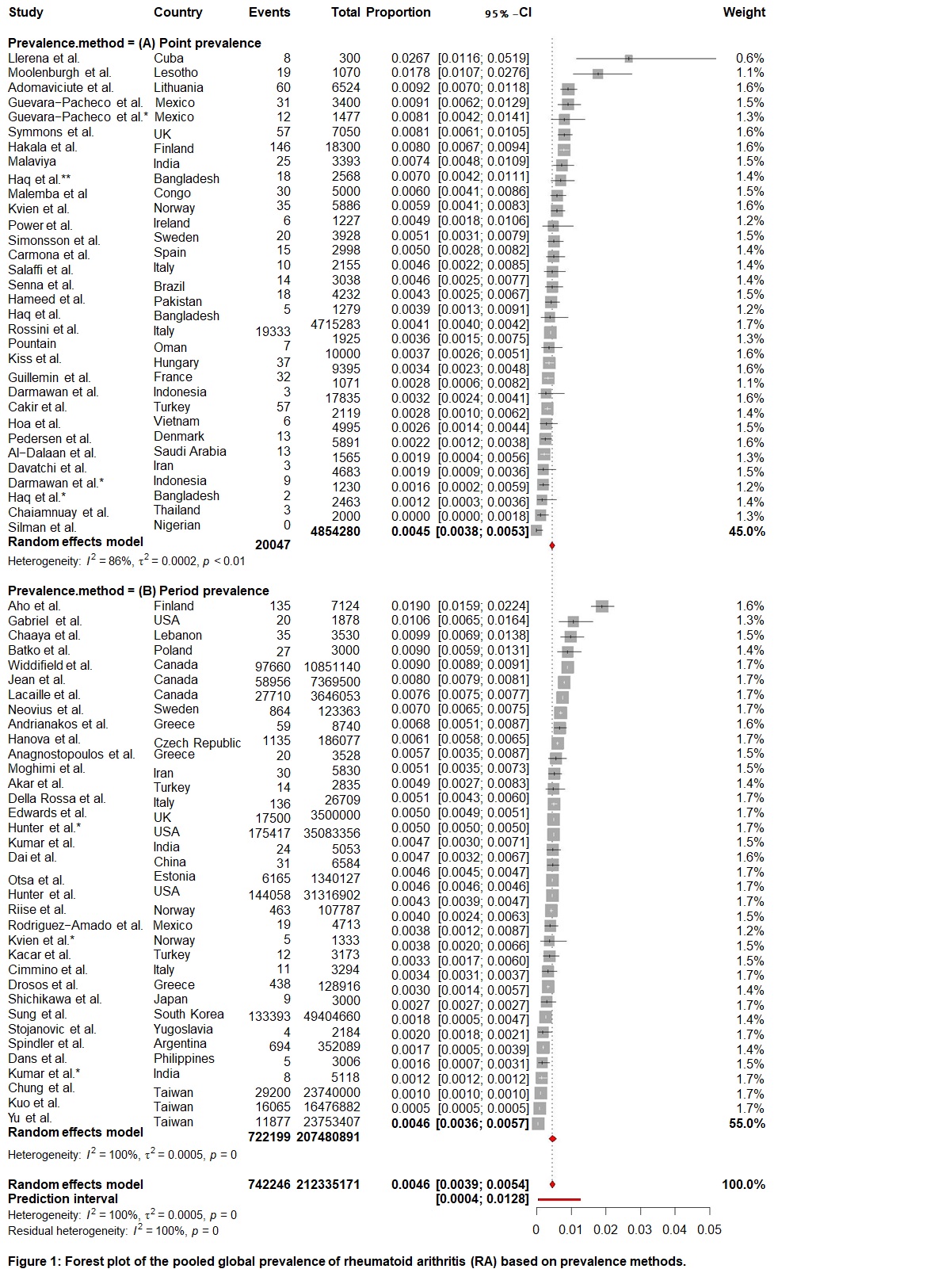 Figure 1: Forest plot of the pooled global prevalence of Rheumatoid Arthritis (RA) based on prevalence methods.
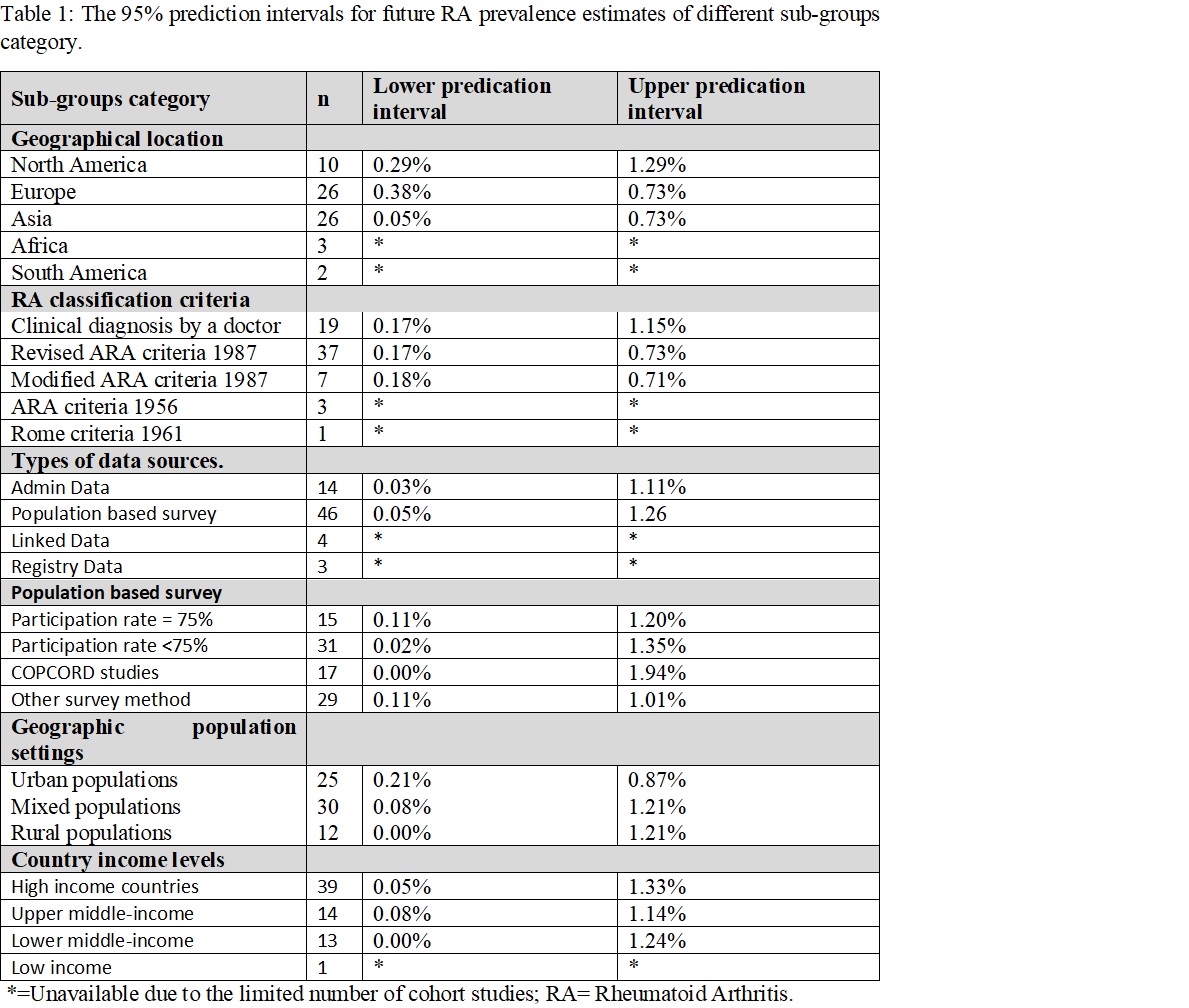 Table 1: The 95% prediction intervals for future RA prevalence estimates of different sub-groups category.
To cite this abstract in AMA style:
Almutairi K, Nossent J, Preen D, Keen H, Inderjeeth C. The Global Prevalence of Rheumatoid Arthritis: A Meta-Analysis [abstract]. Arthritis Rheumatol. 2020; 72 (suppl 10). https://acrabstracts.org/abstract/the-global-prevalence-of-rheumatoid-arthritis-a-meta-analysis/. Accessed .« Back to ACR Convergence 2020
ACR Meeting Abstracts - https://acrabstracts.org/abstract/the-global-prevalence-of-rheumatoid-arthritis-a-meta-analysis/