
Session Information
Date: Sunday, November 8, 2020
Session Type: Abstract Session
Session Time: 10:00AM-10:50AM
Background/Purpose: Frequent bending increases loading at the knee and is a risk factor for worsening knee pain associated with knee osteoarthritis (OA). Knee bending is also common during activities of daily living, such as climbing stairs, and beneficial for lower extremity strength. Presently, it is unclear if frequent knee bending is helpful or harmful for trajectories of pain and function, thus understanding this association is important to help weigh its costs and benefits. Therefore, the purpose of this study was to investigate the association of knee bending and 8-year trajectories of pain and function in adults with or at risk for knee OA.
Methods: We used data from the Osteoarthritis Initiative, a prospective cohort study of adults with or at risk for knee OA. Knee bending activities over the previous 30 days were collected at baseline (BL) via two yes/no questions: (1) climbing up 10+ flights of stairs in 1 day (stair use) and (2) lifting/moving objects weighing 25+ lbs by hand in 1 day (lifting). Pain and function were assessed at BL and six follow-up (FU) visits (1, 2, 3, 4, 6, 8 years). Knee pain severity in the past 30 days was determined via a Visual Analogue Scale (VAS; 0-10). Function was assessed using self-selected gait speed over 20m. Samples were restricted to those with low pain (< 3/10) or good function (≥ 1.22m/s) at BL and trajectories were identified using group-based modeling. To determine the association between each knee bending activity and group membership for pain and function trajectories, we calculated odds ratios (OR) and 95% confidence intervals (95% CI) using multinomial logistic regression, adjusted for confounders.
Results: Of those with complete data at BL and at least 2 FU visits, two separate trajectory models were run for both pain (age: 61.9 ± 9.0 years, sex: 56.7% female, BMI: 27.7 ± 4.6 kg/m2) and function (age: 60.1 ± 8.8 years, sex: 54.7% female, BMI: 27.8 ± 4.5 kg/m2). We identified 3 pain trajectory groups: Minimal Pain, Low Pain, and Worsening Pain. The Worsening Pain trajectory group exceeded the Patient Acceptable Symptom State ( > 3/10) by 24 months, while the other trajectories remained at 0 or 1 (Figure 1). However, no associations were found between knee bending activities and pain trajectory group membership. We identified 3 function trajectory groups: No Decline, Minimal Decline, and Fast Decline. The Fast Decline trajectory dropped below 1.22 m/s by 24 months, while the other trajectories remained above this cutoff with little decline over 8 years (Figure 2). Those who reported no stair use had 40% [1.40 (1.06, 1.84)] greater odds of being in the Fast Decline group relative to those who reported stair use. Those who reported no lifting had 49% [1.49 (1.18, 1.89)] and 61% [1.61 (1.17, 2.21)] greater odds of being in the No or Minimal Decline groups, respectively, relative to those who reported lifting.
Conclusion: Adults who did not engage in knee bending activities at BL had greater odds of membership in the slowest gait speed trajectory group, relative to those who did. Additionally, knee bending was not associated with any of the pain trajectories. This indicates that stair use and lifting may be unrelated to pain and favorably associated with gait speed trajectories in adults with or at risk for knee OA.
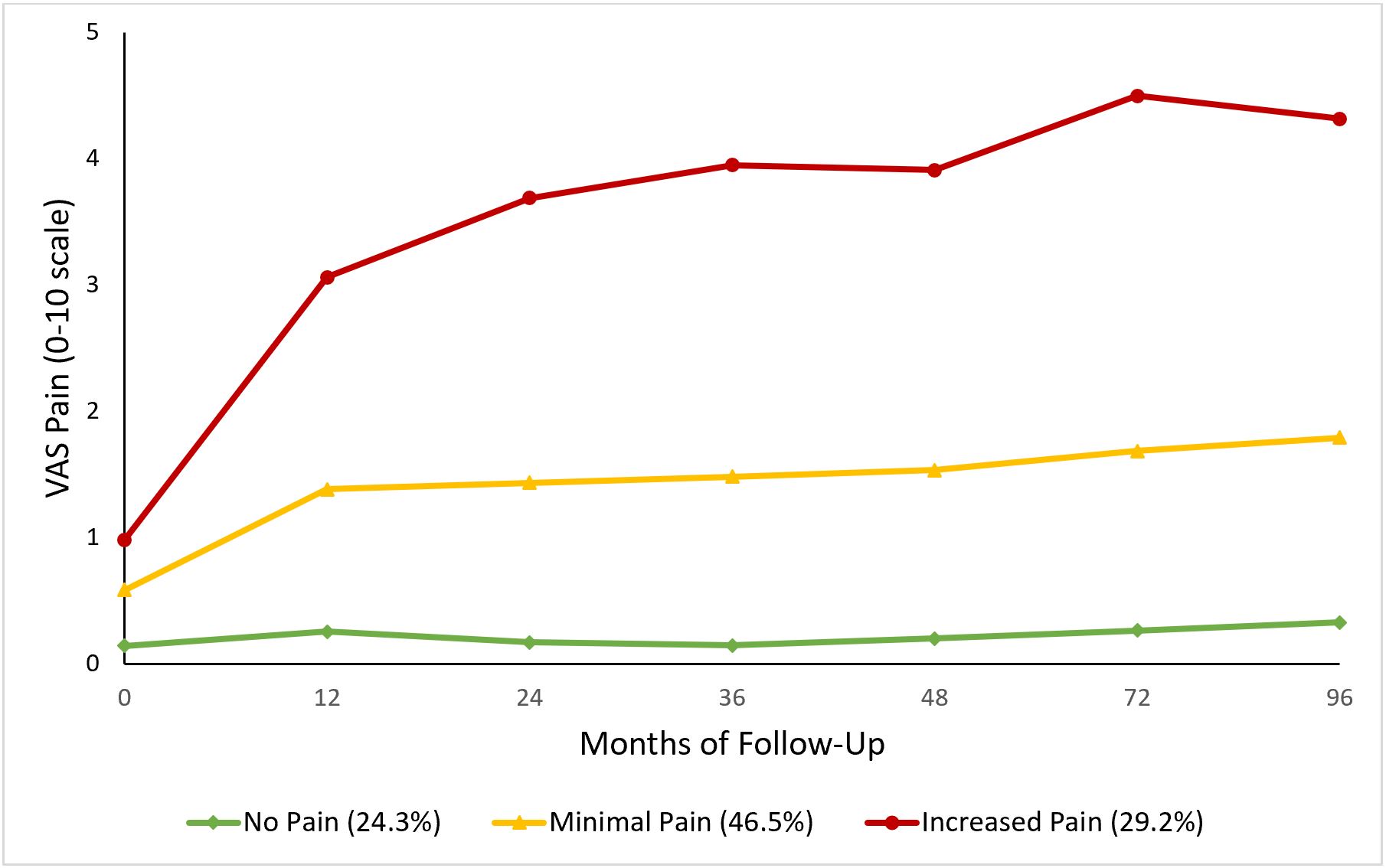 Figure 1: Trajectories of VAS pain over 96 months of follow-up
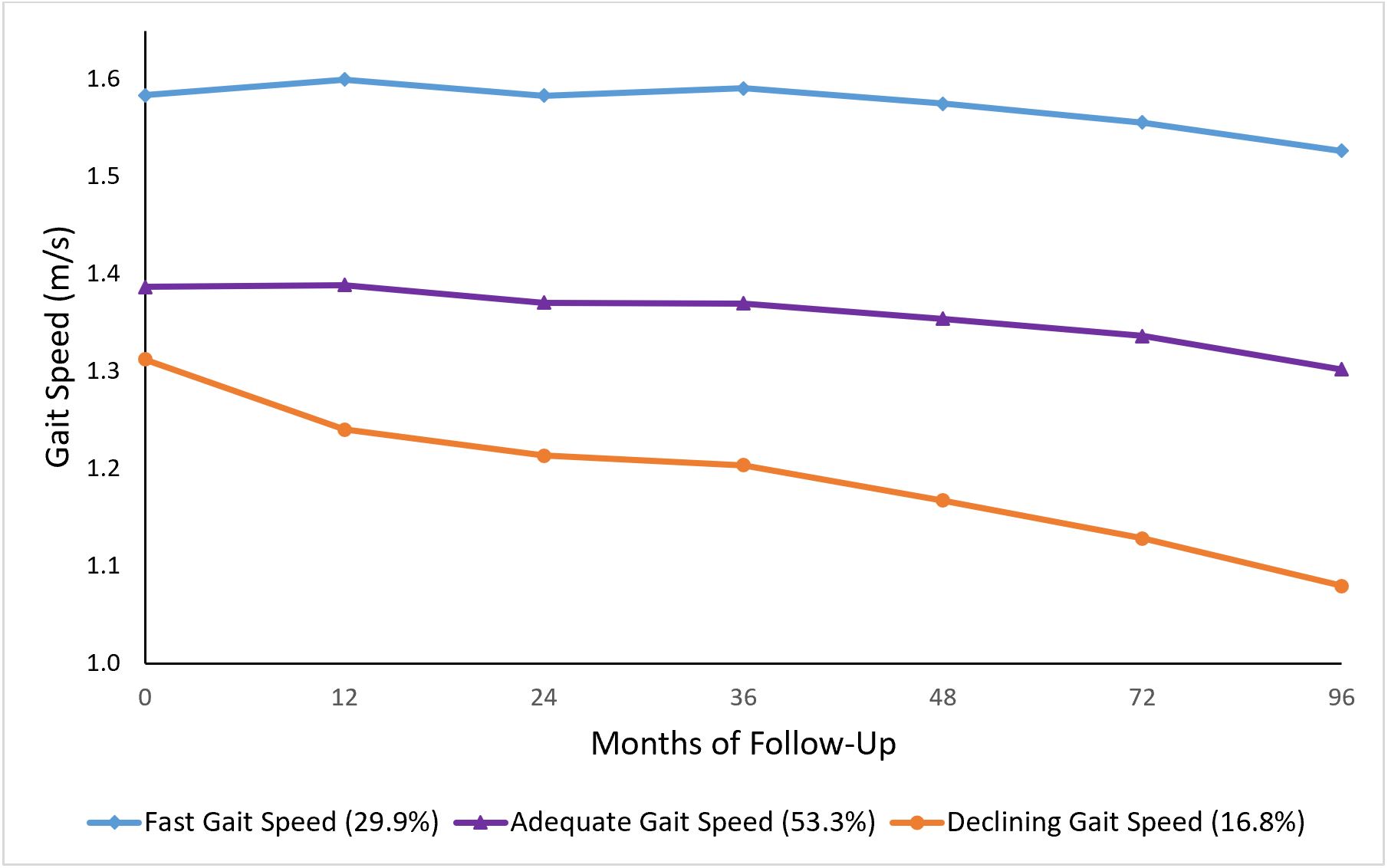 Figure 2: Trajectories of gait speed over 96 months of follow-up
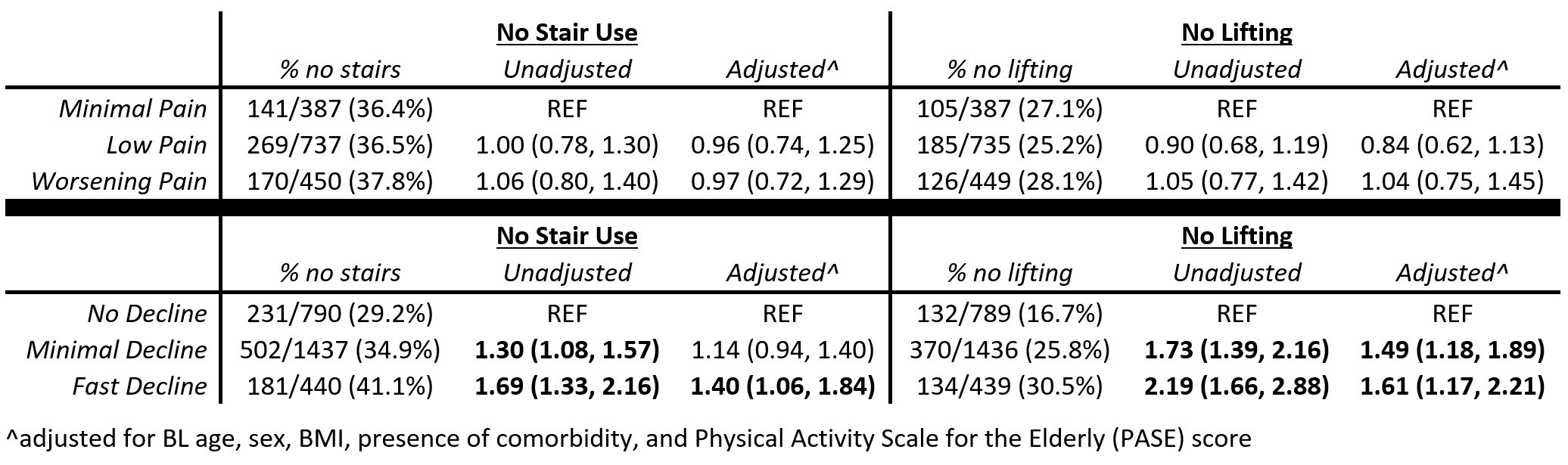 Table 1: Odds ratios and 95% confidence intervals for the association between frequent knee bending and pain and gait speed trajectory group membership
To cite this abstract in AMA style:
Jakiela J, Voinier D, Bye T, Tukis M, Konyak K, Orloff D, White D. The Association of Frequent Knee Bending with Trajectories of Pain and Physical Function over 8 Years in Knee Osteoarthritis [abstract]. Arthritis Rheumatol. 2020; 72 (suppl 10). https://acrabstracts.org/abstract/the-association-of-frequent-knee-bending-with-trajectories-of-pain-and-physical-function-over-8-years-in-knee-osteoarthritis/. Accessed .« Back to ACR Convergence 2020
ACR Meeting Abstracts - https://acrabstracts.org/abstract/the-association-of-frequent-knee-bending-with-trajectories-of-pain-and-physical-function-over-8-years-in-knee-osteoarthritis/