
Session Information
Date: Monday, October 22, 2018
Title: 4M117 ARHP Abstract: Pain, Anxiety, & Depression–ARHP I (1946–1951)
Session Type: ARHP Concurrent Abstract Session
Session Time: 4:30PM-6:00PM
Background/Purpose: We previously showed that the one-year effects of weight loss on knee pain reduction were not mediated by changes in structural features of osteoarthritis such as bone marrow lesions and synovitis. We aimed to assess whether the knee pain improvement in these persons could be explained by changes in pain sensitization or depressive symptoms.
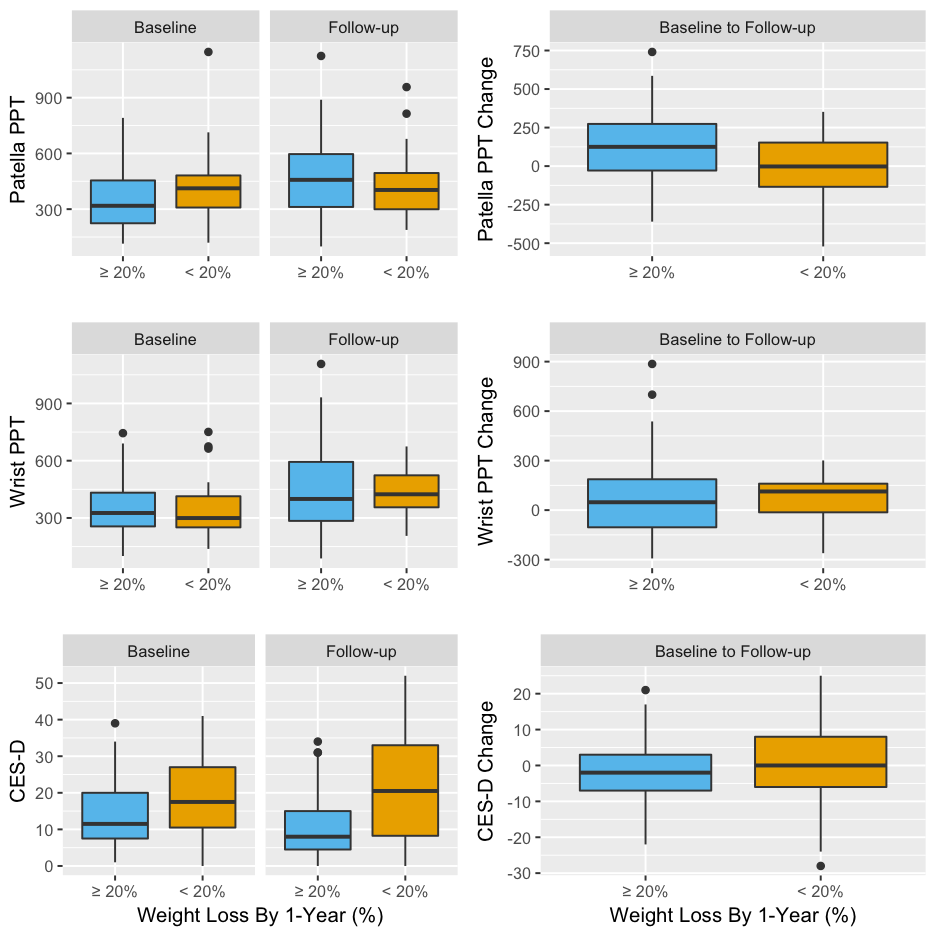
Methods: Morbidly obese persons with body mass index ≥ 35 kg/m2, from the Nutrition and Weight Management Center who had knee pain on most days of the past month were eligible. Patients were evaluated at baseline, before bariatric surgery or medical weight management, and at one-year. Measurements from both visits included WOMAC pain subscale score, pressure pain threshold (PPT) obtained at index patella and right wrist as an indication of peripheral/central and central sensitization, respectively, and depressive symptoms derived from the Center for Epidemiologic Studies Depression (CES-D) scale. Improvement in pain beyond a minimal clinically important difference (MCID) of 18% (i.e., ≥18% reduction) in WOMAC score was defined as the outcome. We defined the exposure as weight loss of ≥20% and focused on potential mediators defined as the change in patella and wrist PPT and CES-D score from baseline to follow-up. For mediation analysis, we fit natural effects models to quantify the magnitude of weight loss effect on pain improvement through a mediator-specific causal pathway; this is the mediating or indirect effect, and the remaining direct effect that is independent of the mediator-specific pathway (Figure 1).
Results: Of 75 study participants, 53% (40/75) lost ≥20% body weight by one-year follow-up. Of these 40, 39 (98%) underwent bariatric surgery compared to 23% (8/35) of participants who experienced <20% weight loss. Pain improvement at MCID level or beyond was observed in 75% (30/40) of those with ≥20% weight loss, compared to 34% (12/35) who lost <20% bodyweight. Natural indirect effect estimates suggested increased odds of pain improvement through changes in patella PPT (odds ratio [OR] = 1.62, 95% CI: 0.89, 2.75), wrist PPT (OR = 1.15, 95% CI: 0.77, 1.77), and CES-D score (OR = 1.22, 95% CI: 0.77, 1.87). However, the bootstrap-based confidence intervals around our reported effect sizes slightly overlapped the null value of 1.
Conclusion: Weight loss-induced knee pain improvement is partially attributable to reduced pain sensitization and to a lesser extent improvement in depressive symptoms.
Figure 1. Directed acyclic graph
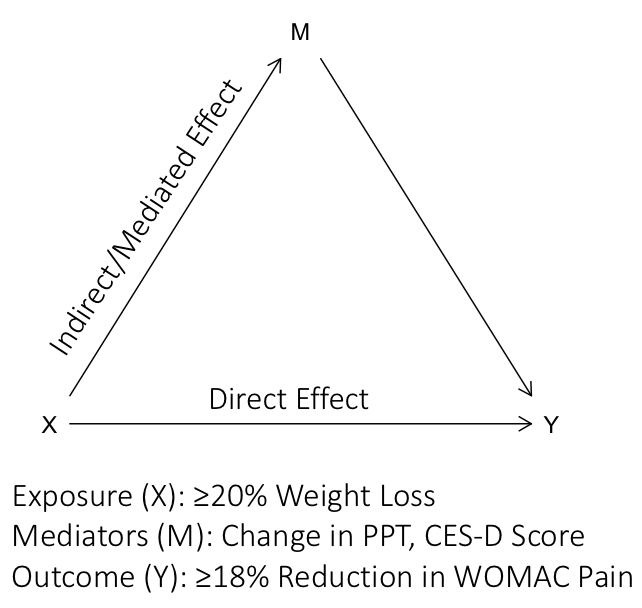
Figure 2. Baseline and follow-up values for PPT and CES-D.
To cite this abstract in AMA style:
Jafarzadeh SR, Neogi T, Stefanik JJ, Clancy MM, Li JS, Felson DT. Do Changes in Pain Sensitization and Depressive Symptoms Mediate the Effect of Extreme Weight Loss on Knee Pain Improvement? [abstract]. Arthritis Rheumatol. 2018; 70 (suppl 9). https://acrabstracts.org/abstract/do-changes-in-pain-sensitization-and-depressive-symptoms-mediate-the-effect-of-extreme-weight-loss-on-knee-pain-improvement/. Accessed .« Back to 2018 ACR/ARHP Annual Meeting
ACR Meeting Abstracts - https://acrabstracts.org/abstract/do-changes-in-pain-sensitization-and-depressive-symptoms-mediate-the-effect-of-extreme-weight-loss-on-knee-pain-improvement/