
Session Information
Date: Saturday, November 16, 2024
Title: Abstracts: Osteoarthritis – Novel Insights from Observational Studies
Session Type: Abstract Session
Session Time: 3:00PM-4:30PM
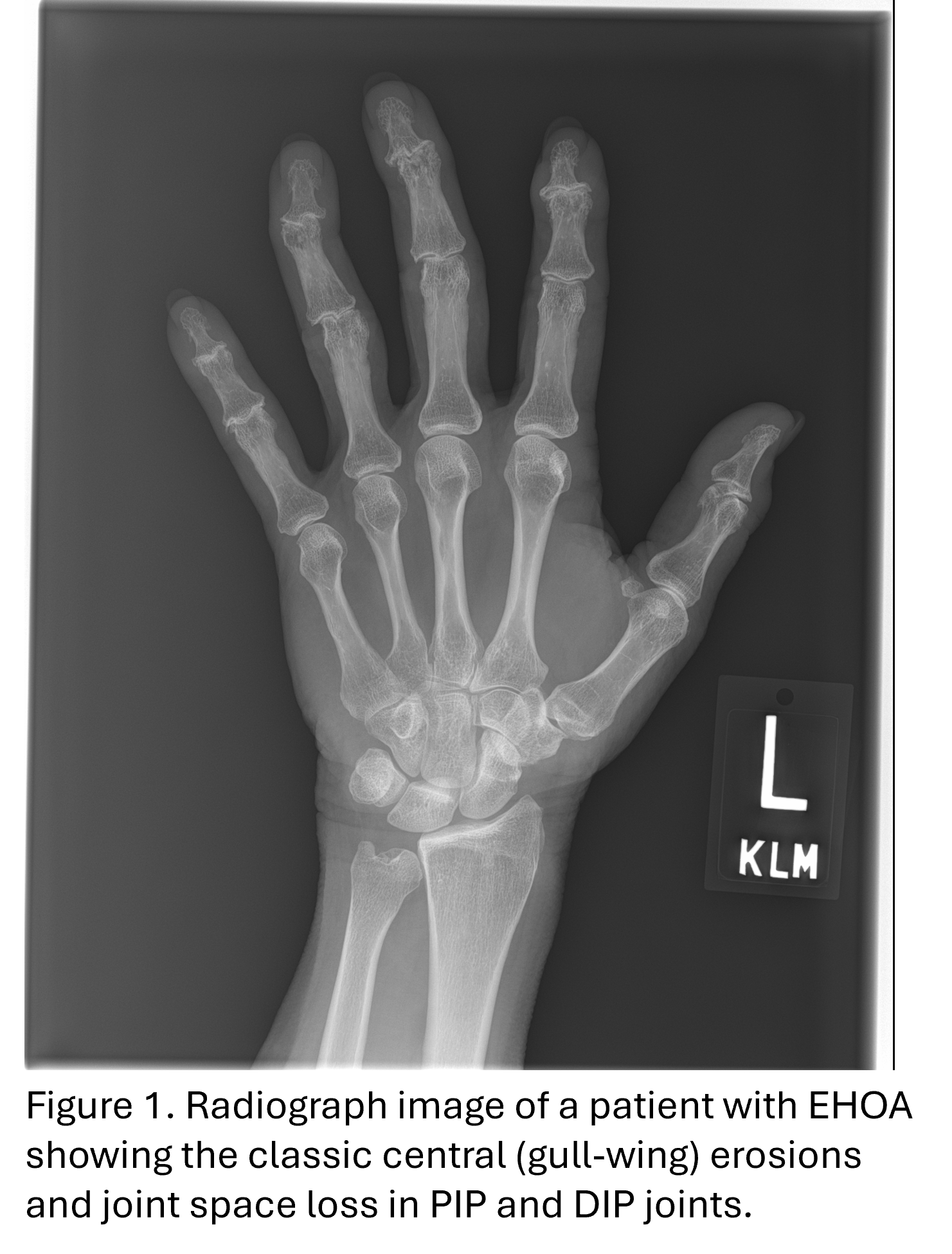
Background/Purpose: Erosive hand osteoarthritis (EHOA) is a subtype of hand OA that primarily impacts the interphalangeal joints resulting in subchondral bone erosion and cortical destruction. EHOA is commonly characterized by unique radiographic features such as central erosions and increased inflammatory cytokines suggesting that the pathologic processes differ from those seen in typical OA. Conflicting data on EHOA and association with BMD have been published with some hypothesizing it is a disease of skeletal fragility1. Therefore, we hypothesized that EHOA will correlate with risk of fracture.
References
1. McAlindon TE, Driban JB, Roberts MB, Duryea J, Haugen IK, Schaefer LF, Smith SE, Mathiessen A, Eaton C. Erosive Hand Osteoarthritis: Incidence and Predictive Characteristics Among Participants in the Osteoarthritis Initiative. Arthritis Rheumatol. 2021 Nov;73(11):2015-2024.
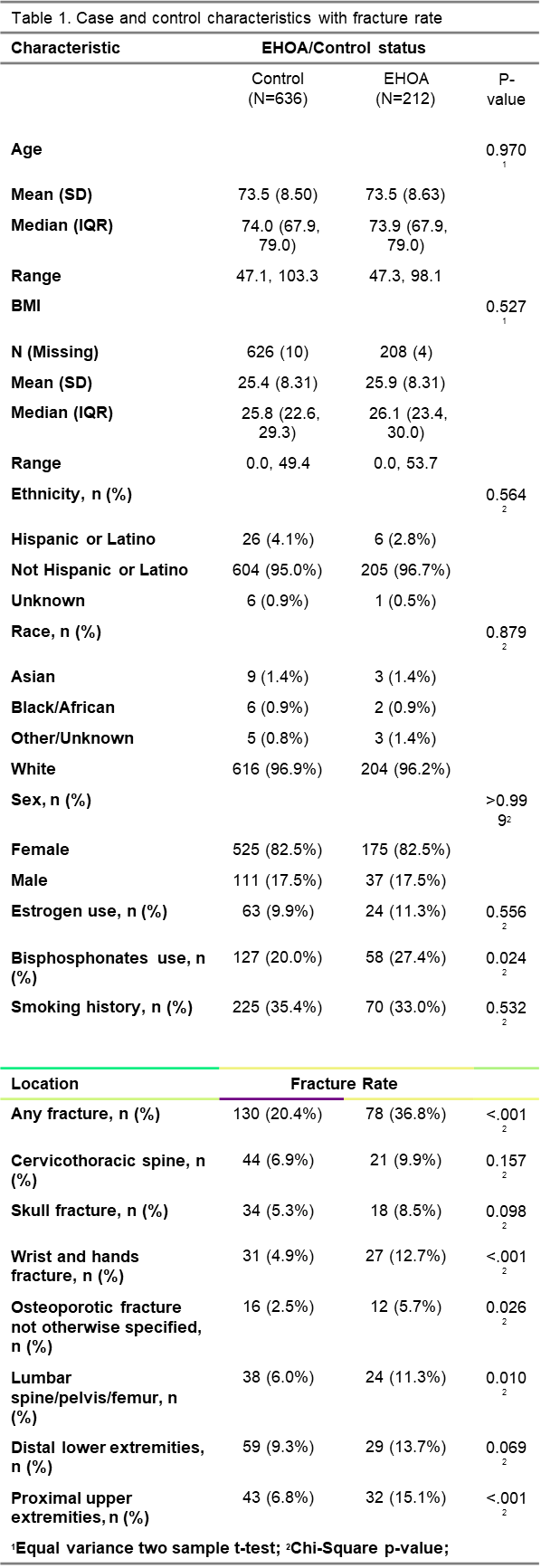
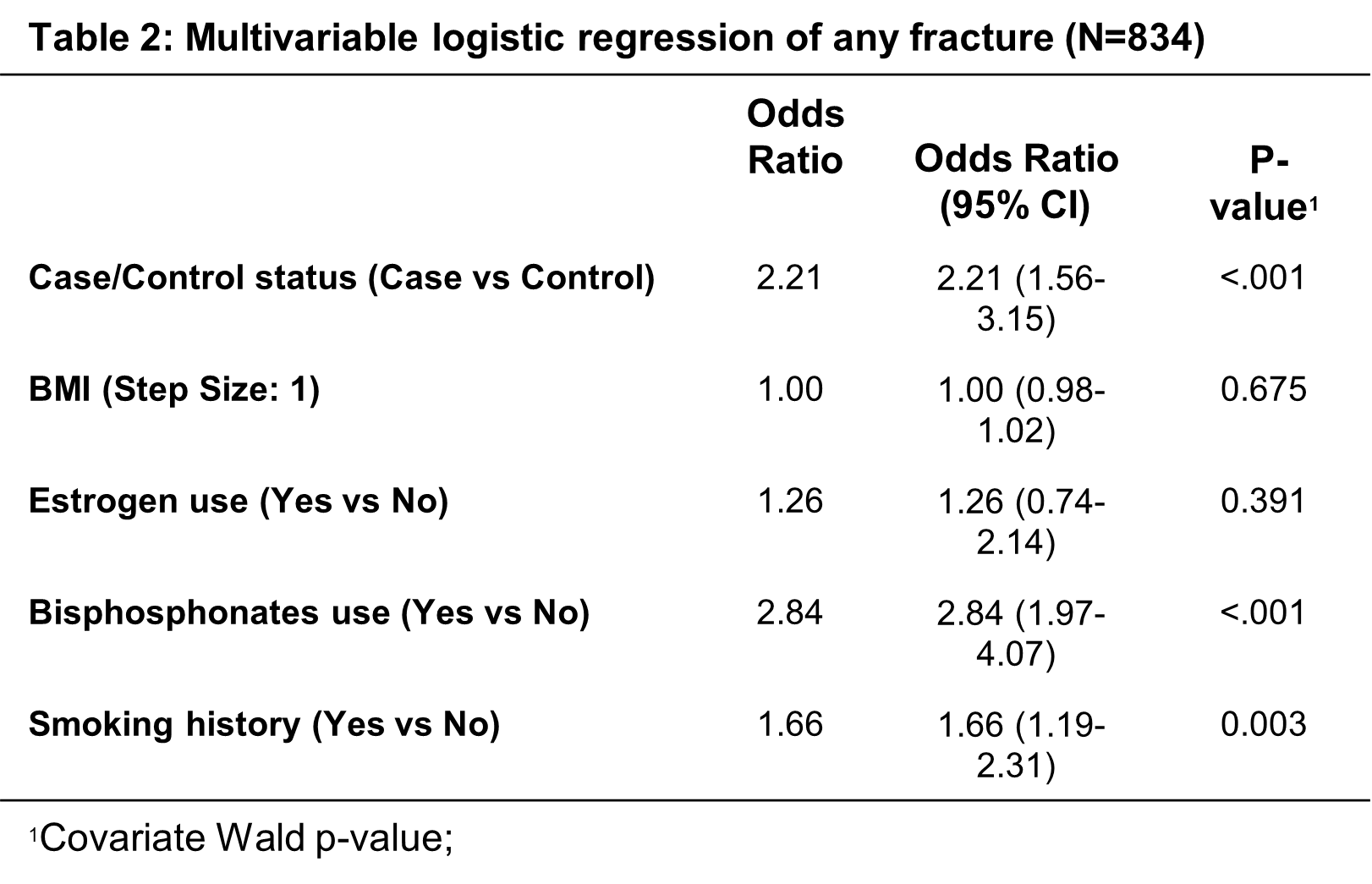
Methods: EHOA patients were identified from the electronic medical record utilizing radiograph reports containing the term “erosive osteoarthritis” or ICD code. The radiographs were then reviewed to confirm the characteristic changes of central erosions and joint space narrowing within the distal and middle interphalangeal joints. Patients were excluded if they had documented autoimmune arthritis. Age and sex matched controls were identified in a 1:3 ratio. Study variables included BMI, estrogen use, bisphosphonate use and smoking history. The primary outcome was history of fracture at any anatomical site, while secondary outcomes included history of fracture at each anatomic site, identified using ICD-9 and ICD-10 codes. EHOA and control groups were univariately compared for study variables and fractures using equal variance two-sample t-tests for continuous variables and Chi-square tests for categorical variables. Difference in fracture risk between EHOA and control was estimated using logistic regression modeling adjusted for BMI, smoking history, bisphosphonate use, and estrogen use.
Results: We observed a positive association between EHOA and history of 1) any fracture, 2) fracture with osteoporosis, and 3) fracture at distinct anatomical sites: wrist and hand fracture; lumbar spine, pelvis and femur; and shoulder and proximal upper extremities fracture. The estimated unadjusted odds ratio (OR) for overall prevalence of fracture was 2.27 (95% CI: 1.61-3.18; p< .001). The OR was similar after adjusting for BMI, estrogen use, bisphosphonates use, and smoking history using multivariate regression analysis (OR 2.21 (95% CI: 1.56-3.15; p< .001)). Bisphosphonate use (OR 2.84 (1.97-4.07; p< .001)) and smoking history (OR 1.66 (1.19-2.31; p< 0.003)) were also positively associated with fracture prevalence after adjusting for covariates.
Conclusion: We observed that patients with EHOA have a higher prevalence of fracture compared with age and gender matched controls with and without adjustment for potential confounders. Positive association between EHOA and fracture sites linked to classic osteoporotic areas suggests that osteoporotic fractures may be more common in EHOA. Further studies are warranted to explore the association between EHOA, risk of fracture and osteoporosis.
To cite this abstract in AMA style:
Mahajan A, mead harvey c, Grilli C, Sullivan M. Cross-sectional Analysis of Erosive Hand Osteoarthritis and Fracture Risk [abstract]. Arthritis Rheumatol. 2024; 76 (suppl 9). https://acrabstracts.org/abstract/cross-sectional-analysis-of-erosive-hand-osteoarthritis-and-fracture-risk/. Accessed .« Back to ACR Convergence 2024
ACR Meeting Abstracts - https://acrabstracts.org/abstract/cross-sectional-analysis-of-erosive-hand-osteoarthritis-and-fracture-risk/