
Session Information
Session Type: Poster Session B
Session Time: 10:30AM-12:30PM
Background/Purpose: Previous studies have shown that alterations in gut microbiota are present early in systemic sclerosis (SSc) (Andréasson et al. 2022) and are associated with distinct clinical phenotypes. The gut microbiota produces numerous metabolites, which modulate both local intestinal and extraintestinal immune responses. This study evaluates whether: (1) patients with relatively early SSc exhibit alterations in the fecal metabolome compared with unaffected controls, and (2) patients with interstitial lung disease (ILD) have a unique metabolite profile compared with patients without ILD.
Methods: Stool samples were collected from 115 patients who met 2013 ACR/EULAR classification criteria for SSc with a disease duration of < 3 years and 79 age-matched, unaffected controls at Lund University, Sweden. Targeted metabolomic profiling was performed on fecal samples, using liquid chromatography mass spectrometry (LCMS). Raw peak areas were normalized to four internal standards to account for any variability between runs on the mass spectrometer. Samples were filtered to retain metabolites that were detected in at least 25% of participants. General linear models were created to identify differentially abundant metabolites in patients with SSc vs unaffected controls, adjusting for age and sex. General linear models were also created to identify differentially abundant metabolites based on the presence of ILD among SSc patients adjusting for age, sex, body mass index, current proton pump inhibitor use, current probiotic use, current or prior immunomodulatory therapy, and presence of small intestinal bacterial overgrowth. We considered p< 0.05 as the threshold for reporting and provide 5% false discovery rate corrected p-values (q). We also computed effect size estimates and Cohen’s D for mean differences.
Results: The mean age of patients with SSc and unaffected controls was 55.3 and 56.7 years, respectively. More women were present in the SSc group compared to the unaffected control group (84.9% versus 69.4%). The median disease duration for patients with SSc was 2 years and the majority (67%) of SSc patients had never been exposed to any immunomodulatory therapy. 35 (30%) of SSc patients had ILD as detected by high-resolution computed tomography.
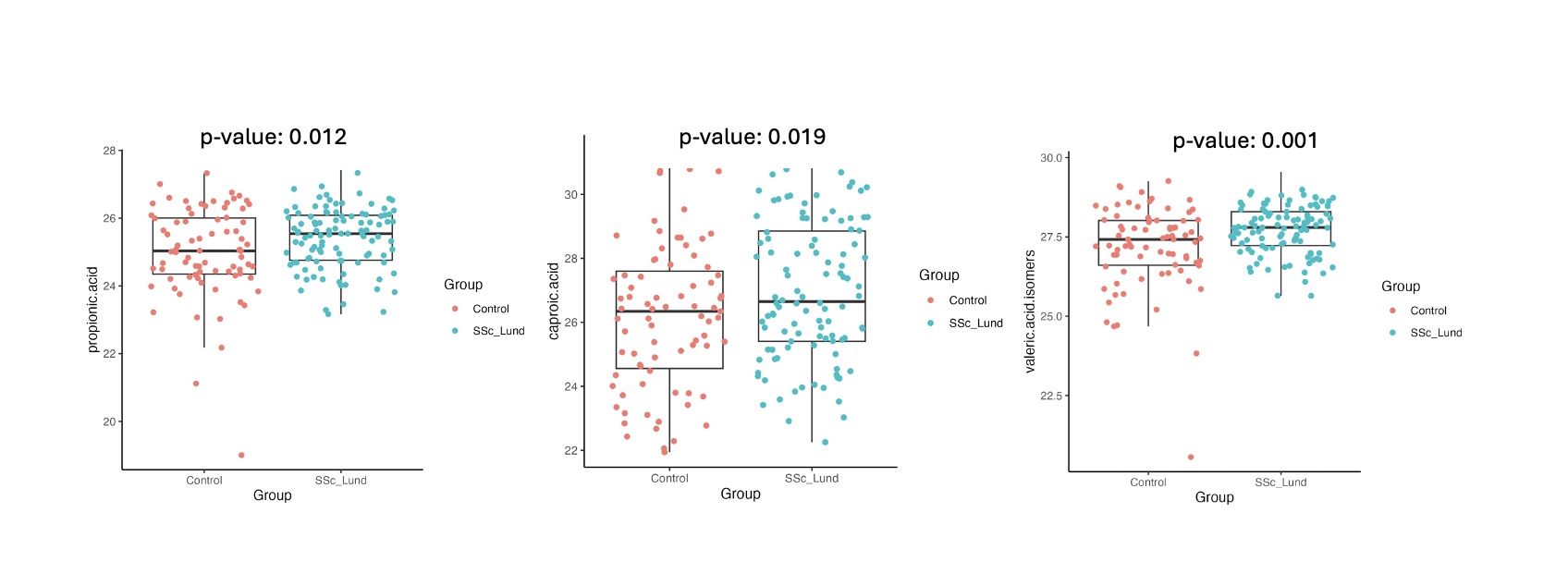
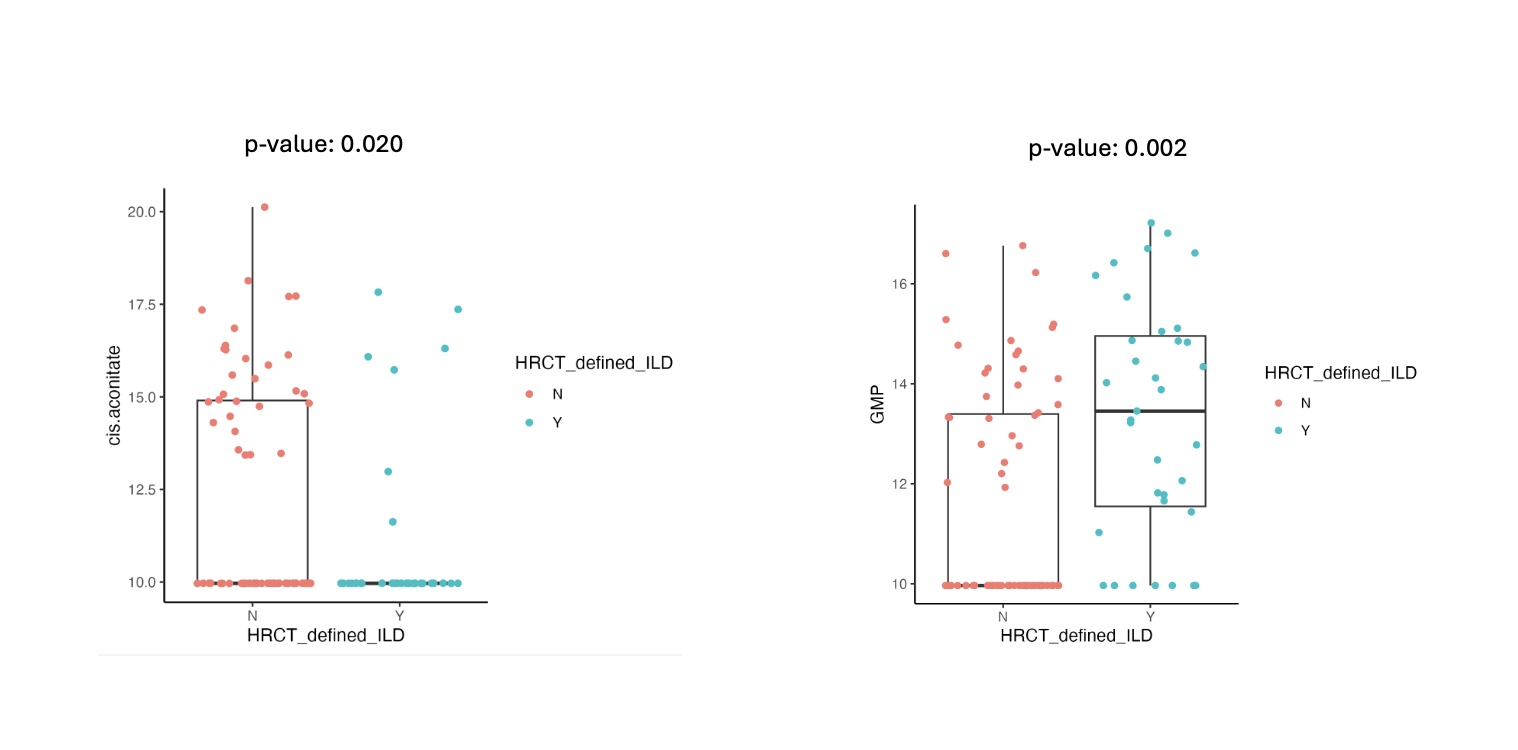
The total number of metabolites detected by LCMS was 122. Multivariable analysis demonstrated that the levels of 10 metabolites differed significantly between SSc patients and unaffected controls, including several short chain fatty acids (SCFAs) (Table 1 and Figure 1). In multivariable analysis, the levels of 3 metabolites were significantly different in SSc patients with ILD versus no ILD, including guanosine monophosphate, mycophenolic acid and cis-asconitate (Figure 2).
Conclusion: In the first study to characterize the fecal metabolome of patients with early SSc, patients with SSc had higher levels of specific SCFAs. Higher SCFA concentrations have been associated with gut permeability and dysbiosis in prior human studies (de la Cuesta-Zuluaga et al. 2019). In future studies, we aim to identify which gut microbes produce these differentially abundant metabolites and explore how altering the microbiome and/or fecal metabolome can affect disease course.
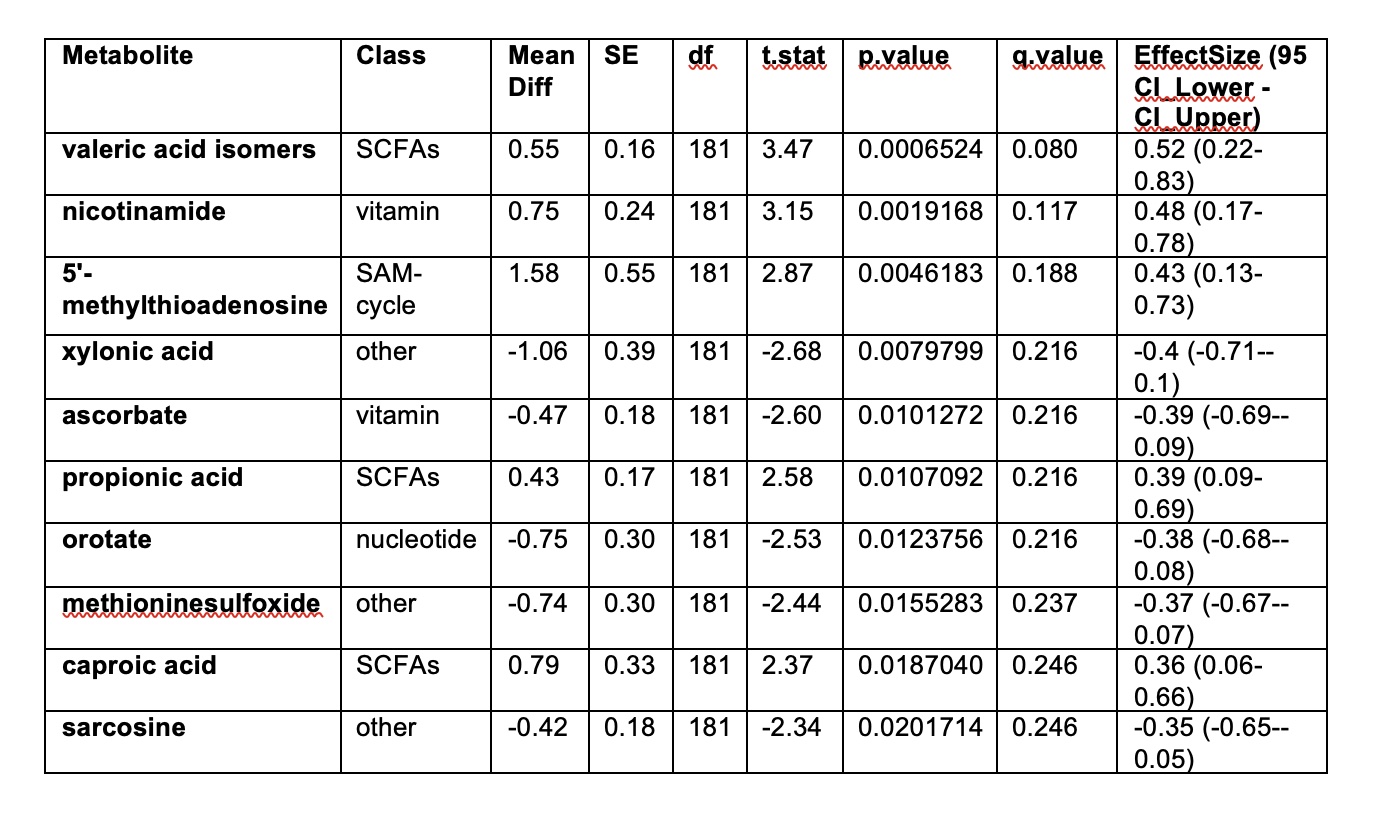
*Negative mean difference=Metabolite Lower in SSc compared with controls; Positive mean difference=Metabolite Higher in SSc compared with controls
To cite this abstract in AMA style:
Young A, Andreasson K, Labus J, Matulianos N, Wilde B, Jacobs J, Christofk H, Volkmann E. Characterization of the Fecal Metabolome in Early Systemic Sclerosis [abstract]. Arthritis Rheumatol. 2024; 76 (suppl 9). https://acrabstracts.org/abstract/characterization-of-the-fecal-metabolome-in-early-systemic-sclerosis/. Accessed .« Back to ACR Convergence 2024
ACR Meeting Abstracts - https://acrabstracts.org/abstract/characterization-of-the-fecal-metabolome-in-early-systemic-sclerosis/