
Session Information
Date: Monday, October 27, 2025
Title: (0897–0915) B Cell Biology & Targets in Autoimmune & Inflammatory Disease Poster II
Session Type: Poster Session B
Session Time: 10:30AM-12:30PM
Background/Purpose: Studying antinuclear antibody (ANA) producing B cells at the single-cell level offers critical insights into their fine specificity and functional characteristics. However, conventional techniques including bulk B cell cultures, ELISpot assays, and single-cell sequencing present several limitations. To overcome some of these limitations, we developed an integrated platform that combines flow cytometric detection of ANA⁺ B cells with an optimized single-B cell culture system (Nojima).
Methods: We employed a flow cytometry assay using biotinylated nuclear extracts to detect ANA reactive B cells, followed by single cell sorting and culture in the presence of feeder cells expressing CD40L and adding BAFF, IL-2, IL-21 (Figure 1).
Results: This approach enabled the isolation and in vitro expansion of ANA-producing B cells coming from patients with SLE and healthy donors from naïve, marginal zone and memory B cell subsets. Following 26 days of culture, a high proportion of wells produced significant immunoglobulin levels: 82% of naïve, 67% of marginal zone, and 57% of IgG⁺ memory B cell cultures exceeded 1 µg/mL. ANA reactivity in culture supernatants was confirmed by HEp-2 cell staining (shown in figure 2), yielding a sensitivity of 95% and specificity of 68%, validating the functional identity of the expanded B cells. Studying previously sorted ANA+ cells significantly increases the efficiency of the assay. In order to study the immunoglobulin form 100 ANA⁺ cells would ordinarily require screening 2,857 B cells (assuming ANA prevalence of 5%), whereas our approach reduces this to just 150 cells.
Conclusion: This method provides a robust platform for isolating and expanding ANA-producing B cells, enabling the production of autoantibodies for further study. The approach has potential applications in elucidating SLE pathogenesis.
 Figure 1: Experimental approach. Seeding the feeder cells until they reach 70% confluence. Irradiating the tissue culture plates with the feeder cells and then sort the cells directly into the tissue plate. Add cytokines and change media replacing cytokines every 3 days. End the culture by day 26, estimate the immunoglobulin production on the supernatant by ELISA. Finally validate the method by testing the supernatants in Hep2 cells.
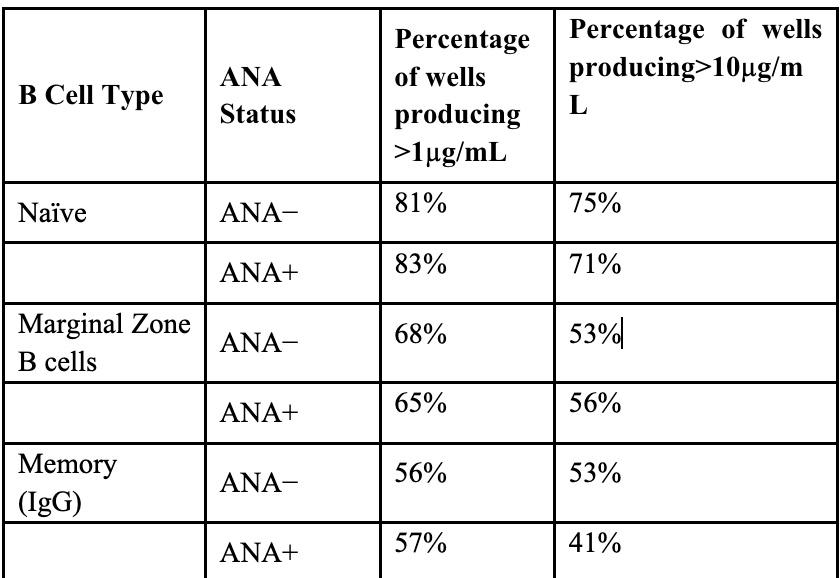 Table 1. Percentage of wells producing immunoglobulin by day 26 in 96-well single-cell cultures of B cell subsets from ANA-negative and ANA-positive donors using two seeding methods.
Values represent the proportion of wells (out of total plated) that produced detectable IgM (for naïve and marginal zone B cells) or IgG (for memory B cells) above 1 and 10ug/mL threshold. Comparisons are shown for manually seeded versus index plate-sorted cells, grouped by ANA status.
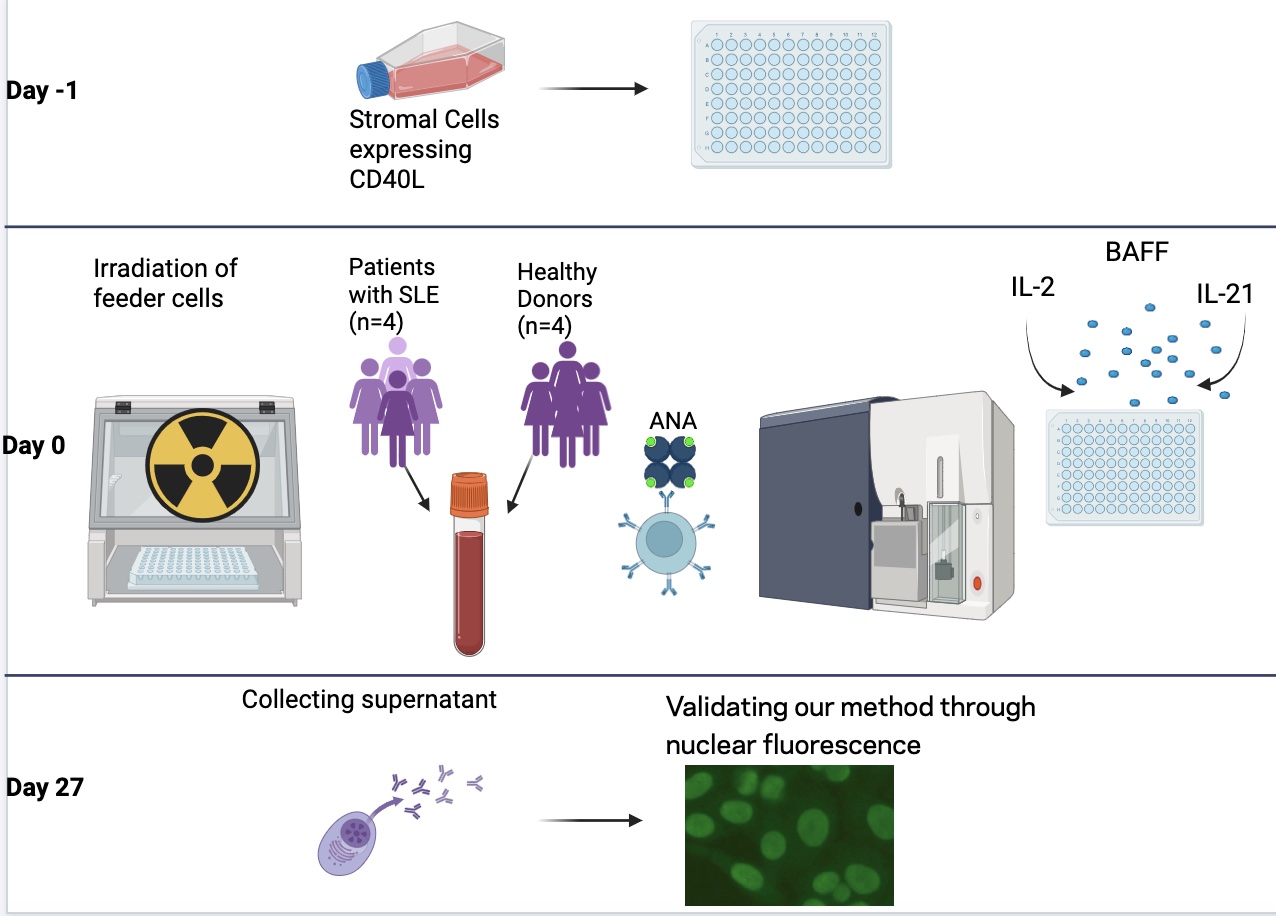 Figure 2. Hep 2 Staining in ANA sorted cells from a patient with SLE showing different nuclear patterns.
To cite this abstract in AMA style:
Velez arteaga D, Atisha Fregoso Y, Gunduz H, Diamond B. A Novel Approach to study ANA+ B Cells in Lupus Integrating Flow Cytometry with Single-Cell culture [abstract]. Arthritis Rheumatol. 2025; 77 (suppl 9). https://acrabstracts.org/abstract/a-novel-approach-to-study-ana-b-cells-in-lupus-integrating-flow-cytometry-with-single-cell-culture/. Accessed .ACR Meeting Abstracts - https://acrabstracts.org/abstract/a-novel-approach-to-study-ana-b-cells-in-lupus-integrating-flow-cytometry-with-single-cell-culture/