
Session Information
Session Type: Poster Session A
Session Time: 8:30AM-10:30AM
Background/Purpose: Risk stratification in patients with antiphospholipid antibodies (aPL) remains a clinical challenge. We aim to evaluate the role of Thrombin Generation Assay (TGA) in distinguishing various populations of aPL positive patients (with and without lupus anticoagulant – LA) and its association with β2GPI-dependent and anti-phosphatidyl-serine/prothrombin (aPS/PT) antibodies.
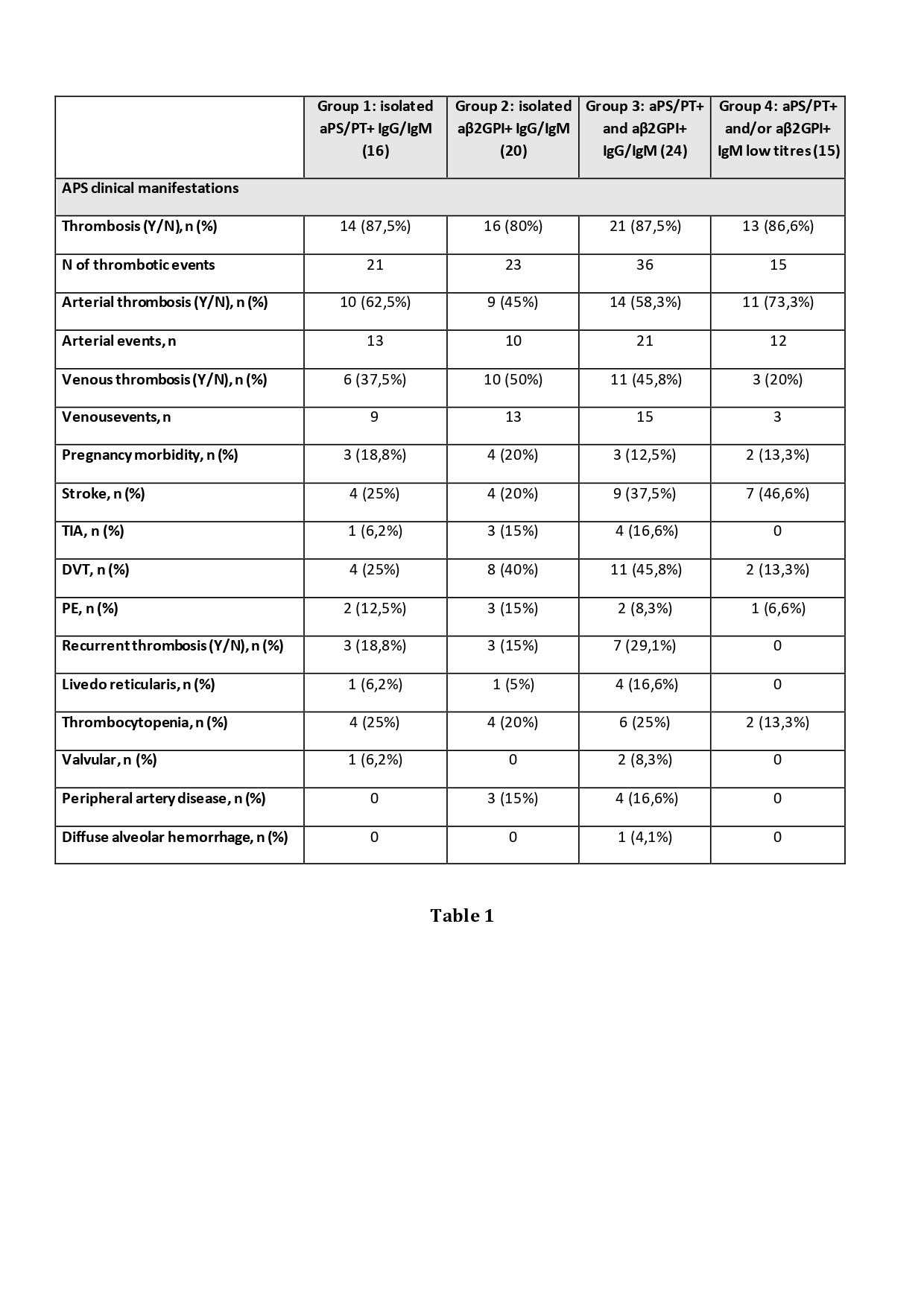
Methods: One-hundred-and-eight patients were tested with TGA and divided as follows: 21 patients with aPS/PT IgG/IgM, 29 with aβ2GPI IgG/IgM, 31 with aPS/PT and aβ2GPI IgG/IgM, 27 with aPS/PT and/or aβ2GPI IgM low-titers. Table 1 resumes the clinical characteristics of the APS patients (excluding aPL asymptomatic). Thirty-one healthy donors (HDs) and 24 controls treated with VKA were also included.
Results: The most deranged TGA and LA profile was observed in patients with both aPS/PT and aβ2GPI when compared to those with an isolated positivity for aPS/PT or aβ2GPI and patients with aPS/PT and/or aβ2GPI IgM at low titres (Figure 1). Similarly, patients with aPS/PT and/or aβ2GPI at medium/high titres presented with the higher rate of clinical manifestations.
When comparing the TGA curves of APS patients, asymptomatic aPL positive (aPL+) subjects, HDs and controls treated with VKA, we observed that aPL+ patients (particularly those with a confirmed diagnosis of APS) showed a characteristic profile (Figure 2). Moreover, both in aPL+ subjects and in the control groups we observed a correlation between TGA and LA parameters.
Conclusion: TGA seems a valuable approach to stratify aPL+ patients according to their risk profile. The differences among groups and different populations of autoantibodies specificities obtained from this test can be considered a translational validation of the increased thrombotic risk of patients with triple or tetra aPL positivity.
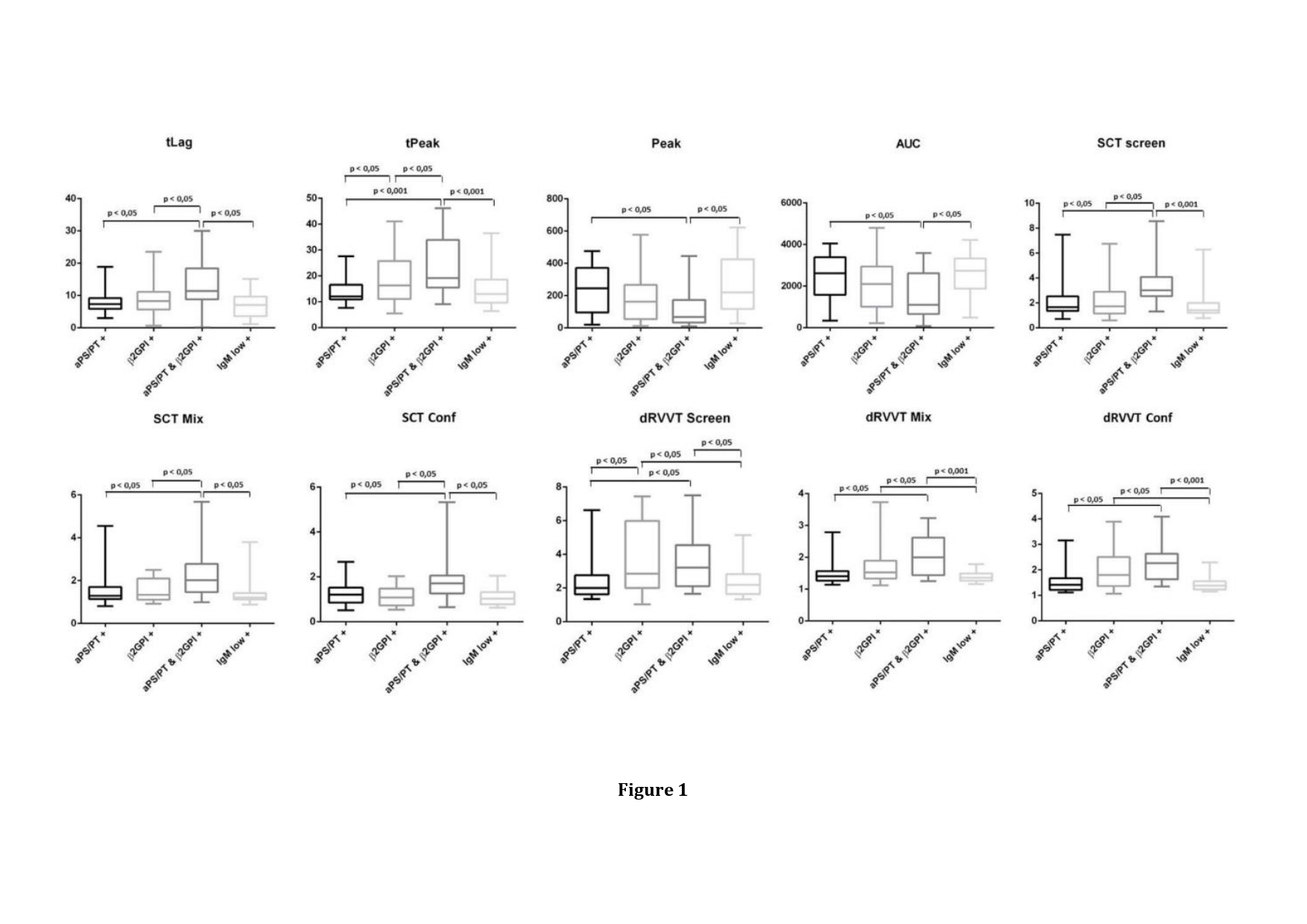
The differences between groups that reached statistical significance (p<0,05) are indicated in the graph.
(aPS/PT – Anti-phosphatidylserine/prothrombin antibodies; aβ2GPI – Anti-β2-glycoprotein-I antibodies; Ig – Immunoglobulin; tLag – Lag time; tPeak – Time to peak; AUC – Area under the curve; sctScreen – Silica Clotting Time screening; sctMix – Silica Clotting Time mix; sctConf – Silica Clotting Time confirmation; dRVVTscreen – Dilute Russell’s viper venom time screening; dRVVTmix – Dilute Russell’s viper venom time mix; dRVVTconf – Dilute Russell’s viper venom time confirmation)
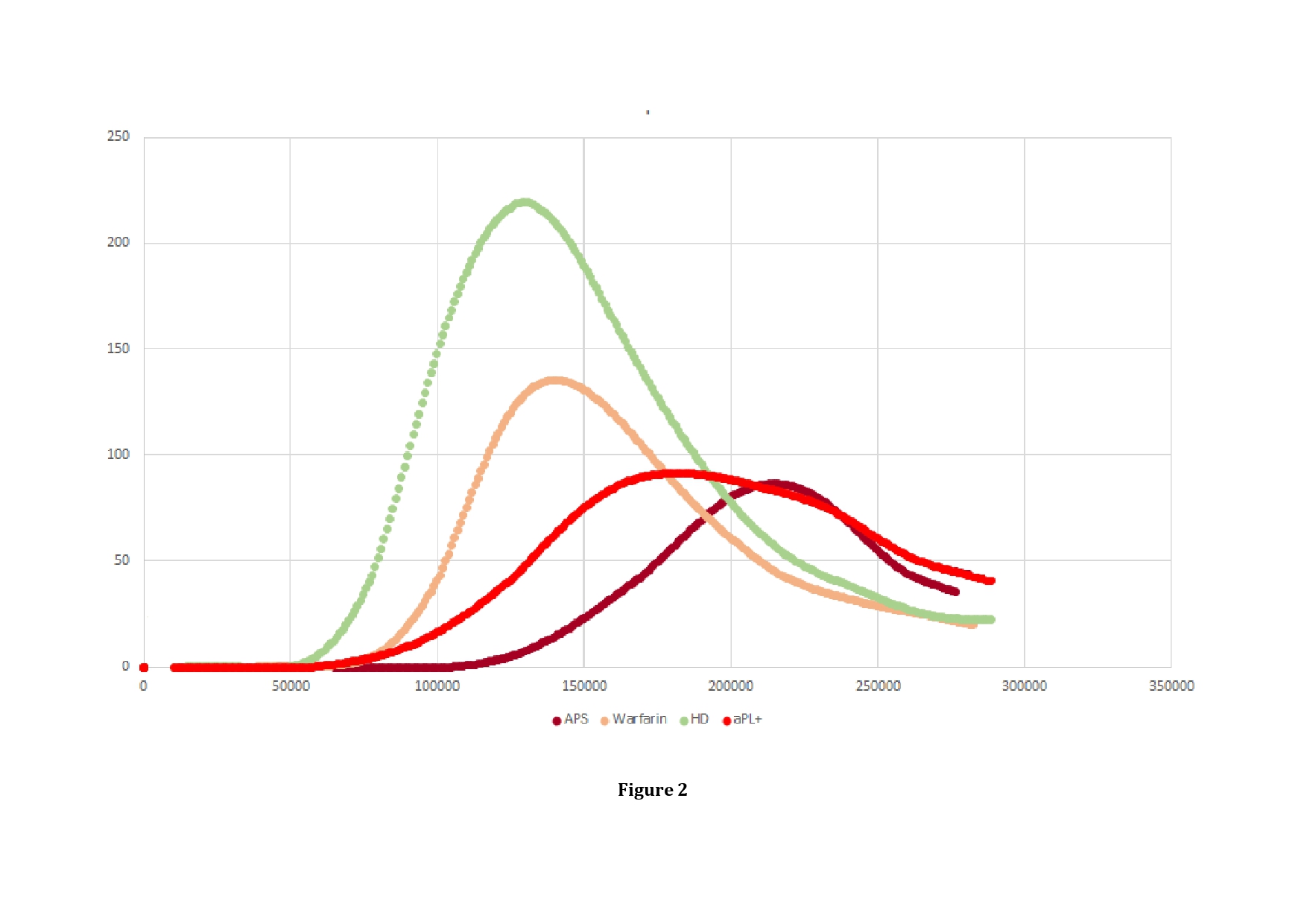
(TGA – Thrombin generation assay; APS – Antiphospholipid Syndrome; aPL – Antiphospholipid antibodies; HC – healthy controls)
To cite this abstract in AMA style:
Radin M, Barinotti A, Cecchi I, Foddai S, Rubini E, Roccatello D, Menegatti E, Sciascia S. Thrombin Generation Assay and Lupus Anticoagulant Identify Different Populations of Patients with Antiphospholipid Antibodies [abstract]. Arthritis Rheumatol. 2021; 73 (suppl 9). https://acrabstracts.org/abstract/thrombin-generation-assay-and-lupus-anticoagulant-identify-different-populations-of-patients-with-antiphospholipid-antibodies/. Accessed .« Back to ACR Convergence 2021
ACR Meeting Abstracts - https://acrabstracts.org/abstract/thrombin-generation-assay-and-lupus-anticoagulant-identify-different-populations-of-patients-with-antiphospholipid-antibodies/