
Session Information
Session Type: Poster Session A
Session Time: 6:00PM-7:00PM
Background/Purpose: In 2019, new classification criteria for SLE were developed by the EULAR/ACR. Prior research in adult lupus cohorts found a positive correlation between high summary score at diagnosis and SLE disease activity at 5 years, but it is unknown whether a higher summary score indicates more severe disease in a pediatric cohort. Using the new lupus criteria, this pediatric study evaluates the predictive value of higher summary scores and number of extra-renal domains at diagnosis to renal outcomes after treatment.
Methods: This is a retrospective, single center cohort study of all patients seen at Stanford Childrens Health diagnosed withSLEwith kidney involvement prior to their 18th birthday from 2010- 2022. For each patient, the EULAR/ACR summary score was calculated based on the clinical and laboratory criteria. Patients were dichotomized into two subgroups, those with low/moderate number (1-5) of extra-renal domains at diagnosis vs those with a high number (6-9). Patient baseline information was collected at diagnosis and follow up data was collected after 1 year. The Childhood Arthritis and Rheumatology Research Alliance (CARRA) 2012 definition for renal response was utilized (no, partial [mild/moderate] or complete response) after 1 year of treatment as our outcome measure. Descriptive statistics were reported by group and an ordinal logistic regression was conducted to calculate adjusted odds ratio for renal response to determine if a higher summary score (30) and high number of extra-renal domains predicted poor renal response.
Results: Patient characteristics of our final cohort of 74 children are depicted in Table 1. Patients with a high number of extra-renal domains have 1.47 (95% CI: 0.55 – 2.91, p=0.44) times the odds of having a complete renal response than patients with a low/moderate number of domains (Table 2).
There were no statistically significant differences between the summary scores and the three renal response groups (Figure 1), although the no renal response group were comprised of more patients with a summary score30. Patients with a summary score 30 have 1.31 (95% CI: 0.50-3.44, p=0.59) times the odds of having a complete renal response than patients with a summary score 30 (Table 2).
Conclusion: In this study, we evaluated the predictive potential of the extra-renal domains and the summary score from the 2019 EULAR/ACR classification criteria in a pediatric cohort with SLE with renal involvement. We found that the number of extra-renal domains at diagnosis did not have a significant impact on renal response at one year. While there was no significant difference in the overall EULAR/ACR summary score at diagnosis and renal response after 1 year of treatment, patients with a summary score 30 had an increased trend toward having a complete renal response. This suggests that the overall summary score (a more quantitative, weighted score), rather than the number of domains, may predict renal outcomes in a pediatric lupus nephritis cohort. Future studies on larger cohorts are needed.
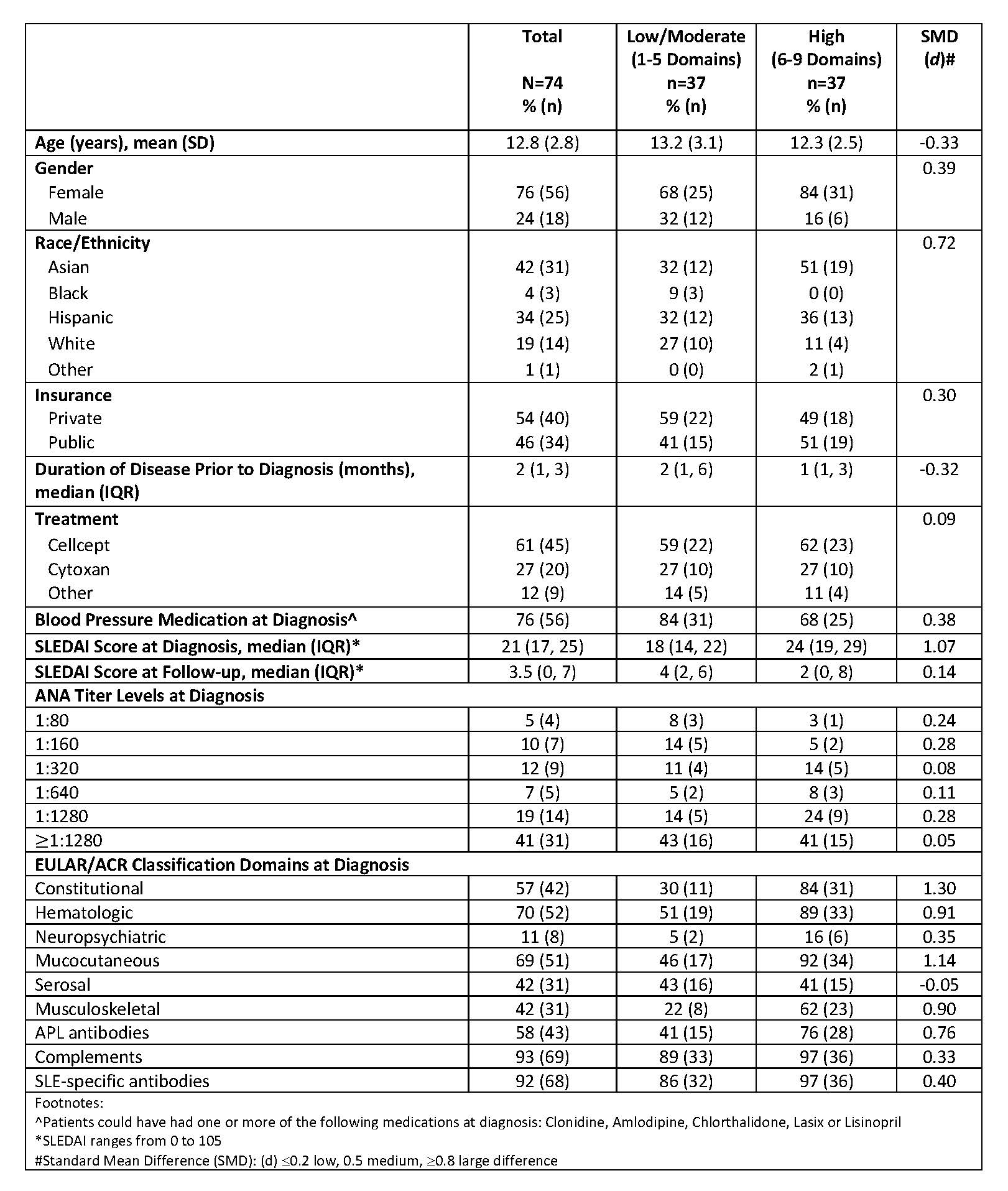 Table 1. Patient Demographics, Clinical Characteristics and EULAR/ACR Classification Domains (Nf74)
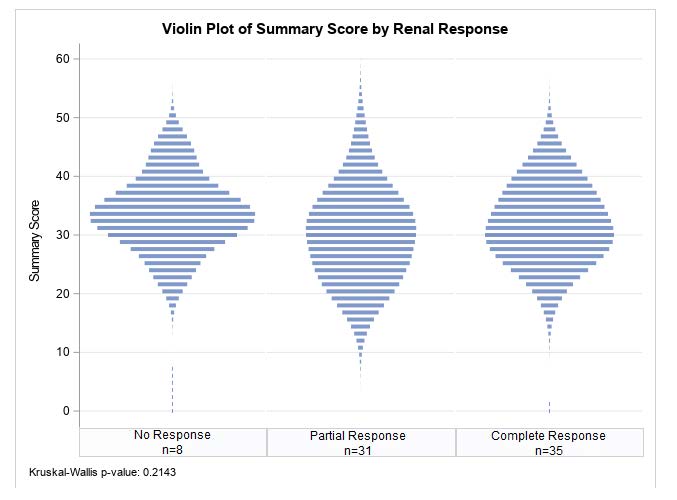 Figure 1. Overall Summary Score by Renal Response (Nf74)
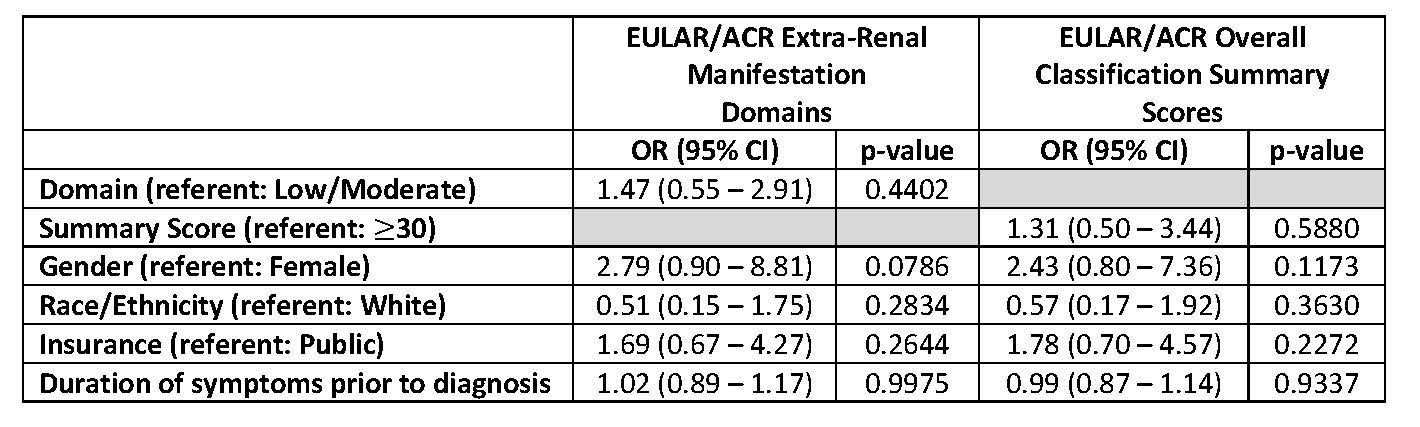 Table 2. Ordinal Logistic Regressions for Complete Renal Response (Nf74)
To cite this abstract in AMA style:
Patrizi S, Tandel M, Boothroyd D, Hsu J. Predictive Value of the 2019 EULAR/ACR SLE Criteria’s Extra-Renal Domains to Renal Response One Year After Treatment in a Pediatric Lupus Nephritis Cohort [abstract]. Arthritis Rheumatol. 2023; 75 (suppl 4). https://acrabstracts.org/abstract/predictive-value-of-the-2019-eular-acr-sle-criterias-extra-renal-domains-to-renal-response-one-year-after-treatment-in-a-pediatric-lupus-nephritis-cohort/. Accessed .« Back to 2023 Pediatric Rheumatology Symposium
ACR Meeting Abstracts - https://acrabstracts.org/abstract/predictive-value-of-the-2019-eular-acr-sle-criterias-extra-renal-domains-to-renal-response-one-year-after-treatment-in-a-pediatric-lupus-nephritis-cohort/