
Session Information
Session Type: Poster Session B
Session Time: 5:00PM-6:00PM
Background/Purpose: Communication is an essential part of medical care, especially in Pediatric Rheumatology where children have varying complex chronic diseases. However, there is paucity of data about effective patient-provider communication. Studies have shown that improvements are required in information accessibility and ensuring children feel safely engaged in healthcare conversations. Further evidence suggests that good communication leads to improved adherence and outcomes, as well as treatment satisfaction in children with juvenile idiopathic arthritis (JIA). In this study, we aim to evaluate communication quality in Pediatric Rheumatology clinical practice using the Communication Assessment Tool (CAT) and assess the correlation between the CAT and patient-specific factors.
Methods: We consecutively recruited 41 patients with follow-up appointments between 10/27/2022 and 12/22/2022. Fifteen patients declined participation. Parent proxies completed surveys for children younger than 9 years. Participants completed a demographic survey, CAT, Patient-Reported Outcomes Measurement Information System Pediatric Global Health Measure 7 (PROMIS), and Connor Davidson Resilience Scale 2 (CD-RISC 2). Raw PROMIS scores were converted to T-scores using standard software. Spearmans correlations were performed with statistical significance set to p 0.05.
Results: The majority of our cohort was female (68%) and had Medicaid insurance (66%). The average age was 12.98 years. The patients primary visit diagnoses included systemic rheumatic disease (48.8%), JIA (14.6%), Uveitis (9.8%), and other (26.8%). The mean CAT score was 4.78 and median was 5 [IQR 4.79, 5], indicating overall high satisfaction with communication quality. Average PROMIS was 46.76 ± 8.89 and CD-RISC 2 was 5.24 ± 2.0, both consistent with reported means for the general population. CAT was only correlated with gender (r = -0.34, p = 0.03), with males endorsing lower scores; while age was strongly negatively correlated with PROMIS (r = -0.65, p 0.001), with older children endorsing worse health-related quality of life (HRQOL) (Table 2).
Conclusion: The mean CAT score of 4.78 indicates overall high communication quality in our practice; however, the percentage of excellent scores (5) was 17.8% lower than the initial report, indicating that areas for improvement exist. There were no significant correlations between CAT and PROMIS, CD-RISC 2, or diagnosis, suggesting that communication quality is not associated with HRQOL, resilience, or presentation. Male patients endorsed worse communication quality; given that the majority of our providers are female, additional research is needed to determine the drivers of lower scores in males, and whether they may be due to different communication styles or intrinsic biases. Older patients reported worse HRQOL than younger children, and the reasons for this are unclear. This study is limited by a small sample size in a single center. Additional research is needed to further assess the drivers of high and low communication quality and improve communication in this population.
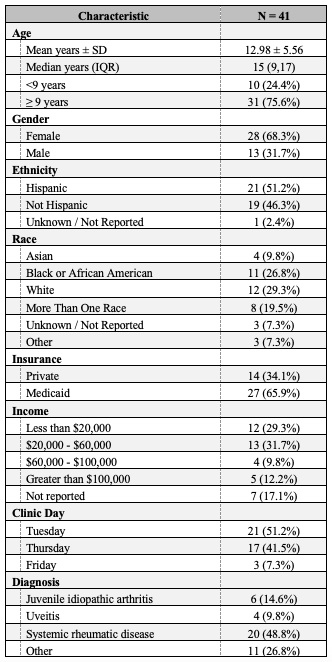 Table 1. Demographic Data.
Demographic data for patients recruited in Pediatric Rheumatology.
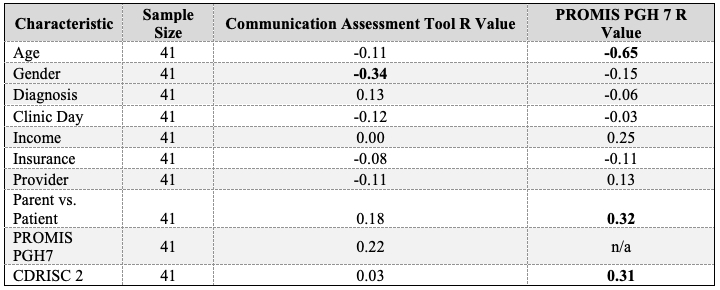 Table 2. Spearman Correlation Coefficients.
Bolded R value signifies p < 0.05. Gender is correlated with the Communication Assessment Tool, with males endorsing worse communication quality. PROMIS is negatively correlated with age, with older children endorsing worse quality of life.
To cite this abstract in AMA style:
Samuels J, Wojtal E, Trachtman R. Patient-Provider Communication in Pediatric Rheumatology [abstract]. Arthritis Rheumatol. 2023; 75 (suppl 4). https://acrabstracts.org/abstract/patient-provider-communication-in-pediatric-rheumatology/. Accessed .« Back to 2023 Pediatric Rheumatology Symposium
ACR Meeting Abstracts - https://acrabstracts.org/abstract/patient-provider-communication-in-pediatric-rheumatology/