
Session Information
Session Type: Poster Session C
Session Time: 8:30AM-10:30AM
Background/Purpose: There is a dearth of resources for medical students on identifying skin findings of autoimmune disorders in skin of color. Considering how several rheumatologic diseases disproportionally affect communities of color and can present with dermatologic findings, an opportunity arises to address a gap. The lack of materials educating future physicians has significant repercussions on delivering care equitably to an increasingly diverse US population.
We sought to create a brief module that addresses dermatologic findings in connective tissue disease (CTD) in all skin tones for medical students. Our purpose was to assess whether this module would 1) increase learner comfort in identifying dermatologic findings in all skin tones and 2) increase learner knowledge of appropriate workup and lab findings in CTD.
Methods: The study was conducted at our institution’s medical school. We developed a PowerPoint-slide based module with pre- and post-tests with three fictional patient scenarios detailing systemic lupus erythematosus, dermatomyositis, and systemic sclerosis. Second through fourth year medical students were asked to complete our module. The pre-test was done immediately prior to the module and the post-test immediately following completion of the module. The test included ten questions evaluating lab and physical exam findings in CTD as well as six questions assessing learner comfort with identifying physical exam findings. De-identified data was collected and stored on a cloud-based program, then analyzed using a paired two tailed student’s t-test.
Results: A total of ten medical students completed the pilot module with the pre-test and post-test. Five of the trainees were rising third-year students, four were rising fourth-year students, and one was a rising second-year student. Baseline mean pre-test scores were 66% correct and the mean post-test score was 82%. Completion of the CTD module led to significant improvement from pre- to post-test scores with a mean improvement of 16.20% (P-Value = 0.00456). 80% of students in the post test had at least a 1-point increase in comfort level (i.e., neutral to agree) of identifying skin findings in Fitzpatrick types IV-VI (medium to very dark brown skin tones) and 50% of students had a 1-point increase in comfort level of identifying skin findings in all skin types.
Conclusion: Our pilot study suggests that implementing a CTD module as a part of the medical school rheumatology curriculum results in immediate improvement in medical knowledge and comfort with identifying physical exam findings in Fitzpatrick types IV-VI. Additionally, all students answered, “strongly agree” with this statement: “It is important to learn about how social determinants of health affect outcomes.” This suggests that students are interested in learning about the social implications affecting patients as they are treated for their disease. Re-testing after 12 months to evaluate knowledge retention as well as implementing a photo quiz at the end of the module to assess objective improvement are future directions. This module will be implemented as a part of a larger curriculum serving to educate learners on dermatologic manifestations of rheumatologic disease for our students.
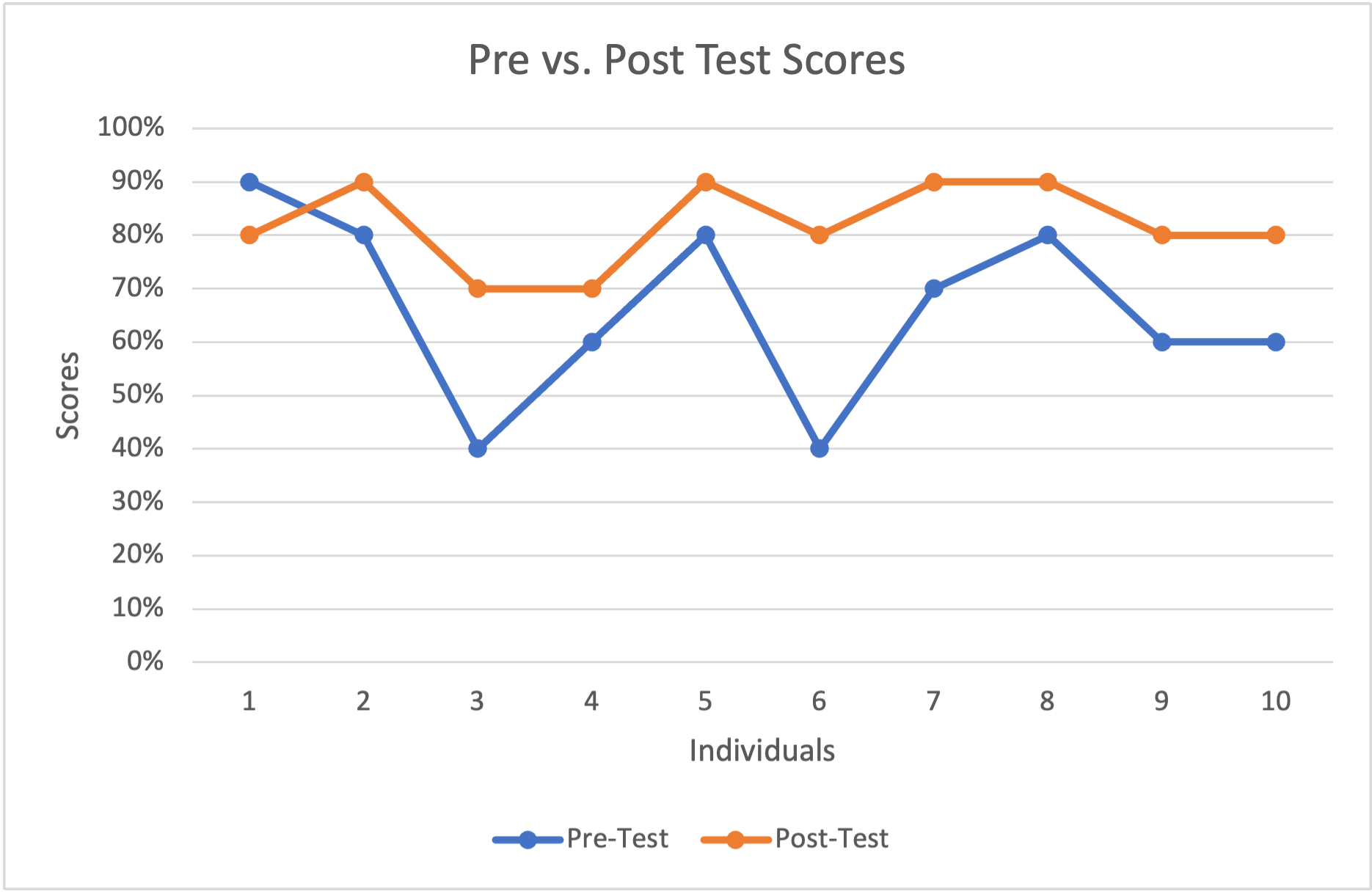 Pre vs. Post Test Module Completion Scores
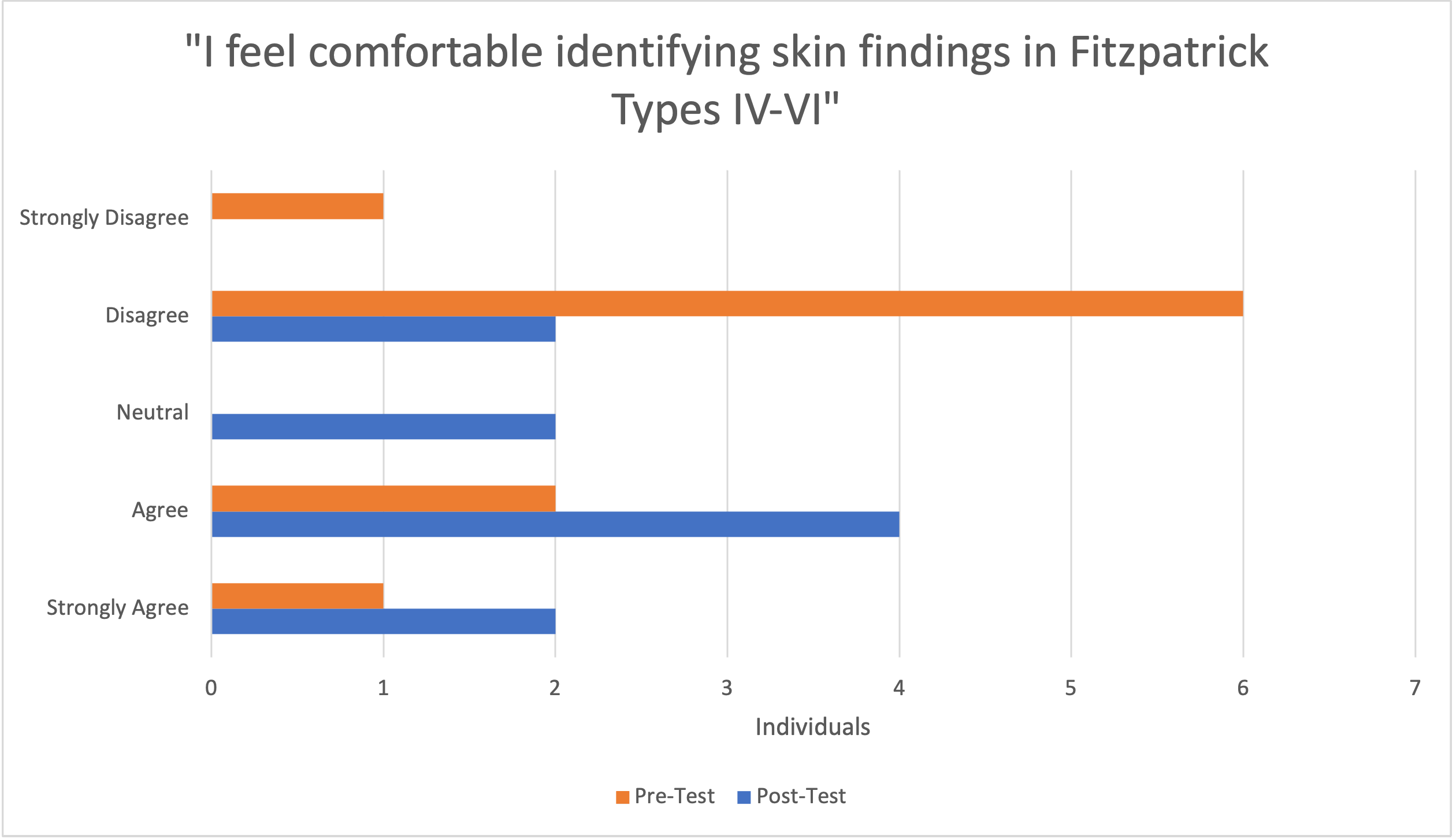 Pre vs. Post Test comfort level scores with identifying skin findings in Fitzpatrick types IV-VI
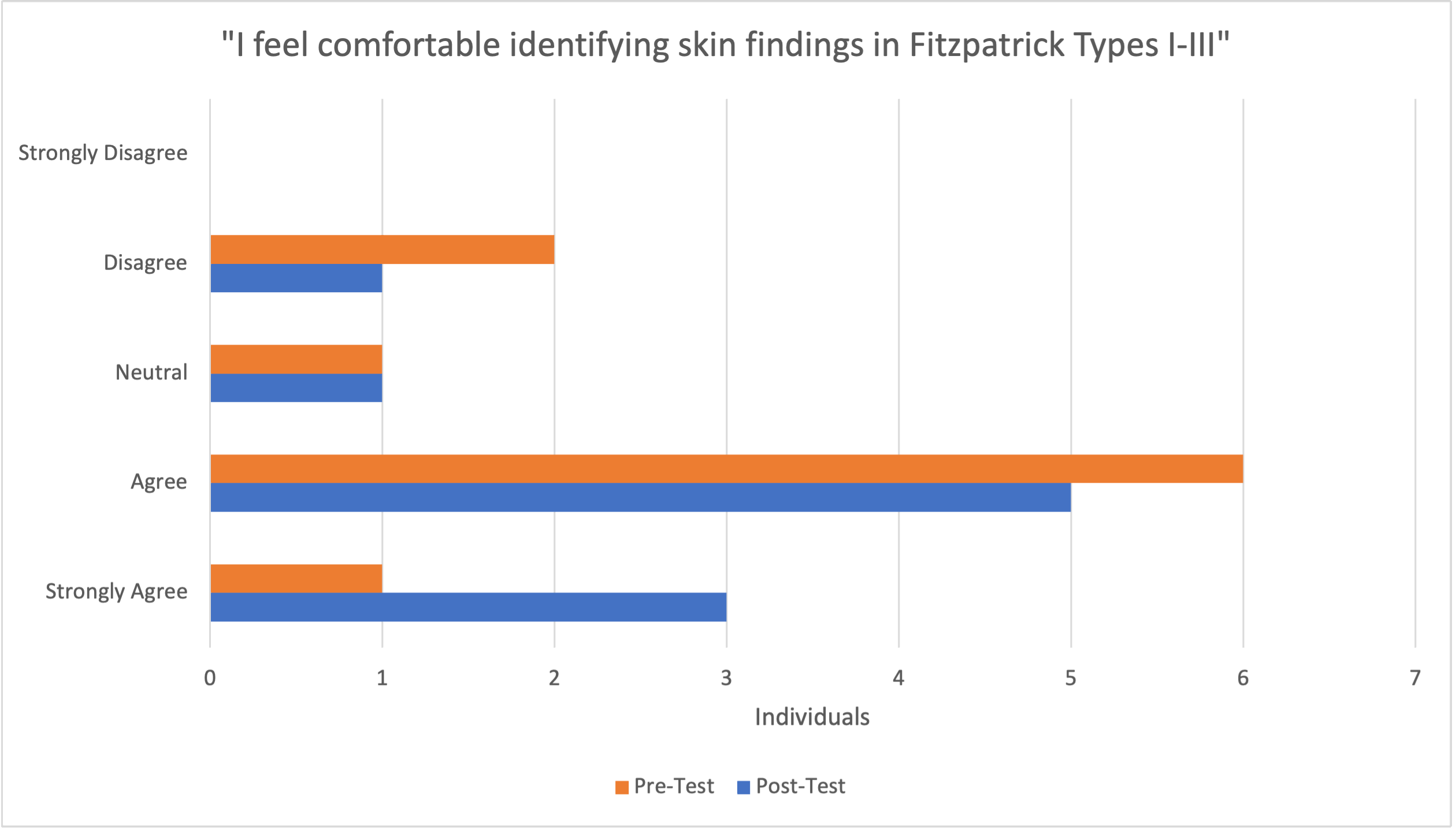 Pre vs. Post Test comfort level scores with identifying skin findings in Fitzpatrick types I-III
To cite this abstract in AMA style:
Masood M, Nutan F, Nunley J, Rubinstein B. Implementation of a Dermatologic Manifestations of Connective Tissue Disease Learning Module Including All Skin Tones and Social Determinants of Health for Medical Students: A Pilot Study [abstract]. Arthritis Rheumatol. 2021; 73 (suppl 9). https://acrabstracts.org/abstract/implementation-of-a-dermatologic-manifestations-of-connective-tissue-disease-learning-module-including-all-skin-tones-and-social-determinants-of-health-for-medical-students-a-pilot-study/. Accessed .« Back to ACR Convergence 2021
ACR Meeting Abstracts - https://acrabstracts.org/abstract/implementation-of-a-dermatologic-manifestations-of-connective-tissue-disease-learning-module-including-all-skin-tones-and-social-determinants-of-health-for-medical-students-a-pilot-study/