
Session Information
Session Type: Poster Session A
Session Time: 10:30AM-12:30PM
Background/Purpose: Systemic vasculitides comprise a group of inflammatory diseases involving multiple organ systems, significantly affecting various aspects of a patient’s life, including their sexuality. Sexual function is often overlooked during consultation, leading to its undervaluation. Both systemic and vascular inflammation cause tissue damage, impacting sexual function in both women and men. The aim of this study was to evaluate factors associated with sexual dysfunction in patients with different types of systemic vasculitides.
Methods: A cross-sectional study was conducted at two centers in Latin America (Mexico and Peru), including patients with systemic vasculitis (Takayasu’s arteritis, polyarteritis nodosa, granulomatosis with polyangiitis [GPA], microscopic polyangiitis [MPA], eosinophilic granulomatosis with polyangiitis, or IgA vasculitis) from October 2023 to May 2024. Demographic and disease-specific variables, comorbidities, and immunosuppressant doses were collected. Global assessments of the patient (PtGA) and physician (PhGA) were performed on scales from 0 to 100. Disease activity was evaluated using the Birmingham Vasculitis Activity Score version 3 (BVAS v.3) or definitions from the European League Against Rheumatism, and damage was assessed using the Vasculitis Damage Index (VDI). Sexual function was evaluated using the Spanish version of the Changes in Sexual Functioning Questionnaire Short-Form (CSFQ-14), which assesses various domains associated with sexuality. Sexual dysfunction was defined by a score ≤41 points in women and ≤47 points in men.
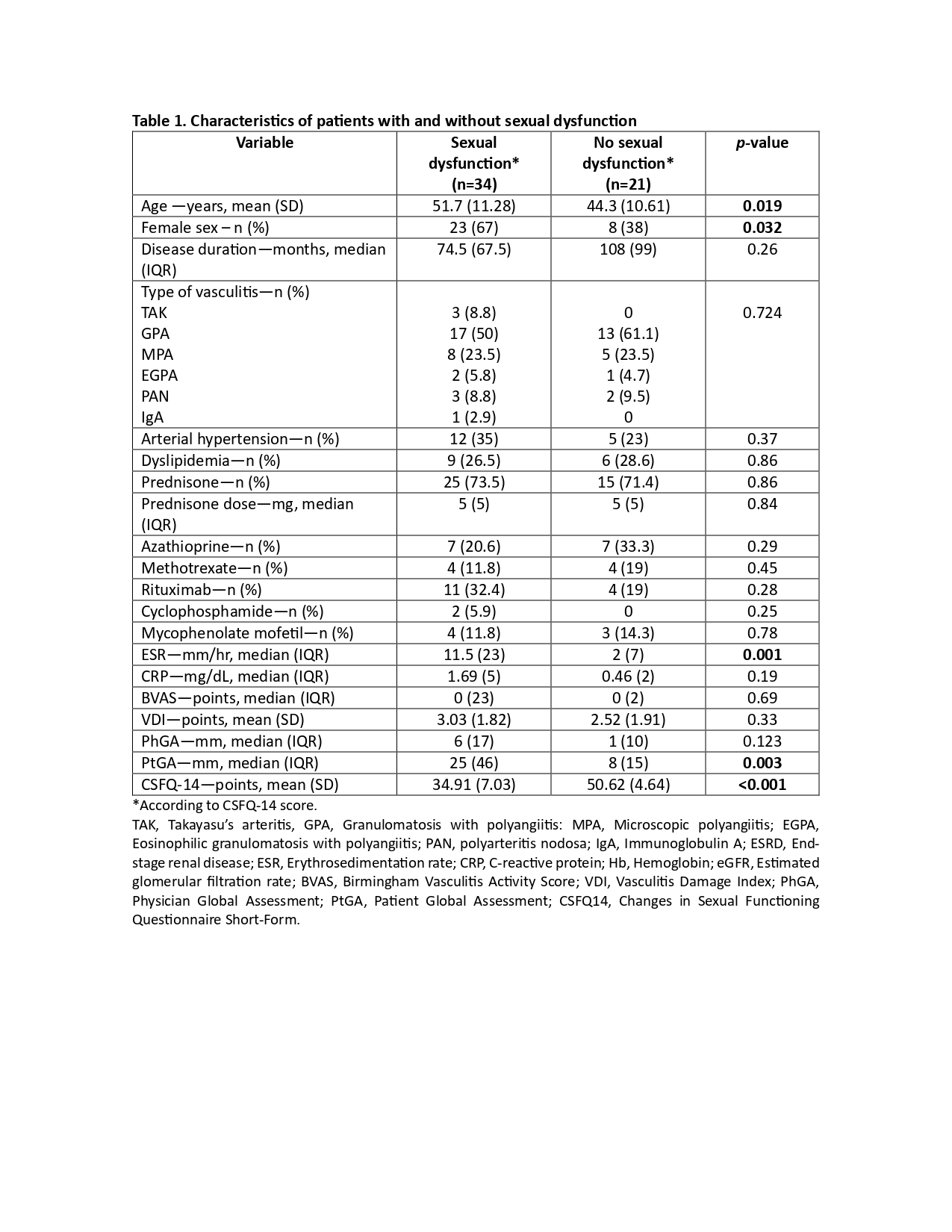
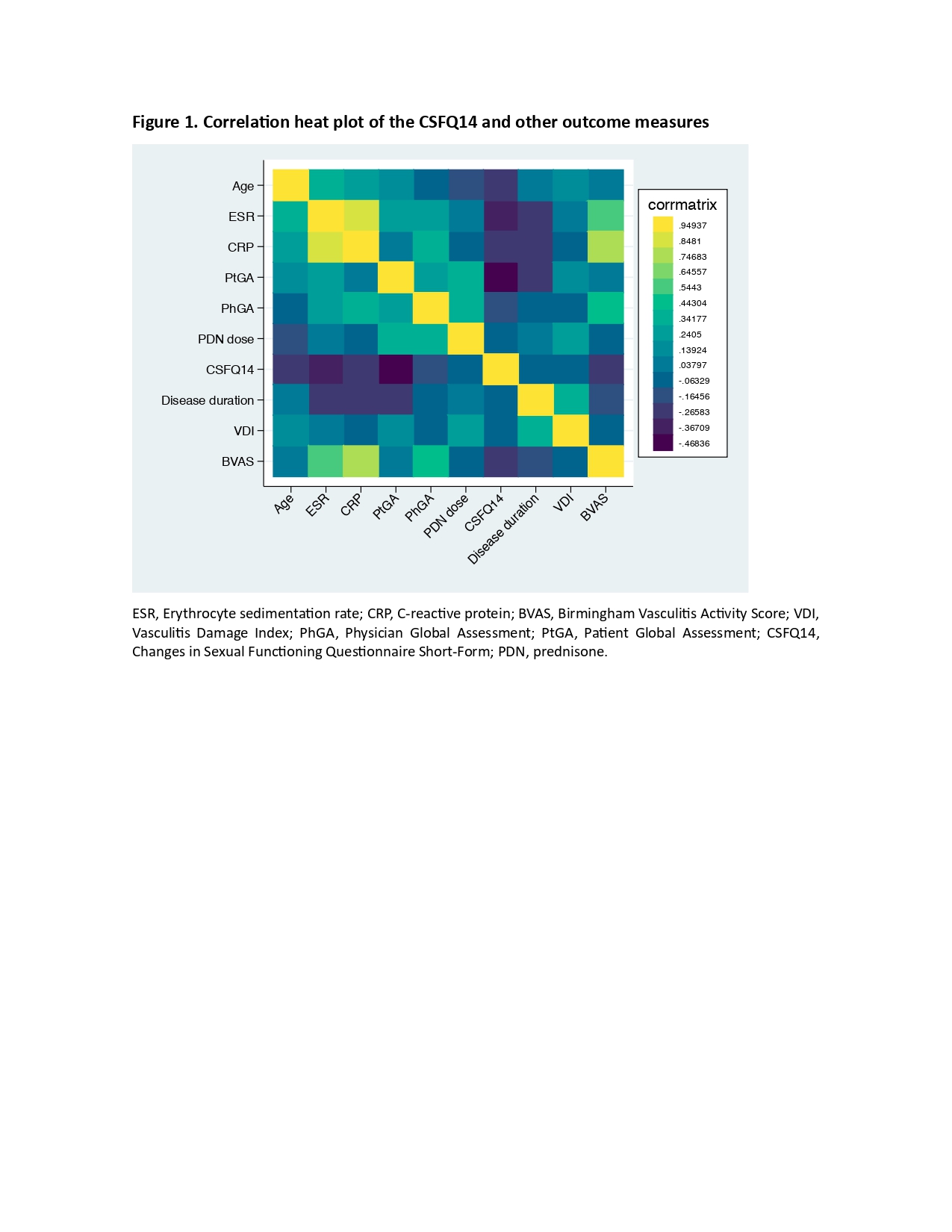
Results: Fifty-five patients were included; 56% were women, with a mean age of 48.93 years (±11.5). The most common vasculitis was GPA (55% of patients), followed by MPA (24% of patients). The mean CSFQ-14 score was 40.91, with 62% of patients experiencing some degree of sexual dysfunction. Table 1 summarizes the characteristics of the patients with and without sexual dysfunction. The median PtGA was 13 (range 0-100, IQR 48), and the median PhGA was 4 (range 0-68, IQR 15). There was no association between VDI or activity scores and the presence of sexual dysfunction. Interestingly, the PtGA (-0.569, p< 0.001), the PhGA (-0.418, p=0.002), and the erythrocyte sedimentation rate (-0.37, p=0.01) negatively correlated with the CSFQ-14 score. Figure 1 displays the correlations of the CSFQ-14 score with other variables. After multivariate analysis, the only variables associated with sexual function according to the CSFQ-14 score were age (Exp B 1.076, 95% CI 1.004-1.154) and female sex (Exp B 4.76, 95% CI 1.006-22.56).
Conclusion: Sexual function is a critical but often overlooked aspect of patient care in systemic vasculitides. Despite the significant prevalence of sexual dysfunction among these patients, no direct correlation was found between specific disease parameters (activity and damage) and sexual function. Our study highlights the need for rheumatologists to proactively address sexual health during consultations as an integral component of patient well-being.
To cite this abstract in AMA style:
Merayo Chalico j, Mulia-Soto A, Espinosa-León M, Pimentel-Quiroz V, Barrera-Vargas A, Hinojosa-Azaola A. Impact of Systemic Vasculitides on Sexual Function: An Overlooked Aspect of Patient Care [abstract]. Arthritis Rheumatol. 2024; 76 (suppl 9). https://acrabstracts.org/abstract/impact-of-systemic-vasculitides-on-sexual-function-an-overlooked-aspect-of-patient-care/. Accessed .« Back to ACR Convergence 2024
ACR Meeting Abstracts - https://acrabstracts.org/abstract/impact-of-systemic-vasculitides-on-sexual-function-an-overlooked-aspect-of-patient-care/