
Session Information
Date: Saturday, November 7, 2020
Session Type: Poster Session B
Session Time: 9:00AM-11:00AM
Background/Purpose: This study aimed to estimate the extent to which gout associated genetic variants are associated with the presence/absence of common comorbidities in gout patients of the UK Biobank cohort. Previous studies have shown that the odds-ratios of comorbidities tend to be higher among women in comparison to men (Dirken-Heukensfeldt et al., 2010; Zhu et al., 2012).
Methods: The total cohort size for this study was 332,360 (mean [SD] age was 57.1 [7.9] years old; 48% male). Common gout comorbidities (hypertension, type 2 diabetes, obesity, dyslipidemia, chronic kidney disease (CKD), liver disease, coronary heart disease, heart failure, cerebrovascular disease and sleep apnea) were defined using self-report data, ICD-10 codes, medications and measured biomarkers/metrics.
Each comorbidity was tested for association with gout using generalized linear models, adjusted for age and sex, and in sex-specific models, adjusted for age.
Variant genotypes from 12 genome-wide significant gout loci (from the UK Biobank) were used to calculate an effect size weighted gout genetic risk score (GRS). The GRS was tested for association, using a generalized linear model, with the presence of any comorbidity within the gout cohort (N = 7,131), adjusting for age and sex. Each variant was also tested separately.
Results: The prevalence of comorbidities in the whole cohort ranged from 1.8% (heart failure) to 35.2% (hypertension) (Table 1). All comorbidities were roughly 2-3x as common in gout patients alone relative to the entire cohort, ranging from 6.5% (heart failure) to 69.4% (hypertension) (Table 2). Additionally, we showed that these comorbidities are more prevalent in female gout cases, with all odds ratios showing higher, non-overlapping confidence intervals in females compared to males.
The GRS was confirmed to associate with gout in the entire cohort (OR = 1.73 [95%-CI: 1.69; 1.77], P < 10-300). The GRS associated with a reduced likelihood of having any comorbidity among gout patients (Table 3). This was largely driven by variants at the ABCG2 locus and the ADH1B locus, which associated significantly on their own.
Conclusion: This study showed evidence for a stronger likelihood of comorbidities among female gout cases in comparison to males. We also established that there is a significant contribution of gout genetic risk variants to the presence or absence of any comorbidity in gout patients. Variants at the ABCG2 and ADH1B loci contributed the most to this association, showing significance when modeled alone with presence of any comorbidity. This likely represents the concept of primary versus secondary gout, with a higher genetic risk amongst individuals without comorbidities (primary gout) and a second group of individuals with lower genetic risk but prevalent comorbidities (secondary gout).
 Table 1: Prevalence of comorbidities.
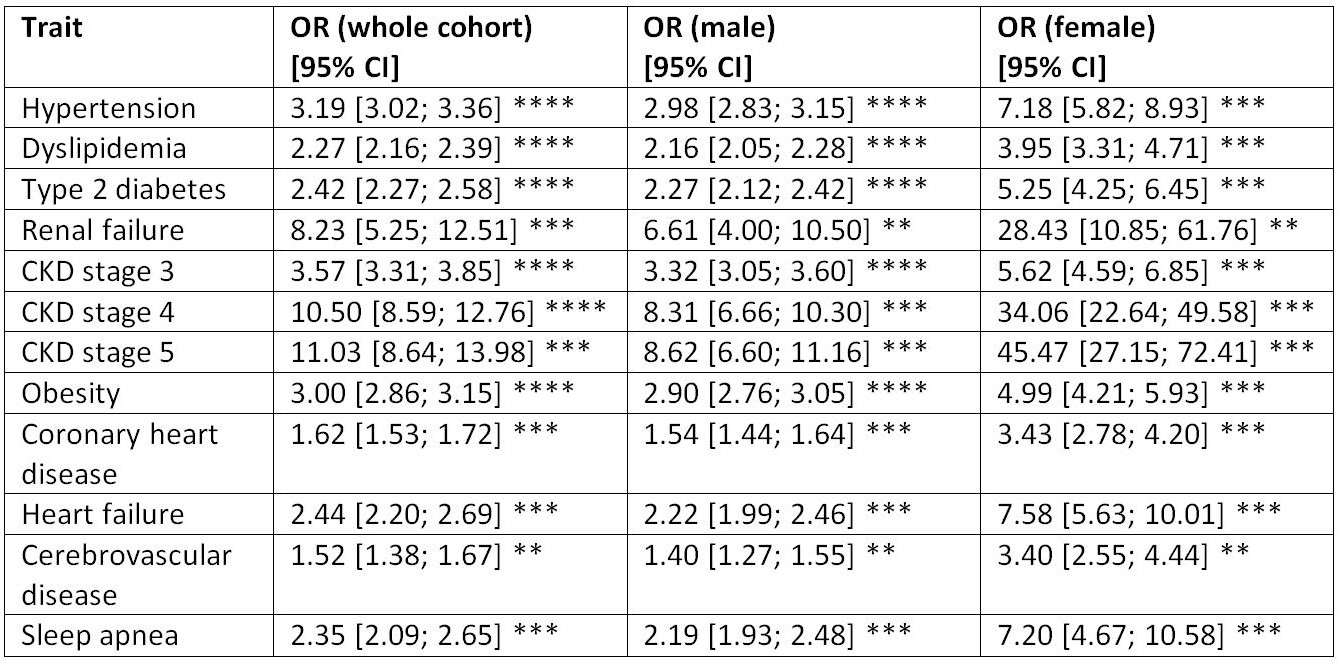 Table 2: Results of generalized linear models for each comorbidity in gout cases vs controls. P-values represented as: * = P < 0.05, ** = P < 0.001, *** = P < 10-20, **** = P < 10-100.
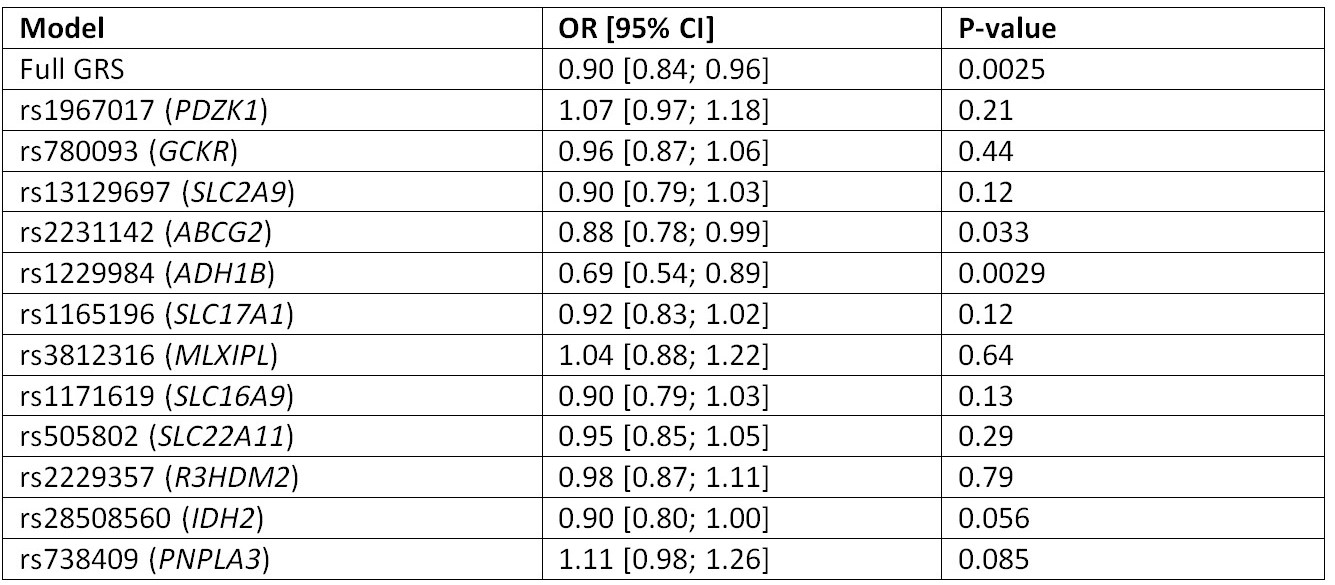 Table 3: Genetic analysis of the presence of any comorbidity among gout patients.
To cite this abstract in AMA style:
Sumpter N, Cadzow M, So A, Reynolds R, Merriman T. Analysis of Common Gout Comorbidities in the UK Biobank Cohort Reveals Sex-Specific Effects and Genetic Differentiation [abstract]. Arthritis Rheumatol. 2020; 72 (suppl 10). https://acrabstracts.org/abstract/analysis-of-common-gout-comorbidities-in-the-uk-biobank-cohort-reveals-sex-specific-effects-and-genetic-differentiation/. Accessed .ACR Meeting Abstracts - https://acrabstracts.org/abstract/analysis-of-common-gout-comorbidities-in-the-uk-biobank-cohort-reveals-sex-specific-effects-and-genetic-differentiation/