
Session Information
Session Type: Poster Session A
Session Time: 10:30AM-12:30PM
Background/Purpose: Chronic nonbacterial osteomyelitis (CNO) is an autoinflammatory bone disease in which osteoclastogenesis may play a critical role. Cytotoxic T-lymphocyte-associated protein 4 (CTLA-4) was shown to inhibit increased osteoclastogenesis derived from peripheral blood mononuclear cells (PBMCs) in adults with active rheumatoid arthritis. Our objectives were to determine: 1) whether osteoclastogenesis is altered in PBMCs, 2) the effect of serum and CTLA-4 analog, abatacept, on osteoclastogenesis, 3) serum concentrations of receptor activator of nuclear factor kappa beta ligand (RANKL) and osteoprotegerin (OPG), from children with CNO.
Methods: Patients with CNO, inactive juvenile idiopathic arthritis (JIA), or healthy controls were enrolled in Seattle Children’s Hospital (Study 624, 14426). ELISA kits were used to measure the serum concentration of RANKL and OPG. Serum samples at 0.001, 0.01, and 0.1 of total volume were incubated with negatively selected CD14+ monocytes isolated from commercially sourced, pooled healthy-donor PBMCs. Cells were incubated with macrophage colony-stimulating factor (MCSF) and RANKL for 7 days with twice a week media exchange. Tartrate resistant acid phosphatase (TRAP) and 4′,6-diamidino-2-phenylindole (DAPI) staining were performed at 7 days. TRAP positive cells with 3 or more nuclei were counted and compared. PBMC cells from patients were incubated with MCSF and 100 ng/ml RANKL with or without abatacept for 7 days prior to staining. Descriptive statistics were used for demographic and clinical characteristics. Kruskal–Wallis tests or Fisher’s exact tests were used to analyze demographic and clinical characteristics. Log-linear mixed model considering patients nested within block random effects was applied to compare the osteoclast counts across 4 groups of patients and determine the effect of abatacept on osteoclast counts. To compare serum RANKL and OPG levels across the 4 groups, the linear mixed model was used. Dunn’s multiple comparisons test was performed using the Benjamini-Hochberg method. Results were considered significant if p< 0.05.
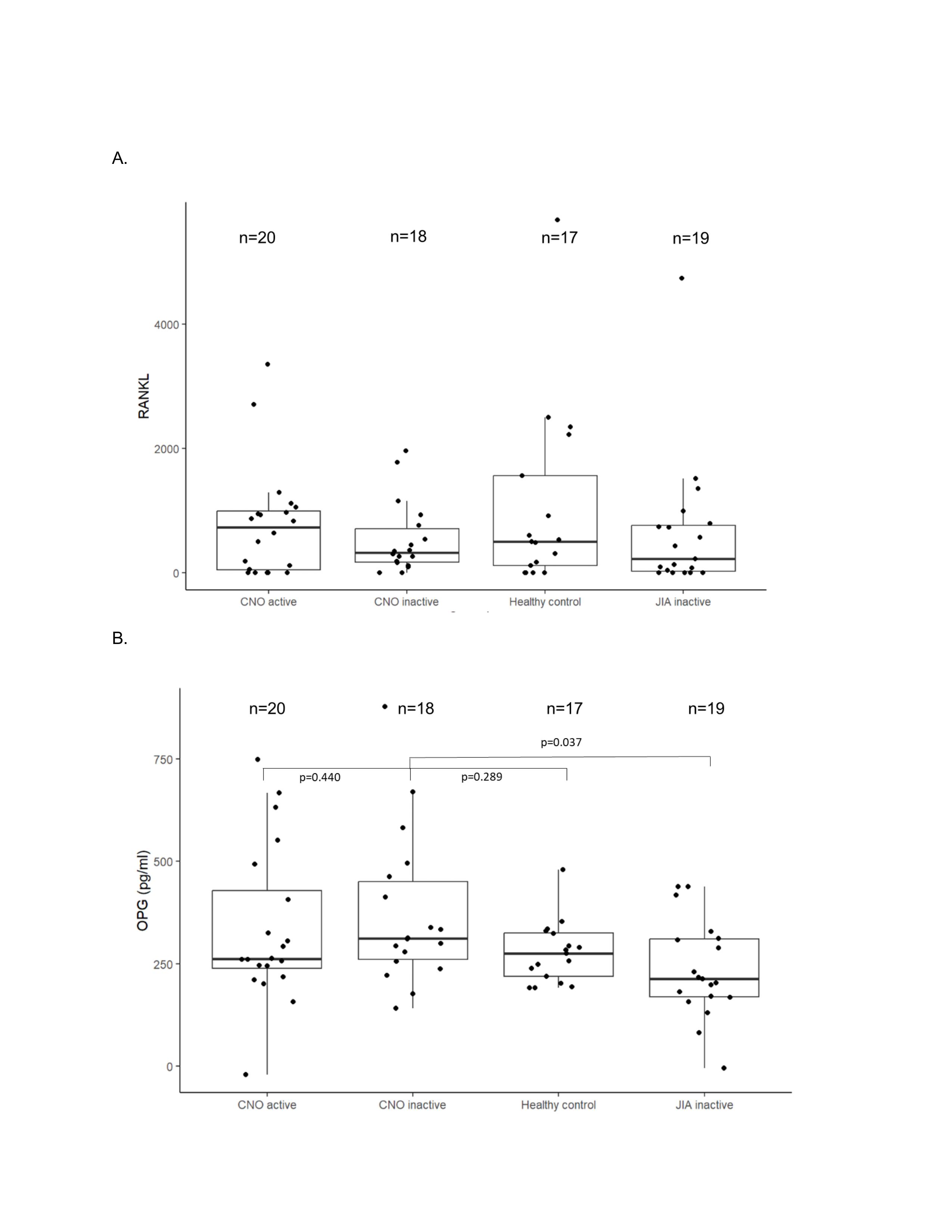
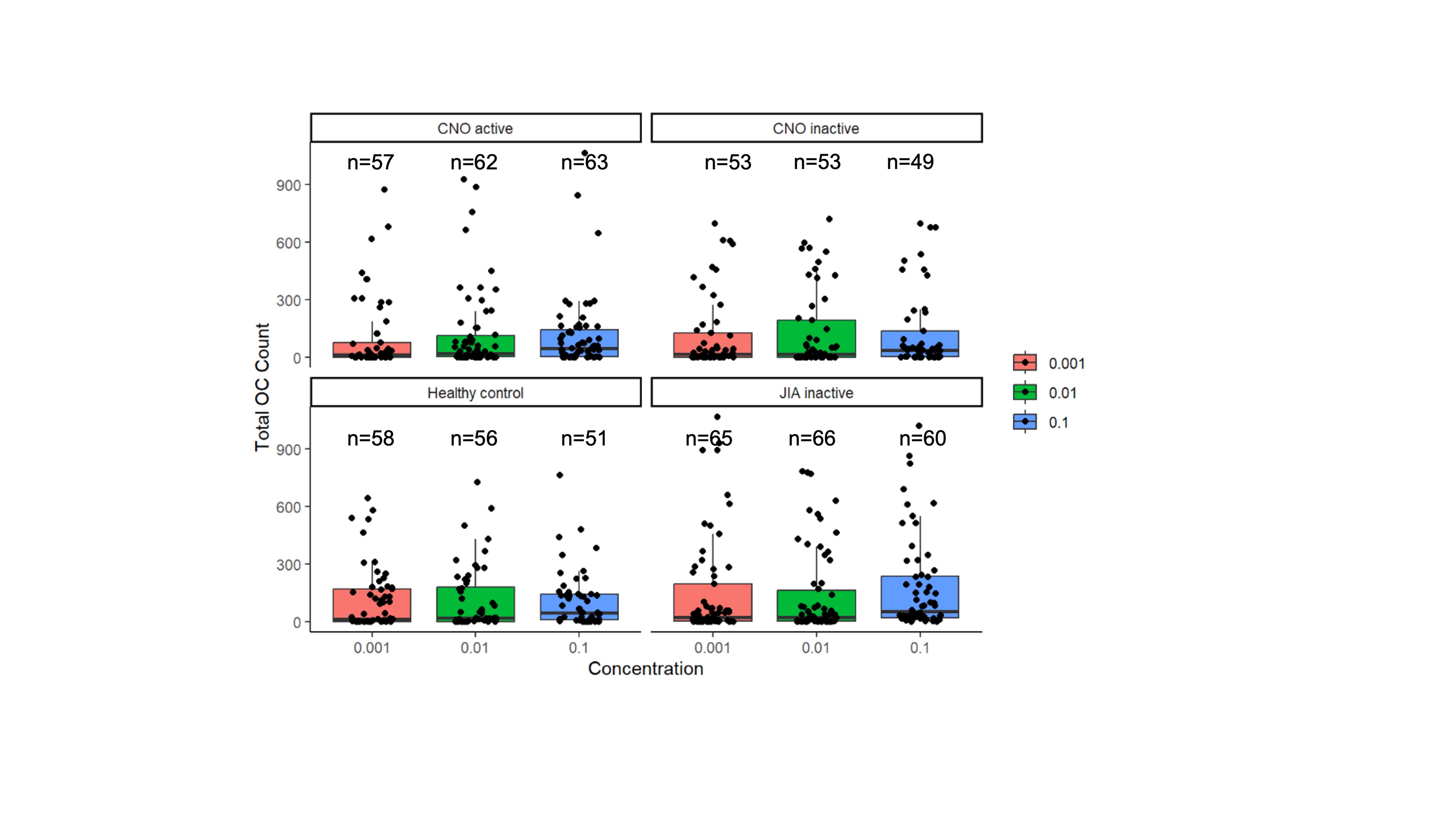
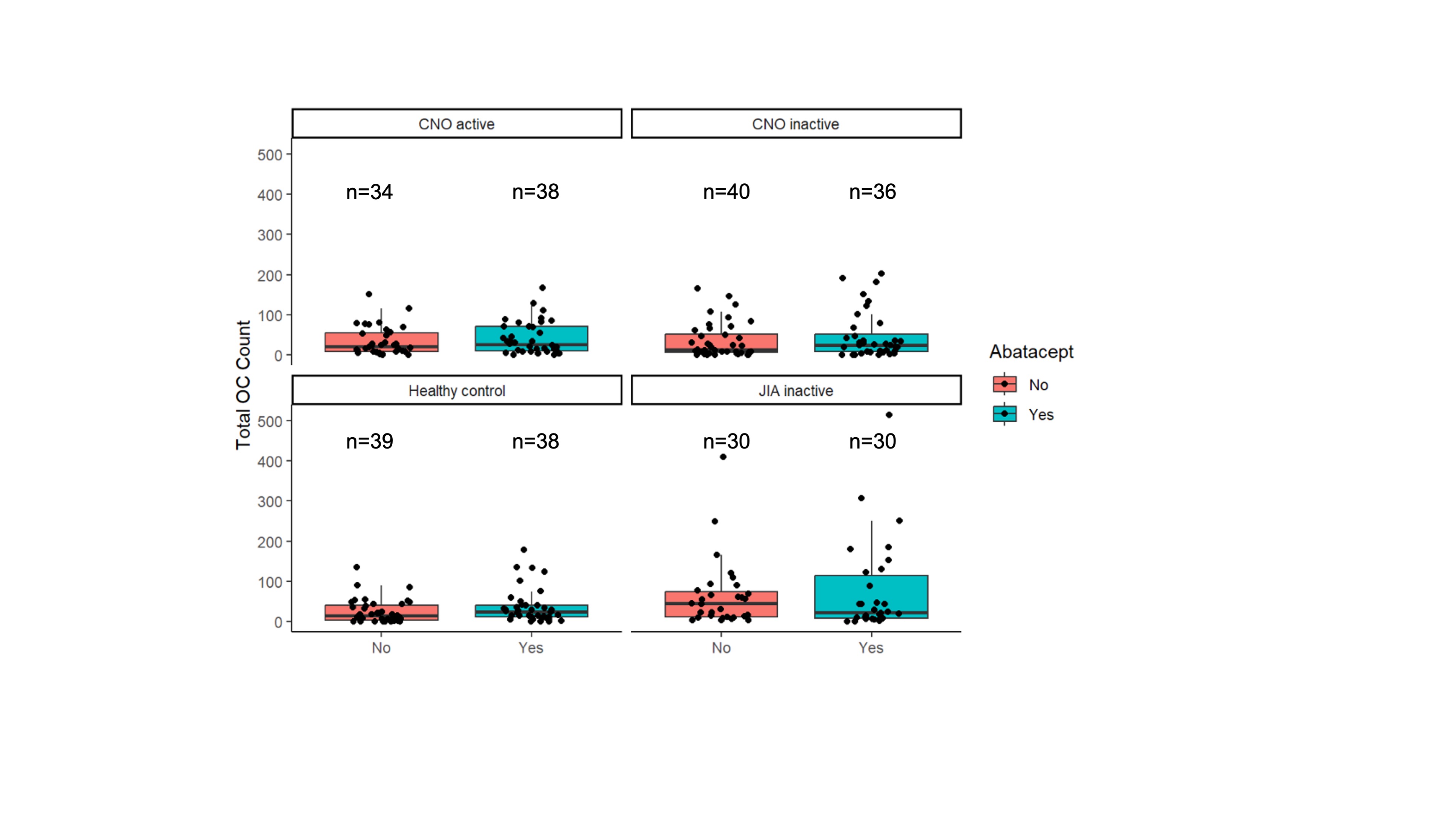
Results: Serum RANKL concentrations were similar across 4 groups while CNO inactive group OPG concentration is significantly higher than that in JIA inactive group (p< 0.05) (Figure 1). No significant difference was seen across CNO active, CNO inactive, JIA inactive, and healthy control groups within the serum study (p=0.10). The highest serum concentration was associated with more osteoclasts compared to the lowest concentration (p=0.007) (Figure 2). Serum from children aged between 7 and 12 was associated with greater osteoclastogenesis than that from older children (p< 0.05). Inactive JIA patients’ PBMCs had significantly greater osteoclastogenesis compared to healthy control (p=0.03) (Figure 3). Abatacept increased osteoclastogenesis (p=0.02). Age and sex did not affect osteoclastogenesis in the serum study.
Conclusion: Neither PBMCs nor the serum from patients with active CNO exerted any promoting effects of osteoclastogenesis compared to healthy control. Surprisingly, abatacept increased osteoclastogenesis in PBMC co-culture study.
To cite this abstract in AMA style:
Bui J, Curry J, Kent J, Danosky P, Sanders K, Paluvayi S, Garcia W, Ruppe A, Cheung M, Saack A, Bao X, Luey A, Kim M, McDaniel E, Chiu A, Ahn S, Park J, Thirunahari S, Wei C, Adriel L, Pham S, Van Den Bogaerde S, Scheck J, Muse I, Klein A, Wang X, Cassat J, Zhao Y. Osteoclastogenesis from Peripheral Blood Mononuclear Cells in Children with Chronic Nonbacterial Osteomyelitis Are Similar to Those from Healthy Children [abstract]. Arthritis Rheumatol. 2024; 76 (suppl 9). https://acrabstracts.org/abstract/osteoclastogenesis-from-peripheral-blood-mononuclear-cells-in-children-with-chronic-nonbacterial-osteomyelitis-are-similar-to-those-from-healthy-children/. Accessed .« Back to ACR Convergence 2024
ACR Meeting Abstracts - https://acrabstracts.org/abstract/osteoclastogenesis-from-peripheral-blood-mononuclear-cells-in-children-with-chronic-nonbacterial-osteomyelitis-are-similar-to-those-from-healthy-children/