
Session Information
Date: Monday, November 18, 2024
Title: SpA Including PsA – Diagnosis, Manifestations, & Outcomes Poster III
Session Type: Poster Session C
Session Time: 10:30AM-12:30PM
Background/Purpose: Psoriatic arthritis (PsA) is a chronic inflammatory disease which significantly impacts quality of life and healthcare costs. However, true US population-level prevalence data is lacking, as existing studies have relied only on clinic-based data or narrow geographic areas. Understanding PsA prevalence at a national level is fundamental for comprehensively assessing the disease burden, identifying populations at high risk for PsA development, and informing critical healthcare policy decisions. The objective of our study was to provide national PsA prevalence estimates and query potential associated factors within the US population using the National Health and Nutrition Examination Survey (NHANES).
Methods: This is a population-based cross-sectional study using the NHANES data from January 2017 to March 2020. The CDC and NCHS advocate for using NHANES data to estimate disease prevalence and, in the recent years, this data has been extensively utilized across numerous medical disciplines. It includes non-institutionalized US participants using a multistage probability design to make it nationally representative. Eligible participants (aged 20 years or more) underwent an in-person interview and a subsequent medical examination conducted by healthcare professionals. PsA was defined based on the participant reporting a diagnosis of PsA by a health care professional. We compared group differences in PsA prevalence using Chi-Squared statistics. All calculations were done on estimated population using the weights provided by NHANES. R version 4.2.0 was used for the analyses.


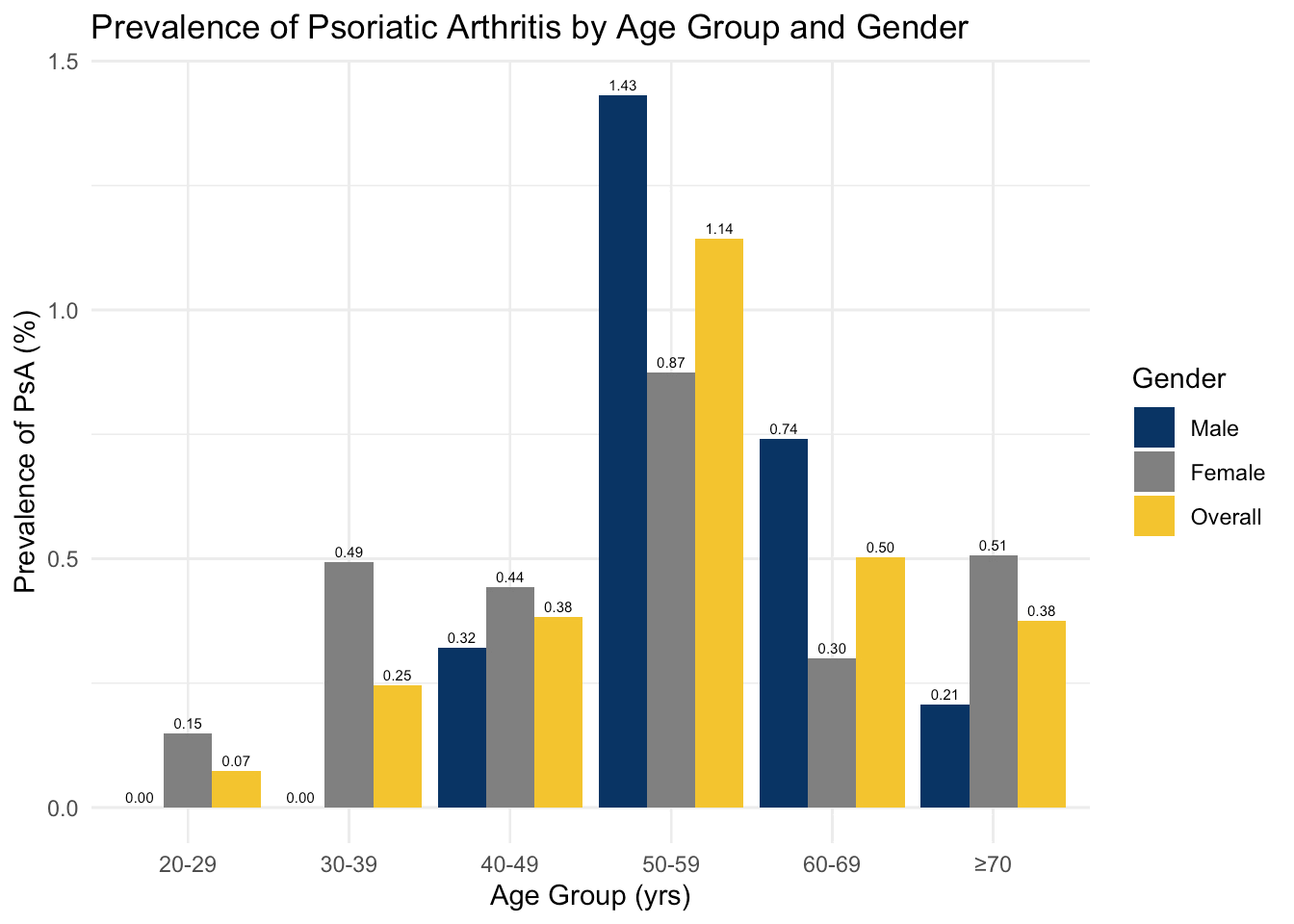
Results: Of the estimated 225,557,413 participants aged 20 years or above, 912,292 adults (0.41%) reported a diagnosis of PsA. Fifty-two percent were women, and majority were White (66%) (Table 1). There were no differences in the prevalence of PsA based on race, income, education, and insurance status. The prevalence of PsA increased progressively with age peaking at 50-59 years (1.01%), with a decrease in prevalence after age 60, p = 0.04. (Table 2, Figure 1).
Conclusion: This population-based cross-sectional study suggests that PsA is a relatively common inflammatory arthritis affecting 0.41% of the US adult population. This is slightly higher compared to the prevalence of PsA in a population-based study from the Olmsted County (predominantly White) of 0.2%. Similar to prior studies, the prevalence of PsA was highest in the age category 50-59 years, with decrease in prevalence in the older population. We did not find any difference in the prevalence of PsA by race, however, nearly double prevalence of psoriasis has been reported in the White population, which could be related to under diagnosis of psoriasis in non-White patient. Limitations include lack of confirmation of PsA diagnosis by a rheumatologist or fulfilment of ClASsification of Psoriatic ARthritis (CASPAR) criteria, however potential underestimation due to only those with a diagnosis of PsA by a health care professional being captured cannot be ruled out. To more accurately estimate PsA prevalence, future NHANES research efforts may consider PsA screening questionnaires for psoriasis patients and an in-person rheumatologist examination.
To cite this abstract in AMA style:
Poudel D, Dhital R, Karmacharya P. National Prevalence of Psoriatic Arthritis in the United States: Data from National Health and Nutrition Examination Survey [NHANES] [abstract]. Arthritis Rheumatol. 2024; 76 (suppl 9). https://acrabstracts.org/abstract/national-prevalence-of-psoriatic-arthritis-in-the-united-states-data-from-national-health-and-nutrition-examination-survey-nhanes/. Accessed .« Back to ACR Convergence 2024
ACR Meeting Abstracts - https://acrabstracts.org/abstract/national-prevalence-of-psoriatic-arthritis-in-the-united-states-data-from-national-health-and-nutrition-examination-survey-nhanes/