
Session Information
Date: Monday, November 18, 2024
Title: SpA Including PsA – Diagnosis, Manifestations, & Outcomes Poster III
Session Type: Poster Session C
Session Time: 10:30AM-12:30PM
Background/Purpose: Despite significant advances in therapeutics over the past two decades, psoriatic arthritis (PsA) remains difficult to treat, with joint outcomes lagging far behind those achieved for skin. Many patients cycle through multiple biologic (b) or targeted synthetic (ts) DMARDs over the course of their disease. Understanding who these recalcitrant patients are remains a gap in knowledge. Here we describe prescribing patterns and characteristics of recalcitrant PsA patients in the NYU Psoriatic Arthritis Center (NYU PAC), a combined psoriasis-PsA center.
Methods: 781 consecutive patients from the NYU PAC were enrolled in an observational, longitudinal registry. Demographics, medical history, medication use, and psoriatic disease phenotype were all collected. Recalcitrant patients were defined as requiring ≥4 b/tsDMARDs.
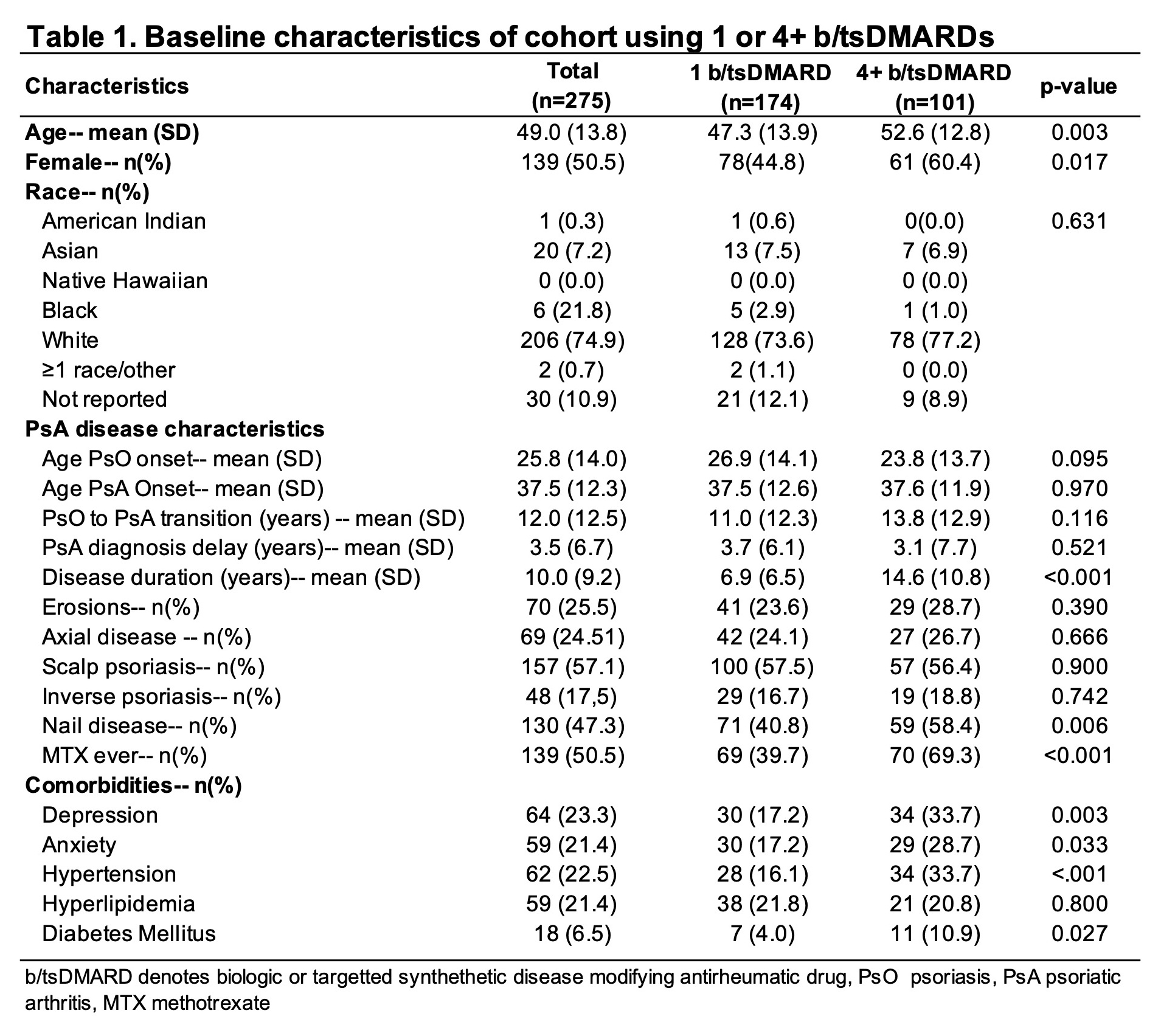
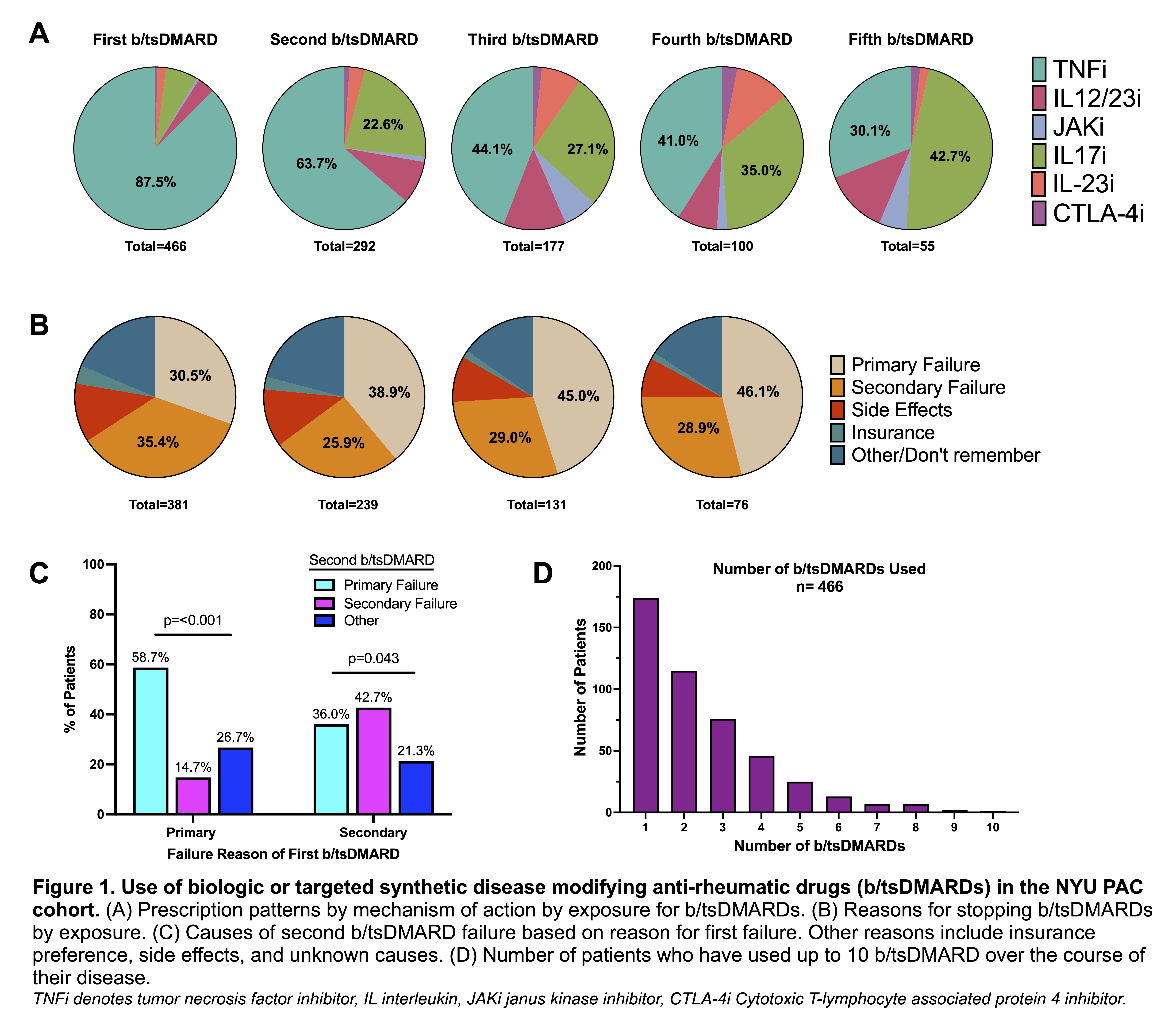
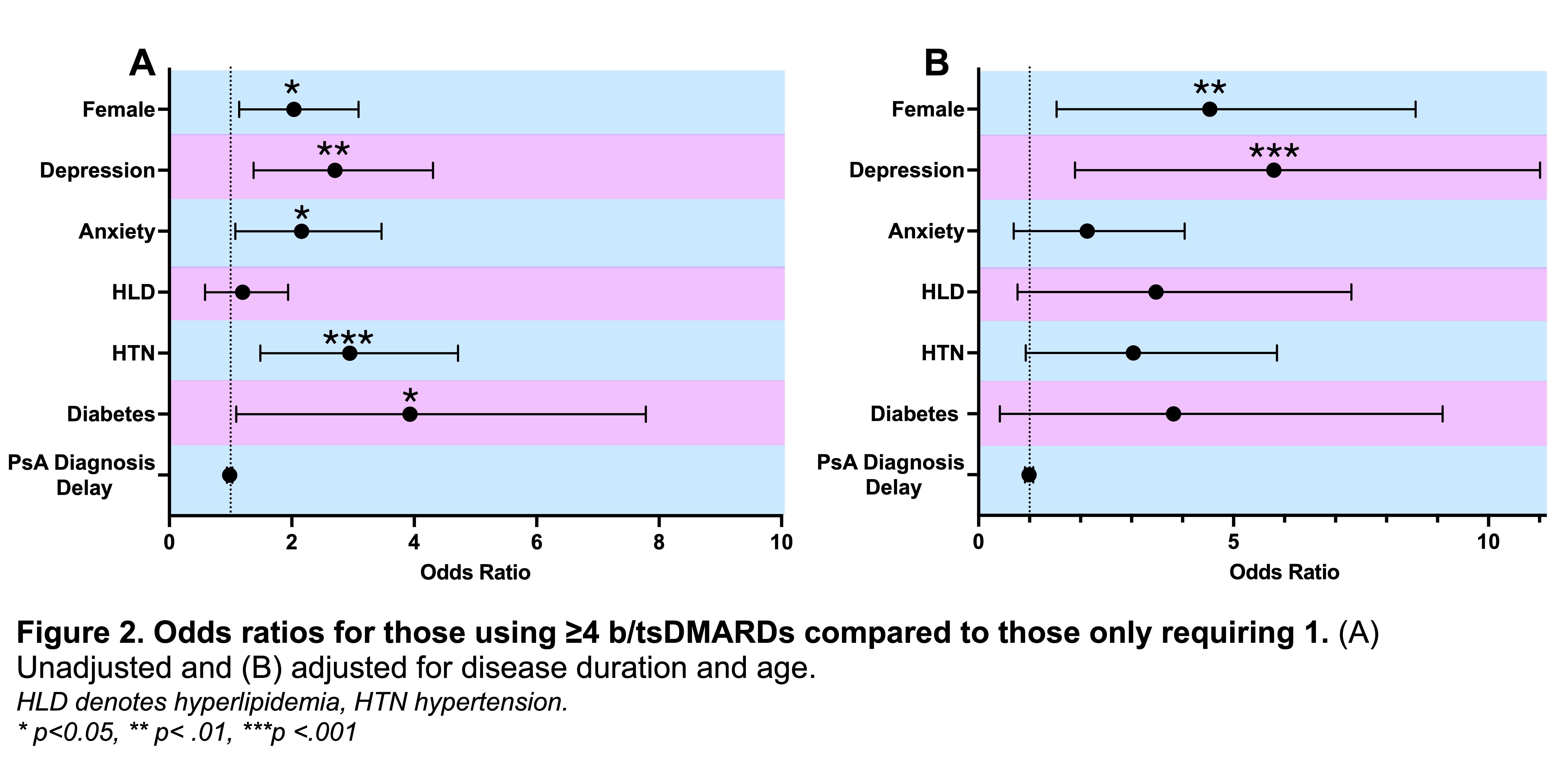
Results: Of the total 781 patients, 466 used at least 1 b/tsDMARD during their disease course. The first b/tsDMARDs prescribed were predominately anti-TNF agents, while IL-17 inhibitors were utilized more frequently with each subsequent drug exposure (Figure 1A). Patients who experienced primary failure with their first b/tsDMARD were more likely to experience primary failure with their second therapy (p< 0.001) and conversely, those with secondary failure were more likely to experience further secondary failure (p=0.04, Figure 1B-C). 101 (21.7%) patients who had been exposed to a b/tsDMARD were on their ≥4 medication (average 2.7 [SD 1.0] mechanisms of action [MoA], Figure 1D). Patients requiring ≥4 b/tsDMARDs throughout their disease, compared to those requiring only 1, were more likely to be female (60.4% v 44.8%, p=0.02), have a longer disease duration (14.6 v 6.9 years, p=< 0.001), and more likely to have comorbidities including depression, anxiety, hypertension, and diabetes (p=0.003, p=0.033, p< 0.001, p= 0.027, Table 1). When adjusting for disease duration, female sex and depression remained risk factors for recalcitrant patients (OR 3.5, 95%CI 1.5-8.6 and OR 4.5, 95%CI 1.9-11.0; Figure 2). While these patients were more likely to have nail disease, there was no difference in presence of axial disease or erosions on imaging.
Conclusion: In this cohort, 59.7% of patients were exposed to at least 1 b/tsDMARD. The most commonly prescribed first line medications were TNFis, likely a reflection of earlier FDA-approval compared to other MoAs. Recalcitrant patients were more likely to be female and have higher rates of comorbidities. Depression and female sex continued to be predictors of 4+ b/tsDMARD use even after adjustment for disease duration and age. Intriguingly, these patients were not prone to more radiographic damage. As patients of female sex or with depression are also more likely to have persistent pain, further work is needed to understand response to therapy and the role that non-inflammatory factors may play in the decision to therapy escalation. Furthermore, this underscores the need for precision medicine strategies and possible non-pharmacologic adjuvant therapies for patients with PsA to improve outcomes and patient quality of life.
To cite this abstract in AMA style:
haberman R, Um S, Howe C, Chen K, Fu B, Felipe A, Eichman S, Coyle M, Lydon E, Neimann A, Reddy S, Adhikari S, Scher J. Mental Health, Sex, and Comorbidities as Determinants of Recalcitrant PsA [abstract]. Arthritis Rheumatol. 2024; 76 (suppl 9). https://acrabstracts.org/abstract/mental-health-sex-and-comorbidities-as-determinants-of-recalcitrant-psa/. Accessed .« Back to ACR Convergence 2024
ACR Meeting Abstracts - https://acrabstracts.org/abstract/mental-health-sex-and-comorbidities-as-determinants-of-recalcitrant-psa/