
Session Information
Date: Monday, November 18, 2024
Title: SLE – Treatment Poster III
Session Type: Poster Session C
Session Time: 10:30AM-12:30PM
Background/Purpose: Systemic lupus erythematosus (SLE) is an autoimmune disorder primarily affecting women with diverse symptoms across multiple organs. Disease activity is assessed using tools like SLEDAI. Genetic mutations and environmental factors, such as UV radiation and infections, contribute to its onset. Autoantibodies, including ANA and anti-dsDNA, lead to immune complex formation and tissue damage. Fatigue is common in SLE and correlates with low vitamin D levels, though the causal relationship is unclear.
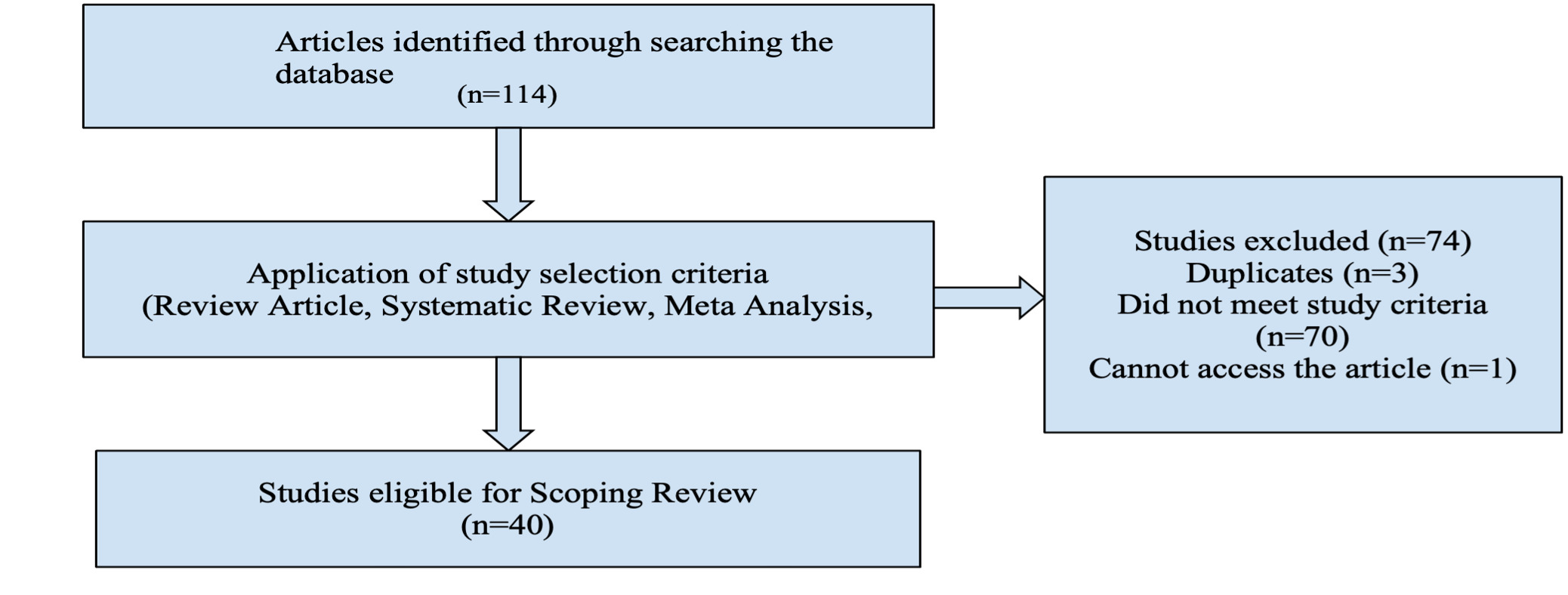
Methods: This scoping review followed the PRISMA guidelines. An electronic search on PubMed was conducted from January 1980 to November 2023 using the string: (SLE OR systemic lupus erythematosus OR lupus OR lupus erythematosus) AND (vitamin D OR Drisdol OR Calciferol OR cholecalciferol OR 1,25-dihydroxycholecalciferol OR ergocalciferol). References from meta-analyses, cohort studies, and review articles were also examined for relevant studies.
Results: The results indicate a significant relationship between vitamin D levels and systemic lupus erythematosus (SLE) disease activity. Low serum vitamin D levels are associated with increased disease activity in SLE patients. Meta-analyses support the potential role of vitamin D supplementation in managing SLE by showing an inverse correlation between vitamin D levels and disease activity. Variations exist across ethnic populations and regions. Vitamin D supplementation appears to benefit SLE, reducing disease scores and improving inflammatory markers. It is generally well-tolerated, even at higher doses, but individual responsiveness varies. Some studies have conflicting findings regarding the impact of vitamin D on disease activity, with long-term supplementation studies showing mixed results. In vitro studies suggest that vitamin D has anti-inflammatory and antiproliferative effects, influencing immune cell polarization and suppressing inflammatory responses. Clinical trials show an increase in regulatory T cells and a decrease in pro-inflammatory cells following vitamin D supplementation in SLE patients. Regarding extramusculoskeletal complications of SLE, such as fatigue and cardiovascular disease, studies have explored the relationship between vitamin D levels and these outcomes. While some studies show an inverse correlation between serum vitamin D levels and fatigue, others have conflicting results. A randomized controlled trial indicates reduced fatigue with vitamin D supplementation in adolescent SLE patients. Additionally, low vitamin D levels are associated with hypertension, hyperlipidemia, and endothelial dysfunction in SLE patients, but causality and the benefits of supplementation require further investigation.
Conclusion: The scoping review explores the relationship between vitamin D and systemic lupus erythematosus (SLE), highlighting thaeprevalence of low vitamin D levels among SLE patients. While evidence suggests a link between vitamin D levels and SLE activity, the efficacy of supplementation is uncertain due to conflicting study results. The impact on extramusculoskeletalsymptoms remains inconclusive, emphasizing the need for more research and caution in clinical applications.
To cite this abstract in AMA style:
Enabi J, Ucar R, Mannem M, Bin Nafisah S. Vitamin-D Effect on SLE- Scoping Review [abstract]. Arthritis Rheumatol. 2024; 76 (suppl 9). https://acrabstracts.org/abstract/vitamin-d-effect-on-sle-scoping-review/. Accessed .« Back to ACR Convergence 2024
ACR Meeting Abstracts - https://acrabstracts.org/abstract/vitamin-d-effect-on-sle-scoping-review/