
Session Information
Session Type: Poster Session A
Session Time: 10:30AM-12:30PM
Background/Purpose: Heavy documentation contributes to clinician workload and burnout. Rheumatology carries one of the highest documentation burdens among Internal Medicine (IM) subspecialties. While recent advances in artificial intelligence (AI) have led to the development of AI scribes that can produce structured clinical notes in real time, little is known about how rheumatologists use these tools. The implementation of AI scribes across a large ambulatory academic health system provided a unique opportunity to compare the adoption, retention, and utilization patterns of AI scribes by rheumatologists compared to other physicians.
Methods: Data from Dec 2024-May 2025 was collected to capture AI scribes use. Ambulatory physicians were eligible to access AI scribes and became “live users” after completing a training; live users became “active users” if they used AI scribes at least once in the preceding 30 days. Provider adoption was defined as the ratio of live users to all eligible providers. Retention was defined as the ratio of active to live users in the preceding 30 days. To assess utilization, live users were categorized based on the percentage of eligible encounters that used AI scribes in the past 30 days: low (< 30%), medium (30–70%), and high ( >70%). Fisher’s exact test was used to compare the proportion of high utilizers between rheumatology vs. IM physicians and rheumatology vs. non-IM physicians. Outcome measures tracked the average weekly time spent on EHR activities per provider, comparing the 90 days prior to the date each physician became a “live user” to the post AI scribes period.
Results: 2477 physicians were eligible to start using AI scribes; by the end of the observation period 888 (37%) had become live users. Adoption by rheumatologists was 41% (12/29) compared to 49% for all other IM physicians (224/455, 15 specialties). Of IM sub-specialties Rheumatology was 10th by adoption rate. Among rheumatologists, retention was 100%, slightly higher than the 94% retention seen across IM. Rheumatology live users used AI scribes for more of their encounters (78%) than any other IM specialty (62%) and non-IM physicians (55%; see Figure 1). Rheumatology had the largest percentage of high utilizers of all IM specialties (83% vs. 52%; see Figure 2). By Fisher’s exact test Rheumatology had a numerically higher but not statistically significant proportion of high utilizers than IM (83% vs. 72%, p=0.5) and a significantly higher proportion than non-IM physicians (83% vs. 42%, p=0.006). Live users from IM specialties and rheumatology decreased mean time spent in all EHR activities, documentation, work outside of work, and patient instructions; rheumatologists had slightly less time savings except in patient instructions (see Figure 3).
Conclusion: Approximately half of rheumatologists adopted AI scribes, emerging as the highest users per encounter among IM subspecialties. Retention was consistently high across all specialties, including rheumatology, underscoring sustained engagement. Rheumatologists enjoyed time savings across all four outcome measures. Future research should investigate the implications of AI scribes on rheumatologist well-being and the patient experience.
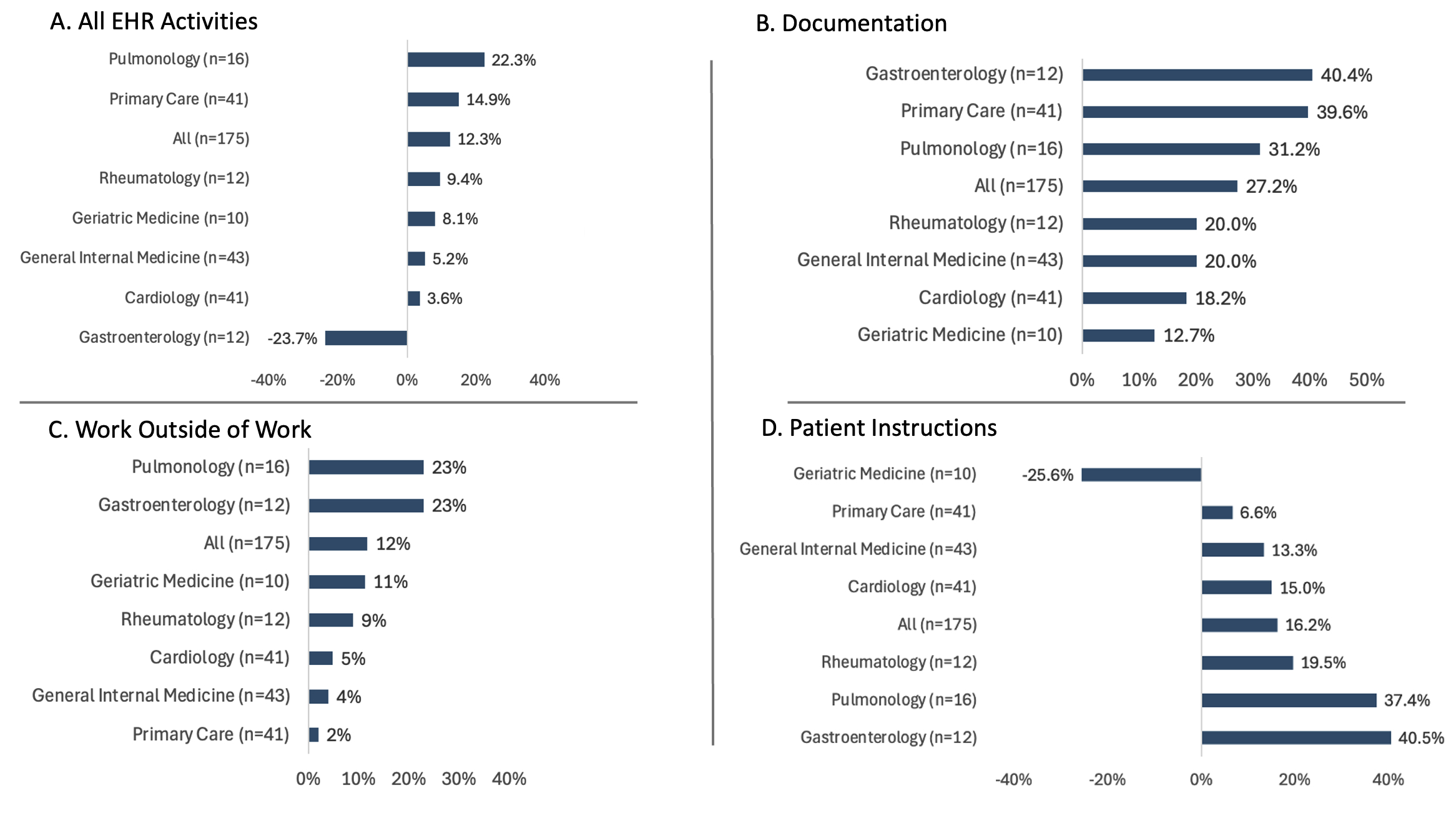 Figure 1. Visit Utilization in in Rheumatology, IM and Non-IM Specialties
.jpg) Figure 2. Top Five IM Specialties by Provider Visit Utilization
Figure 2. Top Five IM Specialties by Provider Visit Utilization
.jpg) Figure 3. Outcomes by IM Specialty
Figure 3. Outcomes by IM Specialty
To cite this abstract in AMA style:
Creasman M, Li J, Garcia-Agundez A, Schmajuk g, Yazdany J. “Try it, you’ll love it”: Patterns of AI Scribes Use Among Rheumatologists [abstract]. Arthritis Rheumatol. 2025; 77 (suppl 9). https://acrabstracts.org/abstract/try-it-youll-love-it-patterns-of-ai-scribes-use-among-rheumatologists/. Accessed .« Back to ACR Convergence 2025
ACR Meeting Abstracts - https://acrabstracts.org/abstract/try-it-youll-love-it-patterns-of-ai-scribes-use-among-rheumatologists/