
Session Information
Date: Tuesday, November 12, 2019
Title: Vasculitis – Non-ANCA-Associated & Related Disorders Poster III: Giant Cell Arteritis
Session Type: Poster Session (Tuesday)
Session Time: 9:00AM-11:00AM
Background/Purpose: For patients with giant cell arteritis (GCA) and/or polymyalgia rheumatica (PMR), glucocorticoids are the mainstay of treatment. However, due to the chronic nature of these diseases, patients may require continued glucocorticoid treatment to achieve treatment targets or prevent disease relapse, over time resulting in high cumulative doses and associated adverse events. The purpose of this study was to assess patterns of glucocorticoid use and outcomes in patients with GCA, PMR or both.
Methods: This retrospective cohort study used electronic medical records from a single US community-based rheumatology clinic utilizing the JointMan rheumatology software application. Patients age ≥ 50 years with a diagnosis of either GCA or PMR and ≥ 1 entry for glucocorticoid following the diagnosis were included and followed until lost to follow-up or the end of the study period (30 Nov 2017). The index date was defined as the date of first glucocorticoid prescription received at or after the earliest GCA or PMR diagnosis date. Outcomes at 2 years included the proportion of patients achieving remission (defined as not receiving steroids for ≥ 6 months), time to remission, persistence of remission (defined as not receiving steroids for ≥ 6 months and still not receiving steroids at 2 years) and prednisone dose at follow-up, and were compared between patients with GCA only, PMR only or both GCA and PMR. P values are reported using F-test (ANOVA) for continuous variables and Chi-squared test for categorical variables.
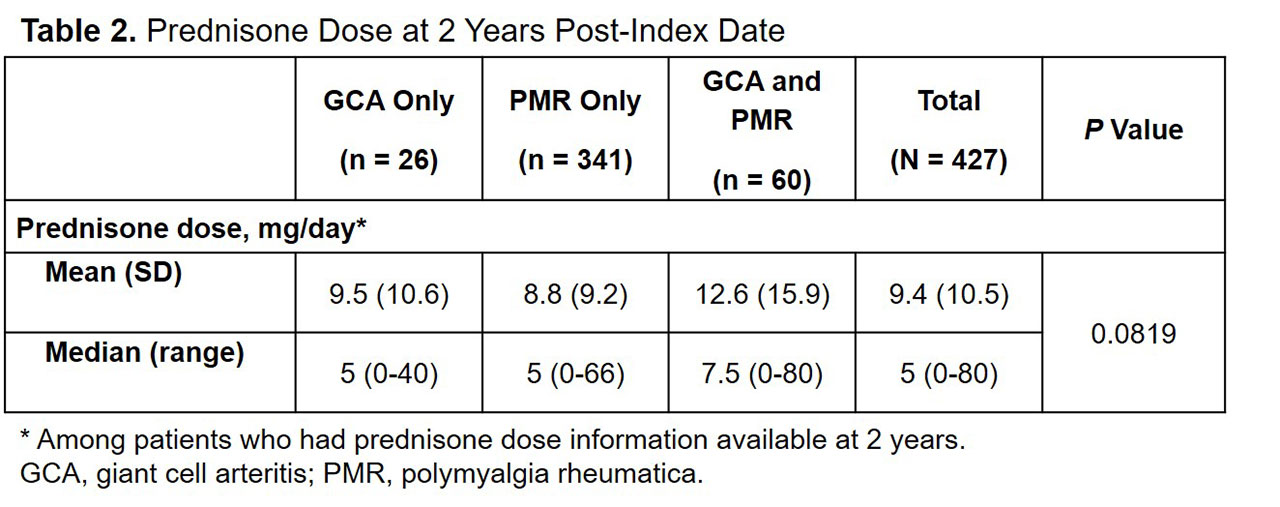
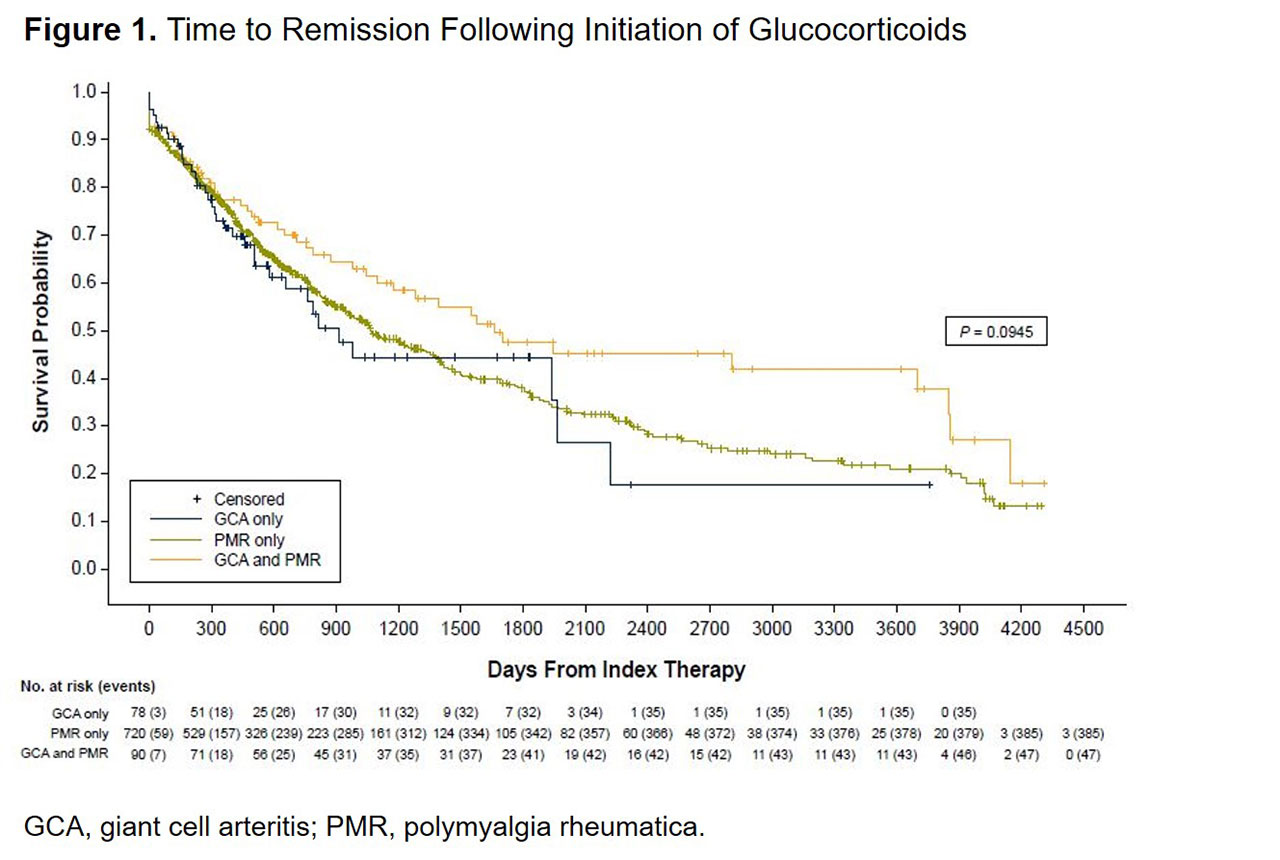
Results: We identified 81 patients with GCA only, 779 with PMR only and 97 with GCA and PMR. Mean (SD) age was 70.0 (9.1) years; 64.2% were women. Mean (SD) daily prednisone dose at the index date was 46.7 (30.9) mg for patients with GCA only, 20.1 (14.2) for PMR only and 29.0 (23.4) for patients with both GCA and PMR. Two years after the index date, 32% of patients with GCA only, 32% with PMR only and 27% with GCA and PMR had achieved remission; 17%, 23% and 18% were in persistent remission, respectively (Table 1), with no significant differences between groups. Among patients who achieved remission, overall median time to first remission was 202.5 (0-635) days and was shorter for patients with both GCA and PMR (157 [0-619] days) vs GCA (213 [0-577] days) or PMR (203.5 [0-635] days) only. Kaplan-Meier estimates of time to remission for each group are shown (Figure 1). Most patients required a daily prednisone dose at 2 years, with similar doses observed between groups (Table 2).
Conclusion: Patients with either GCA and/or PMR are exposed to significant doses of prednisone. In this study, fewer than one-third of patients with GCA and/or PMR achieved remission; the majority of patients continued to require prednisone therapy for at least 2 years after its initiation. These data highlight the need for the use of more efficacious and steroid-sparing therapies in patients with GCA and/or PMR.
Acknowledgements: This study was funded by Genentech, Inc. Support for third-party writing assistance, furnished by Health Interactions, Inc, was provided by Genentech, Inc.

To cite this abstract in AMA style:
Craig G, Knapp K, Salim B, Mohan S, Michalska M. Treatment Patterns, Disease Burden and Outcomes in Patients with Giant Cell Arteritis and Polymyalgia Rheumatica [abstract]. Arthritis Rheumatol. 2019; 71 (suppl 10). https://acrabstracts.org/abstract/treatment-patterns-disease-burden-and-outcomes-in-patients-with-giant-cell-arteritis-and-polymyalgia-rheumatica/. Accessed .« Back to 2019 ACR/ARP Annual Meeting
ACR Meeting Abstracts - https://acrabstracts.org/abstract/treatment-patterns-disease-burden-and-outcomes-in-patients-with-giant-cell-arteritis-and-polymyalgia-rheumatica/