
Session Information
Session Type: Poster Session B
Session Time: 10:30AM-12:30PM
Background/Purpose: Adolescents and young adults (AYA) with chronic rheumatic disease (RD) often engage in behaviours, such as alcohol consumption, recreational drug use, and sexual activity, that, when combined with their medications and RD, may impact their disease and overall well-being. However, educational resources focused on how these behaviours may affect their disease and interact with their medications are limited. Our study aimed to understand the informational needs of AYA with RD regarding alcohol, recreational drugs and sexual health, and their impact on their disease and medication.
Methods: An online survey co-developed with patient partners was circulated to AYA, 16-22 years old with RD, in rheumatology clinics and through patient-focused social media networks, from August 2023 to June 2024. The survey was split into 3 sections and asked i) how informed AYA felt regarding specific topics about alcohol and drug consumption, and sexual health, ii) how comfortable they felt discussing these topics with their healthcare provider and parents, and iii) how they preferred to receive the information. Responses using a 5-point Likert scale (e.g. very well informed to not informed at all) were summarized using descriptive statistics.
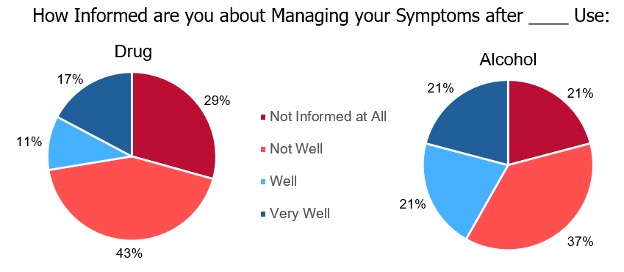
Results: Of 68 respondents, 84% were female, 57% were 16-18 years old, and 63% had JIA. Regarding alcohol and drug use, participants felt poorly informed on how to manage symptoms after drug (73%) and alcohol (59%) consumption (Figure 1), how different types of recreational drugs (69%) and alcohol (57%) interact with medications, the safe time to consume drugs (69%), the safe frequency of drug consumption (66%), and the safe amount of drug consumption (59%). The majority felt well informed regarding the short- and long-term impacts of drugs (58%, 61%) and alcohol (75%, 75%), drug addictions (76%), the safe amount of alcohol consumption (69%), and binge drinking (66%). Concerning sexual health, many AYA felt well informed on sexually transmitted infections (79%), pregnancy (68%), and barrier contraception (60%). Fewer respondents felt informed on considerations when becoming a parent (53%).
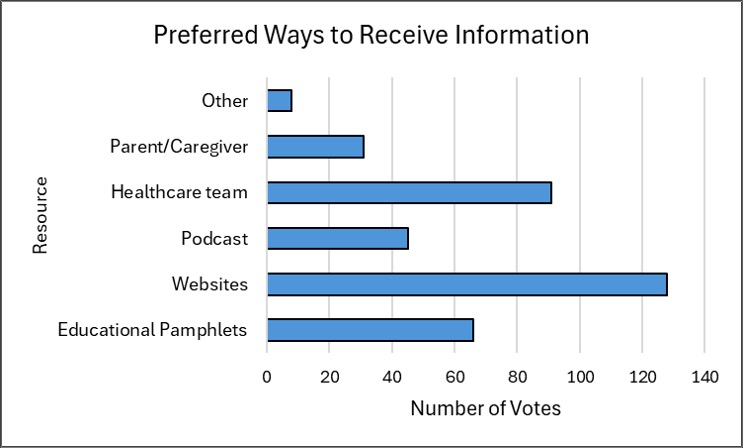
Of 22 topics raised in the survey about drug and alcohol use and sexual health, the majority of AYA wanted more information on 20 (91%) of them. When asked how they would like to receive the information, the top-rated resources were websites, their healthcare team, and educational pamphlets (Figure 2). Most AYA reported feeling comfortable talking to their family and doctor about drug (61%, 69%) and alcohol (85%, 84%) use. However, 54% reported being uncomfortable integrating family and caregivers into conversations about sexual health in the clinic.
Conclusion: Our survey results revealed AYA feel poorly informed about some potentially harmful activities related to their RD and medication. Even in areas where they felt informed, AYA expressed desire for more information. Our next steps include conducting focus groups, to further explore AYA’s preferences for how (e.g., website, videos, pamphlet, etc.), when (e.g., starting age), and how often (e.g., every visit, annually) AYA would like to receive this information.
To cite this abstract in AMA style:
Sholdice M, Pancucci M, gupta g, Heera S, BEATTIE K, Batthish M. Rheuminating About Drugs, Sex, and Alcohol? Assessing the Informational Needs of Adolescents and Young Adults with Rheumatic Disease [abstract]. Arthritis Rheumatol. 2024; 76 (suppl 9). https://acrabstracts.org/abstract/rheuminating-about-drugs-sex-and-alcohol-assessing-the-informational-needs-of-adolescents-and-young-adults-with-rheumatic-disease/. Accessed .« Back to ACR Convergence 2024
ACR Meeting Abstracts - https://acrabstracts.org/abstract/rheuminating-about-drugs-sex-and-alcohol-assessing-the-informational-needs-of-adolescents-and-young-adults-with-rheumatic-disease/