
Session Information
The 2020 Pediatric Rheumatology Symposium, originally scheduled for April 29 – May 2, was postponed due to COVID-19; therefore, abstracts were not presented as scheduled.
Date: Saturday, May 2, 2020
Title: Poster Session 3
Session Type: ACR Abstract Session
Session Time: 4:15PM-5:15PM
Background/Purpose: Substantial risk of early morbidity and mortality exists for patients with childhood-onset systemic lupus erythematosus (cSLE), but there are limited studies identifying predictors of longitudinal disease activity to mitigate this risk. Our objective was to determine patient-level demographic and clinical predictors for follow-up moderate/high disease activity scores in the Childhood Arthritis and Rheumatic Disease Research Alliance (CARRA) Registry. We hypothesized that minority race/ethnicity would be associated with moderate/high disease activity.
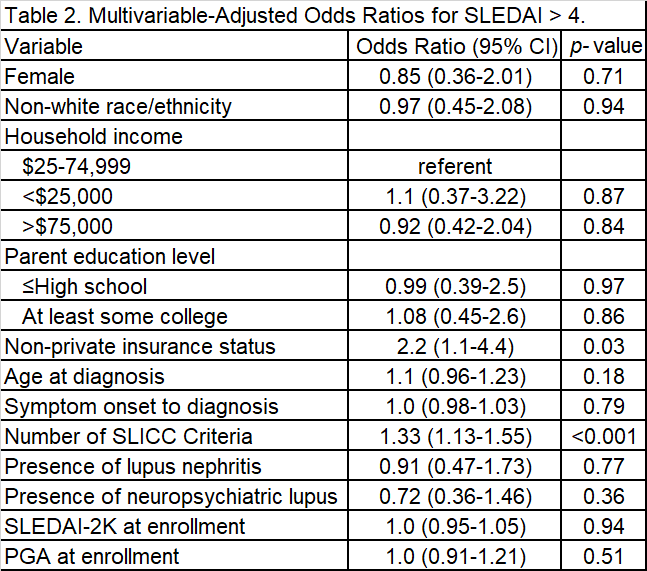
Methods: We performed a retrospective analysis of prospectively collected data from March 2017 to June 2019 in the CARRA Registry. Data was collected every 6 months, and patients with at least two study visits were included. The primary outcome was Systemic Lupus Erythematosus Disease Activity Index 2000 (SLEDAI-2K) at most recent follow-up visit, dichotomized into ≤ 4 (low disease activity) or > 4 (moderate/high disease activity). Predictor variables included sex, race/ethnicity, household income, parental education level, insurance status, age at diagnosis, cumulative number of ACR and SLICC classification criteria, ever presence of lupus nephritis and neuropsychiatric lupus, time between reported symptom onset and diagnosis, SLEDAI-2K at enrollment, and physician global assessment (PGA) of disease activity (0-10) at enrollment. Time from diagnosis to enrollment and time from diagnosis to most recent visit were also collected. Multivariable logistic regression was used to determine predictors for moderate/high disease activity at most recent follow-up visit using SAS v9.4.
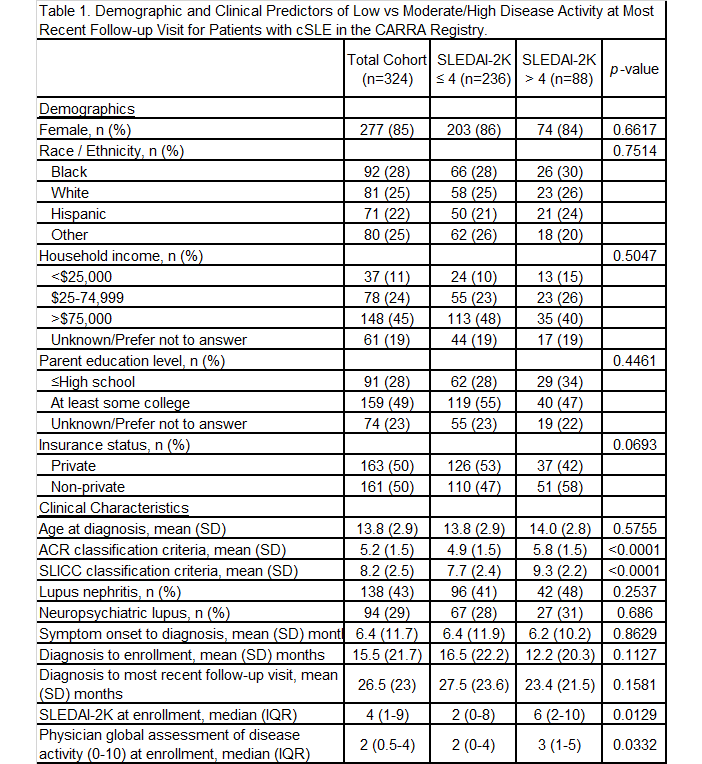
Results: We identified 324 cSLE patients with at least two study visits in the registry (Table 1). The cohort was 85% female, 28% Black, 25% White, and 22% Hispanic with a mean (SD) age at diagnosis of 13.8 (2.9) years. The mean (SD) time from diagnosis to most recent visit was 26.5 (23) months. At the most recent visit, 27% of patients had moderate/high disease activity. Lupus nephritis had been present in 43% and neuropsychiatric lupus in 29%. Statistically significant differences between the low and moderate/high disease activity groups were noted in the number of cumulative ACR and SLICC criteria, SLEDAI-2K at enrollment, and PGA at enrollment (Table 1). In a multivariable logistic regression model, higher number of SLICC criteria (OR=1.3, 95% CI=1.1–1.6, p< 0.001) and non-private insurance status (OR=2.2, 95% CI=1.1–4.4, p=0.03) were independently associated with moderate/high disease activity (Table 2).
Conclusion: This study provides an initial analysis of predictors of cSLE disease activity scores from the longitudinal CARRA Registry. There was a substantial proportion of patients with moderate/high disease activity at their most recent visit. Race/ethnicity was not a significant predictor of SLEDAI-2K but non-private insurance status was significant, suggesting that additional measures of socioeconomic status should be explored in further analyses. In summary, continued investigation is needed to better understand modifiers of disease activity in order to identify targets for intervention and improved outcomes.
To cite this abstract in AMA style:
Smitherman E, Chahine R, Beukelman T, Knight A, Rahman A, Son M, Curtis J, Hersh A. Predictors of Moderate/High Disease Activity in Childhood-Onset Systemic Lupus Erythematosus [abstract]. Arthritis Rheumatol. 2020; 72 (suppl 4). https://acrabstracts.org/abstract/predictors-of-moderate-high-disease-activity-in-childhood-onset-systemic-lupus-erythematosus/. Accessed .« Back to 2020 Pediatric Rheumatology Symposium
ACR Meeting Abstracts - https://acrabstracts.org/abstract/predictors-of-moderate-high-disease-activity-in-childhood-onset-systemic-lupus-erythematosus/