
Session Information
Date: Monday, November 11, 2019
Title: Pediatric Rheumatology – ePoster II: SLE, Juvenile Dermatomyositis, & Scleroderma
Session Type: Poster Session (Monday)
Session Time: 9:00AM-11:00AM
Background/Purpose: Hydroxychloroquine (HCQ) is commonly used in the treatment of autoimmune diseases. However, its use is associated with progressive irreversible retinal damage and vision loss with an estimated overall prevalence of 7.5%. In 2016, the American Academy of Ophthalmology (AAO) published revised recommendations on eye screening for patients receiving HCQ. Only 65% of rheumatology patients receiving HCQ at Nationwide Children’s Hospital (NCH) were screened in concordance with these recommendations. We developed a quality improvement (QI) initiative aiming to increase eye screening compliance in rheumatology clinic patients receiving HCQ from 65% to 85% by December 31, 2018 and to sustain the improvement for 6 months.
Methods: Our baseline analysis included patients receiving HCQ and were followed at NCH rheumatology clinic from 1/01/2017 to 8/31/2017. We formed a multidisciplinary team of rheumatologists, ophthalmologists, a clinical pharmacist, clinic nurses, a quality data technician and administrative staff. We developed consensus eye screening guidelines with risk-level stratification based on the AAO recommendations (Figure 1). A key driver diagram was utilized to identify barriers to compliance and determine possible interventions (Figure 2).
Results: Baseline performance data included 328 patients. Monthly performance assessment included an average of 41 patients on HCQ (range 30-51) (Figure 3). We reached our target of 85% compliance in February 2019 with a shift noticed in September 2018. We identified the following barriers to compliance: 1) Lack of knowledge among providers and patients, 2) Poor accuracy of data reports to reflect the population of interest, and 3) System barriers for interventions that involve another specialty with different locations and EHR systems. Major interventions included: 1) Educating providers and patients, 2) Preparing weekly pre-visit planning (PVP) to identify at-risk patients and provide screening recommendations, 3) Collaborating with ophthalmology clinic to facilitate same day eye screening, 4) Transparent sharing of provider-level data on a monthly basis showing individual performance, and 5) Implementing order-sets of specific eye tests in the EHR system.
Conclusion: This study is the first reported QI initiative to address the compliance with the 2016 eye screening recommendations for patients on HCQ. Our QI project highlights the following conclusions: 1) The usefulness of KDD in identifying root causes and planning interventions, 2) The importance of multidisciplinary team for large QI projects that involve more than one department, 3) The role of PVP in QI projects in a busy clinic setting managing multisystem diseases, and 4) The advantage of implementing interventions such as order sets in the EHR system. Next steps will be directed at maintaining providers buy-in and recruit patient/family member in the QI team.
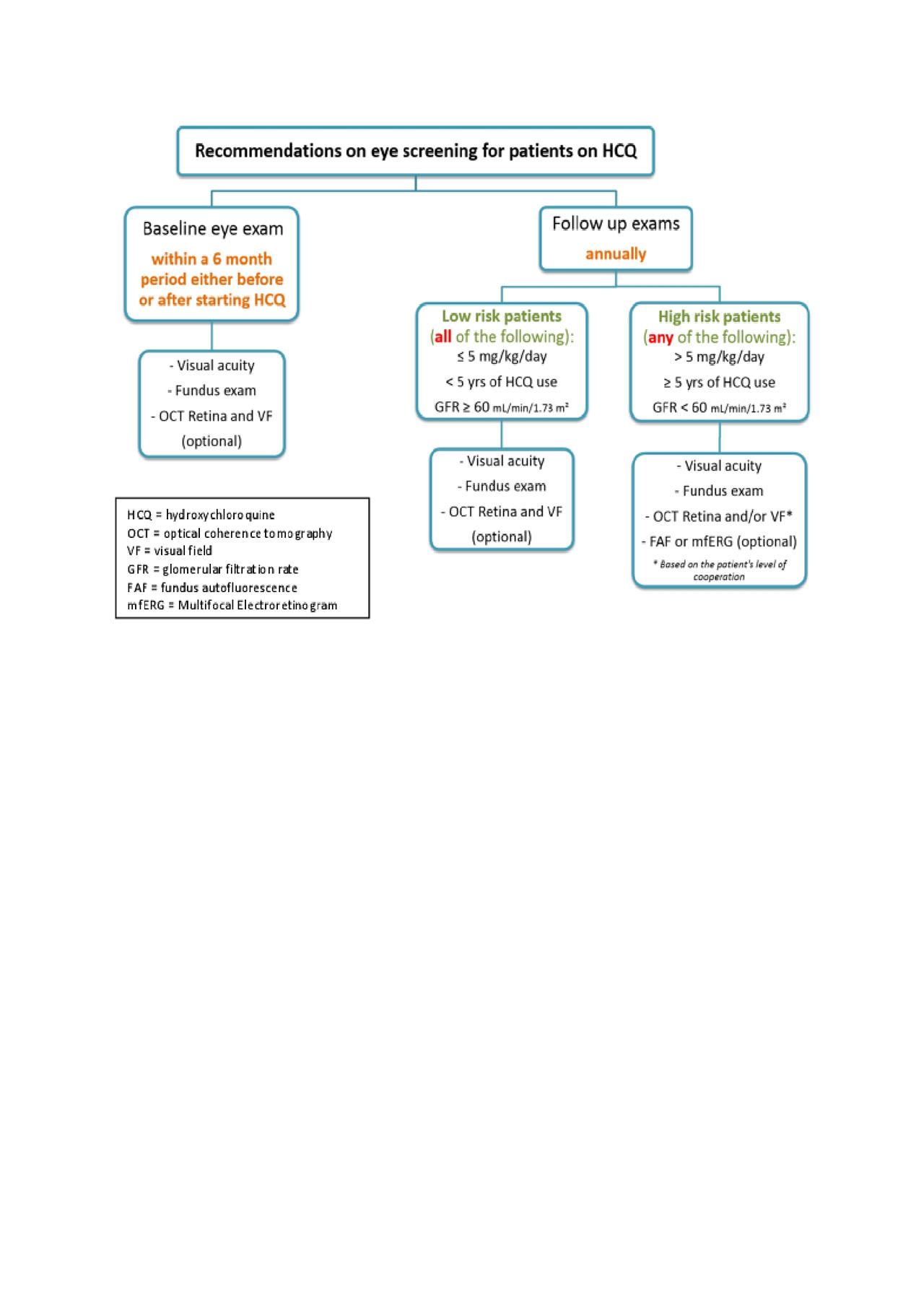
Figure 1
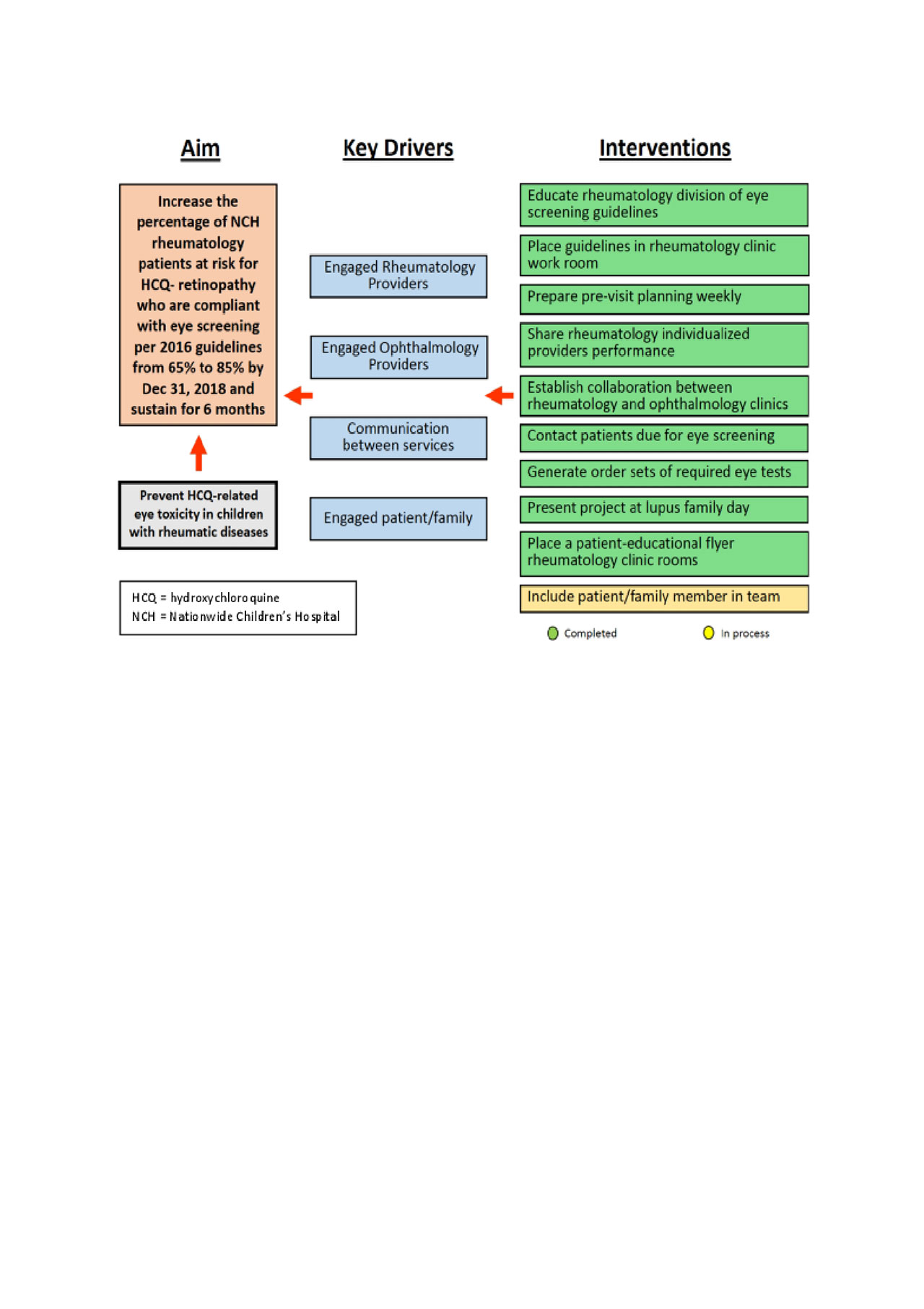
Figure 2

Figure 3
To cite this abstract in AMA style:
AlAhmed O, Way A, akoghlanian S, Barbar-Smiley F, Lemle S, MacDonald D, Wise K, Ardoin S, Sivaraman V. Improving Eye Screening Among Pediatric Rheumatology Patients Receiving Hydroxychloroquine: Experience of a Quaternary Care Center [abstract]. Arthritis Rheumatol. 2019; 71 (suppl 10). https://acrabstracts.org/abstract/improving-eye-screening-among-pediatric-rheumatology-patients-receiving-hydroxychloroquine-experience-of-a-quaternary-care-center/. Accessed .« Back to 2019 ACR/ARP Annual Meeting
ACR Meeting Abstracts - https://acrabstracts.org/abstract/improving-eye-screening-among-pediatric-rheumatology-patients-receiving-hydroxychloroquine-experience-of-a-quaternary-care-center/