
Session Information
Date: Sunday, November 10, 2019
Title: RA – Diagnosis, Manifestations, & Outcomes Poster I: Risk Factors, Predictors, & Prognosis
Session Type: Poster Session (Sunday)
Session Time: 9:00AM-11:00AM
Background/Purpose: Platelet-derived microparticles (PDMP) are membrane vesicles released from activated platelets and contain various inflammatory or angiogenetic factors; therefore, PDMP may be a new biomarker for the diagnosis of rheumatic disease. Previous studies regarding PDMP levels in rheumatoid arthritis (RA) have compared patients with osteoarthritis or less active RA but not those with undifferentiated arthritis (UA), which requires more differentiation from RA. Moreover, reports on the clinical characteristics of RA patients with high PDMP levels are limited. We conducted the analysis of plasma PDMP levels obtained from 65 patients, including those with RA and UA. Furthermore, we examined the clinical features of RA cases with high PDMP levels.
Methods: In total, plasma PDMP levels in 65 cases (RA, n = 28; polymyalgia rheumatica [PMR], n = 11; UA, n = 6; others, n = 20; and healthy controls, n = 7) were analyzed using PDMP ELISA kit employing anti-GPIX and anti-GPIb monoclonal antibodies (Protein Purify Ltd., Gunma, Japan). In addition, we compared PDMP levels with clinical characteristics and other biomarkers, including C-reactive protein, erythrocyte sedimentation rate, matrix metalloproteinase-3 (MMP3), rheumatoid factor (RF), and anticyclic citrullinated peptide antibody (anti-CCP).
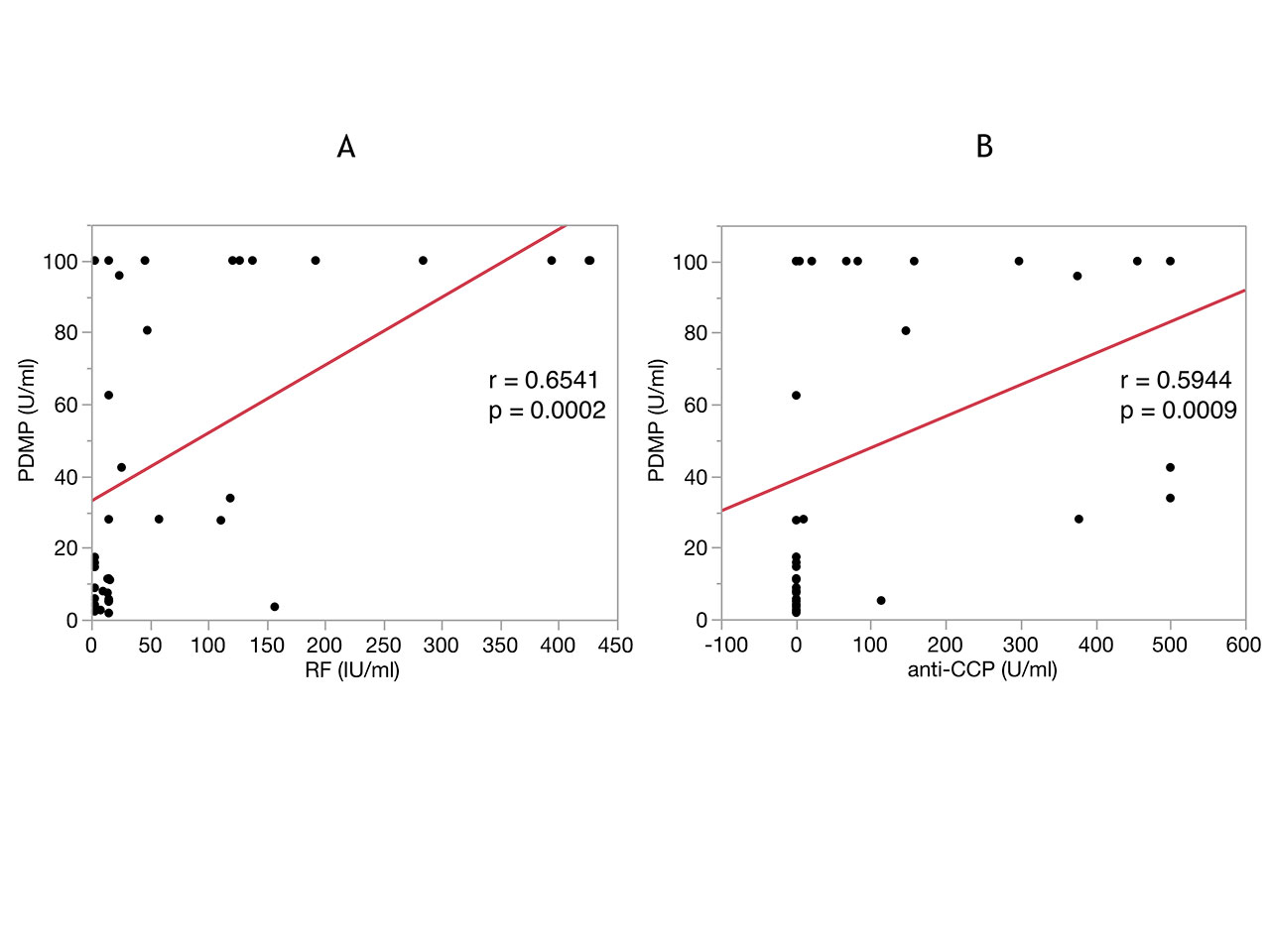
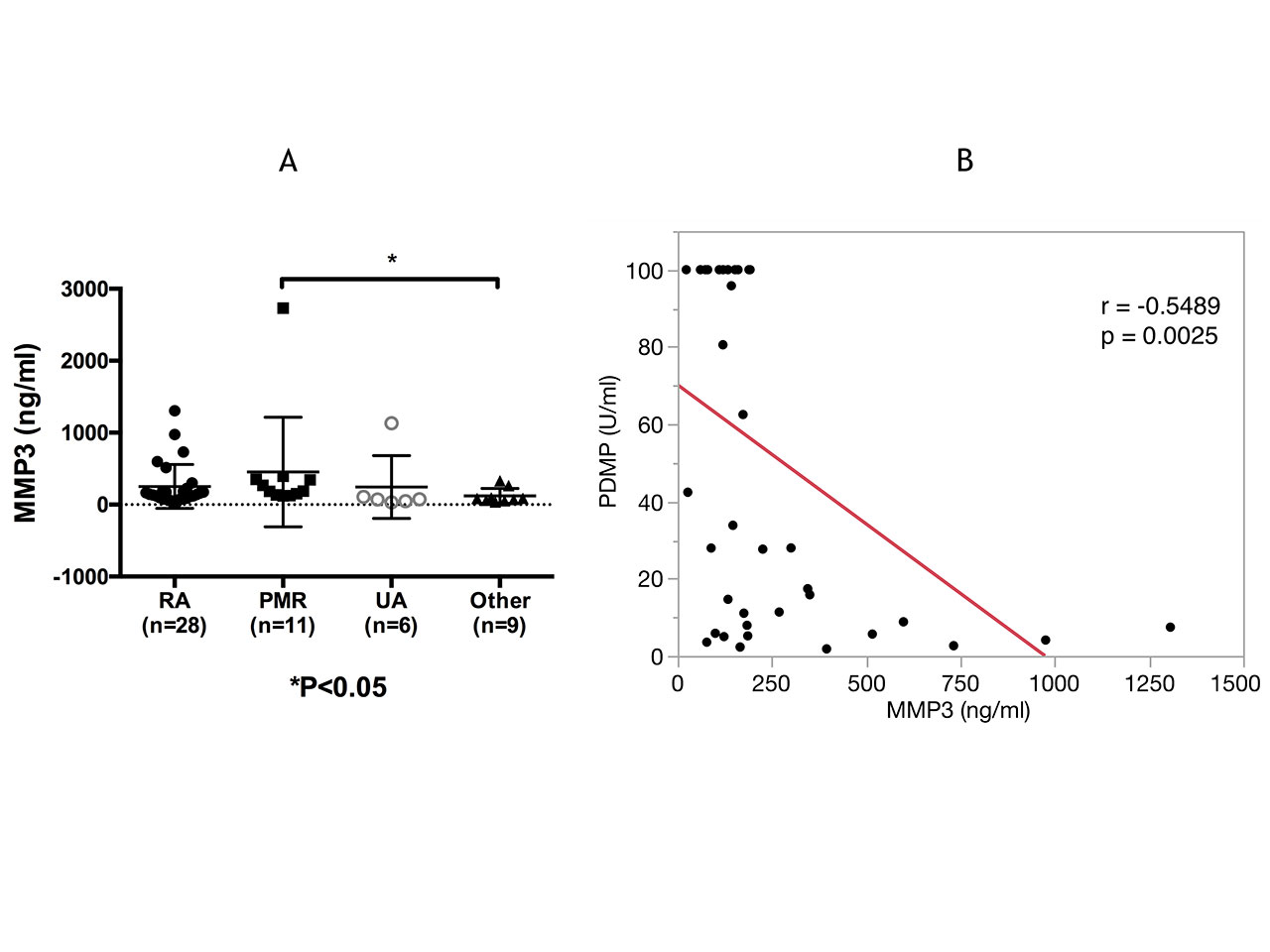
Results: Mean PDMP levels (± SD) for each disease group and controls were as follows: RA, 51.96 ± 42.87 U/ml; PMR, 26.10 ± 36.92 U/ml; UA, 5.27 ± 4.13 U/ml; others, 23.28 ± 26.93 U/ml; healthy controls, 6.20 ± 3.13 U/ml. Plasma PDMP levels were significantly higher in RA patients than in UA patients and control. Furthermore, in RA patients, PDMP levels positively correlated with RF (r = 0.6541; p = 0.0002) and anti-CCP (r = 0.5944; p = 0.0009). Notably, PDMP levels negatively correlated with MMP3 (r = −0.5489; p = 0.0025); MMP3 levels between RA and UA patients were not significant. In addition, compared with 22 RA patients without interstitial pneumonia, 6 RA patients complicated with interstitial pneumonia showed elevated PDMP levels (85.72 ± 26.60 U/ml vs. 42.76 ± 42.19 U/ml; p = 0.0281).
Conclusion: Plasma PDMP levels are useful in the differential diagnosis of RA and UA. Plasma PDMP levels were correlated with RA-associated autoantibody and the complication of interstitial pneumonia, moreover, negatively correlated with MMP3; therefore, plasma PDMP can be a candidate for an independent biomarker for the diagnosis and clinical evaluation of RA.
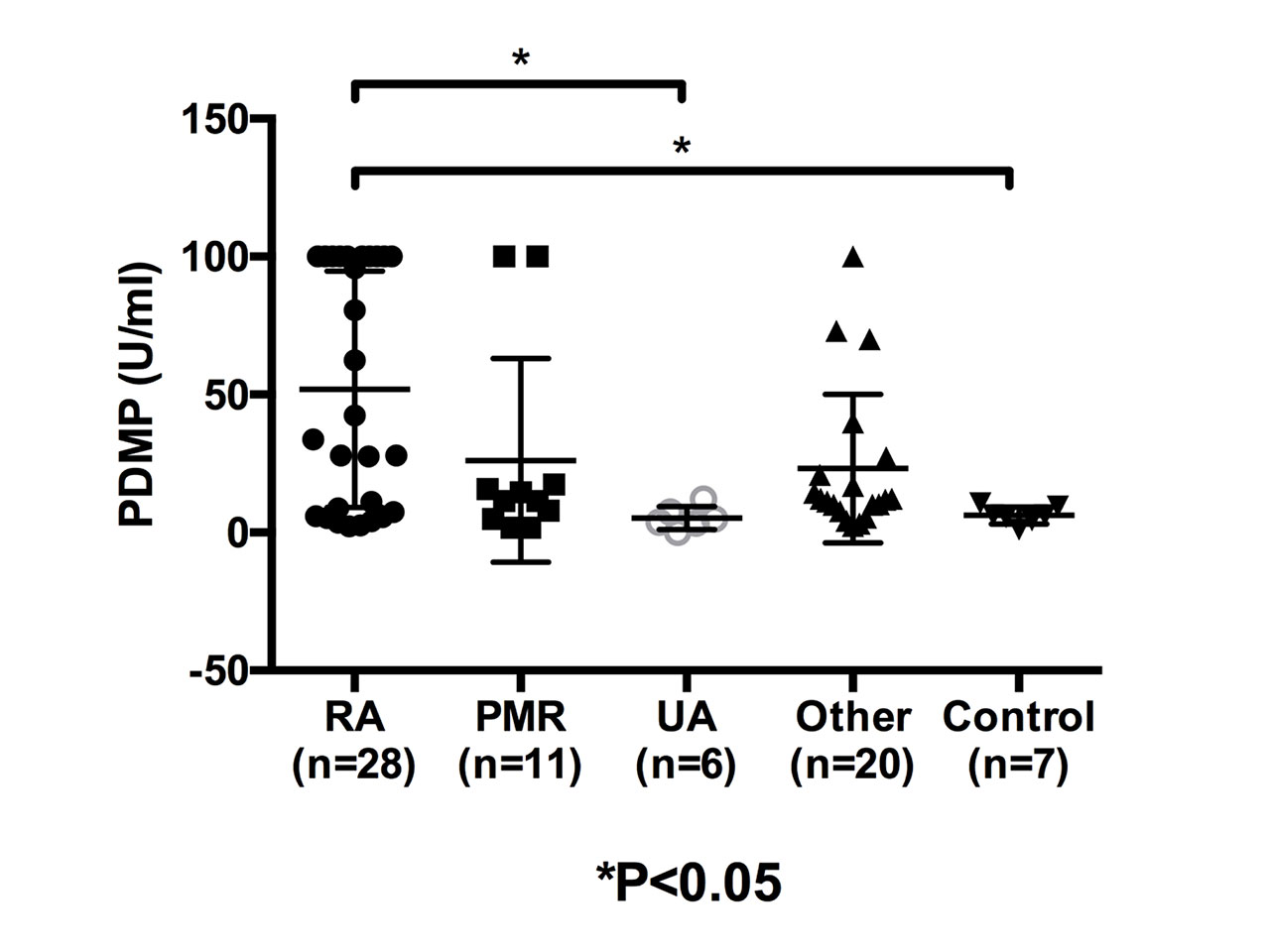
RA, rheumatoid arthritis; PMR, polymyalgia rheumatica; UA, undifferentiated arthritis;
Other includes rheumatic diseases, such as systemic lupus erythematosus and dermatomyositis.
To cite this abstract in AMA style:
Horikoshi H, Takamatsu K, Suzuki R, Kusanagi Y, Kimura F, Itoh K. Effectiveness of Platelet-derived Microparticles for the Diagnosis and Clinical Evaluation of Rheumatoid Arthritis [abstract]. Arthritis Rheumatol. 2019; 71 (suppl 10). https://acrabstracts.org/abstract/effectiveness-of-platelet-derived-microparticles-for-the-diagnosis-and-clinical-evaluation-of-rheumatoid-arthritis/. Accessed .« Back to 2019 ACR/ARP Annual Meeting
ACR Meeting Abstracts - https://acrabstracts.org/abstract/effectiveness-of-platelet-derived-microparticles-for-the-diagnosis-and-clinical-evaluation-of-rheumatoid-arthritis/