ACR Meeting Abstracts

ACR Meeting Abstracts

  • Meeting Abstracts
    • All Meetings
    • PRSYM 2026
    • ACR Convergence 2025
    • Download Abstract Supplements
  • Keyword Index
  • Search
  • My Favorites
    • View and print all favorites
    • Clear all favorites

Abstract Number: 267

Develop Risk Prediction Model and Drug Withdrawl Road Map Through Pattern Extraction and Data Mining: Create a Master Algorithm from the Smart System of Disease Management (SSDM)

Yan Zhao1, Xiaomei Li 2, Rong Mu 3, Xiaoxia Zuo 4, Hua Wei 5, Lingli Dong 6, Shouxin Li 6, Hongsheng Sun 7, Guanmin Gao 8, Lijun Wu 9, Bing Wu 10, Yuhua Jia 11, Hui Xiao 12, Minghua Xu 13, Wenyu Zhou 14, Aichun Chu 15, Li Dong 16, Huiqin Yang 17, Ming Gui 18, Weiqi Min 19, Zhenchun Zhang 20, Ying Pan 21, Junli Zhang 22, Jinchang He 23, Haiying Chen 24 and Fei Xiao 25, 1Peking Union Medical College hospital, Beijing, Beijing, China (People's Republic), 2the First Affiliated Hospital of University of Science and Technology of China, Hefei, China (People's Republic), 3People's Hospital, Beijing University Medical School, Beijing, China (People's Republic), 4Xiangya Hospital Centeral South University, Changsha, China (People's Republic), 5Northern Jiangsu People's Hospital, Yangzhou, China (People's Republic), 6Tongji Hospital,Tongji Medical Colllege,Huazhong University of Science and Technology, Wuhan, Hubei, China (People's Republic), 7Shandong Provincial Hospital Affiliated to Shandong University, Jinan, China (People's Republic), 8the First Affiliated Hospital of Zhengzhou University, Zhengzhou, China (People's Republic), 9People's Hospital of Xinjiang Uygur Autonomous region, Wulumuqi, Xinjiang, China (People's Republic), 10Shanghai Gothic Internet Technology Co., Ltd, Shanghai, China (People's Republic), 11Shanghai Gothic Internet Technology Co., Ltd., Shanghai, Shanghai, China (People's Republic), 12Shanghai Gothic Internet Technology Co., Ltd, shanghai, Shanghai, China (People's Republic), 13Affiliated Hospital of Hebei University, Baoding, China (People's Republic), 14WuHan Fourth Hospital, Wuhan, China (People's Republic), 15Hubei general hospital, Wuhan, China (People's Republic), 16Jingzhou Central Hospital, Jingzhou, China (People's Republic), 17Wuhan NO.1 Hospital, Wuhan, China (People's Republic), 18The third xiangya hospital of central south university, Changsha, China (People's Republic), 19Heze municipal hospital, Heze, China (People's Republic), 20Linyi People's Hospital, Linyi, China (People's Republic), 21the First Affiliated Hospital of xi'an Jiaotong University, Xi'an, China (People's Republic), 22Xi'an Fifth Hospital, Xian, China (People's Republic), 23Panzhihua Central Hospital, Panzhihua, China (People's Republic), 24The Third Hospital of Hebei Medical University, Shijiazhang, China (People's Republic), 25Shanghai Gothic Internet Technology Co., Ltd., shanghai, China (People's Republic)

Meeting: ACR/ARP Annual Meeting 2019

Keywords: adverse events and big data, DMARDs, drug safety, Self-management

  • Tweet
  • Email a link to a friend (Opens in new window) Email
  • Print (Opens in new window) Print
Session Information

Date: Sunday, November 10, 2019

Title: Health Services Research Poster I – ACR/ARP

Session Type: Poster Session (Sunday)

Session Time: 9:00AM-11:00AM

Background/Purpose: Combination therapy with DMARDs for treating RA is considered as a standard of care. However, certain rates of adverse events (AEs) are unavoidable. The stigma are how to predict the risk and how to define drug withdrawl sequence for optimal risk reductions if AEs persist. The decisions made are always empirical. 
To develop a risk prediction model and an algorithm for drug withdrawl sequence based on data mining from the SSDM

Methods: SSDM is an interactive mobile disease management tool, including two application systems (APPs) for both the doctors and the patients. The patients can input medical records (including medication and laboratory test results) and perform self-evaluation (DAS28, HAQ) via App. The patients’ data synchronizes to mobiles of authorized rheumatologists through cloud and doctors’ advices could be delivered. In previous studies, we demonstrated that patients could master SSDM after training.

In order to develop a prediction model and the master algorithm, abnormal white blood cell counts (WBC) and alanine aminotransferase (ALT) elevation were targeted. Data was collected, extracted, validated, and Bayesian networking, data mining, modeling were performed. WBC under 4k/ml is defined as leukocytopenia (LP), over 10k/ml as infection predisposing (IP), and ALT > 40 U/L as ALT elevation.

Results: From Jun 2014 to May 2019, 54,149 RA patients from 587 centers registered in SSDM. 135 different drugs and 1,220 combination therapies are identified. LP happens at 341 and IP at 344, ALT elevation at 325 cases in 752 treatment regiments. Among them, MTX based regiments are 291 types, and the risk ratio (RR) are profiled as prediction model by comparing each AE rate of combination regiment with that of MTX monotherapy (Fig 1). The RR ranges from 0.28 to 6.28. The highest risk combination of prednisone (Pred), leflunomide (LEF), methotrexate (MTX), hydroxychloroquine (HCQ) and Celecoxib (Cel) is selected (RR=6.28) to develop a master algorithm. Figure 2 shows Bayesian network, in which, quartet correlates with 31 different regiments. Based on Bayesian method, the probabilities of LP, IP and ALT elevation are plotted through 64 modeling, and the algorithm for drug withdrawl strategies is generated. Drug withdrawl sequence for LP is HCQ, then Cel, then LEF, then Pred, the risks of LP are reduced by 41%, 22% 36% and 15%, respectively. For IP, withdrawl sequence is Pred, then LEF, then Cel, then HCQ, the risks of IP are reduced by 45%, 28%, 23% and 4%, respectively, For ALT elevation, withdrawl sequence is MTX, then Pred, LEF, then Cel, the risks of ALT elevation are reduced by 48%, 8%, 7% and 6%.

Conclusion: Through patterns extraction, data mining, modeling, and Bayesian networking, a risk prediction model and a master algorithm for drug withdrawl strategy in reduction of AEs are developed, which are expendable and replicatable. Via continuing data inputs and machine leaning, an artificial intelligent system in assisting clinical forecast and decision-making may be achieved with SSDM.
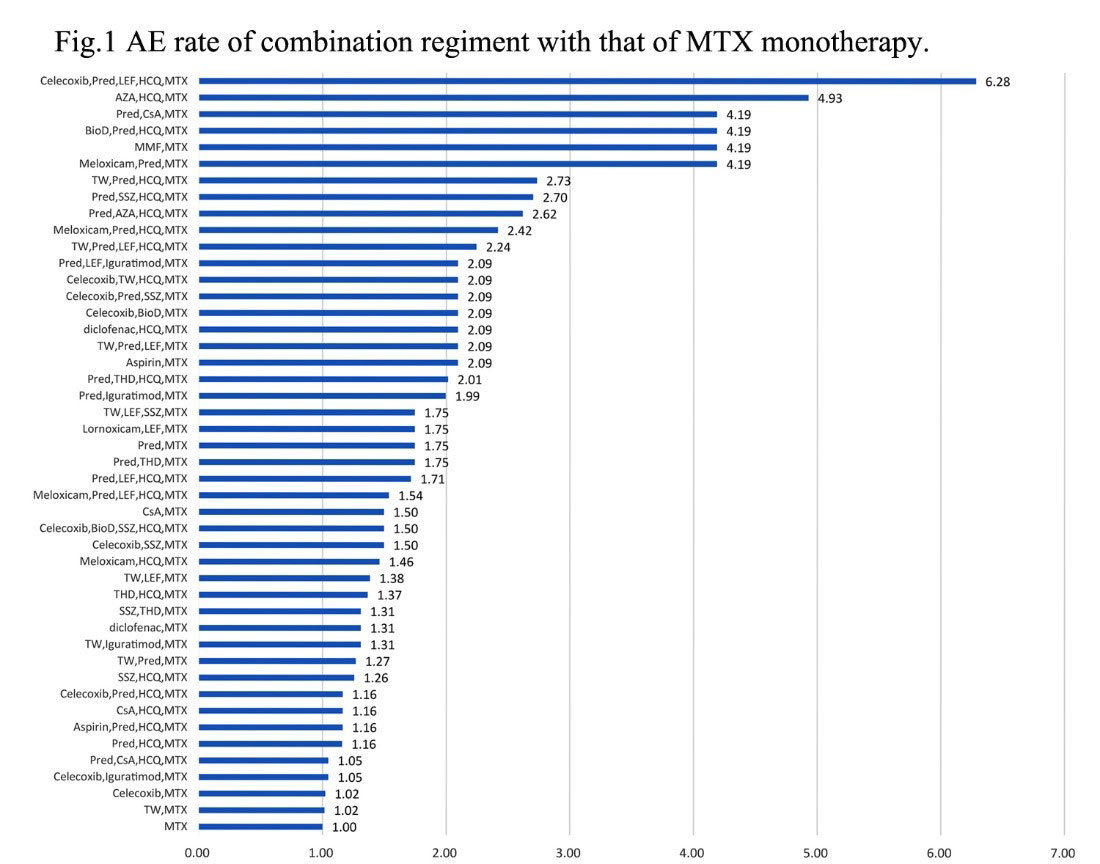
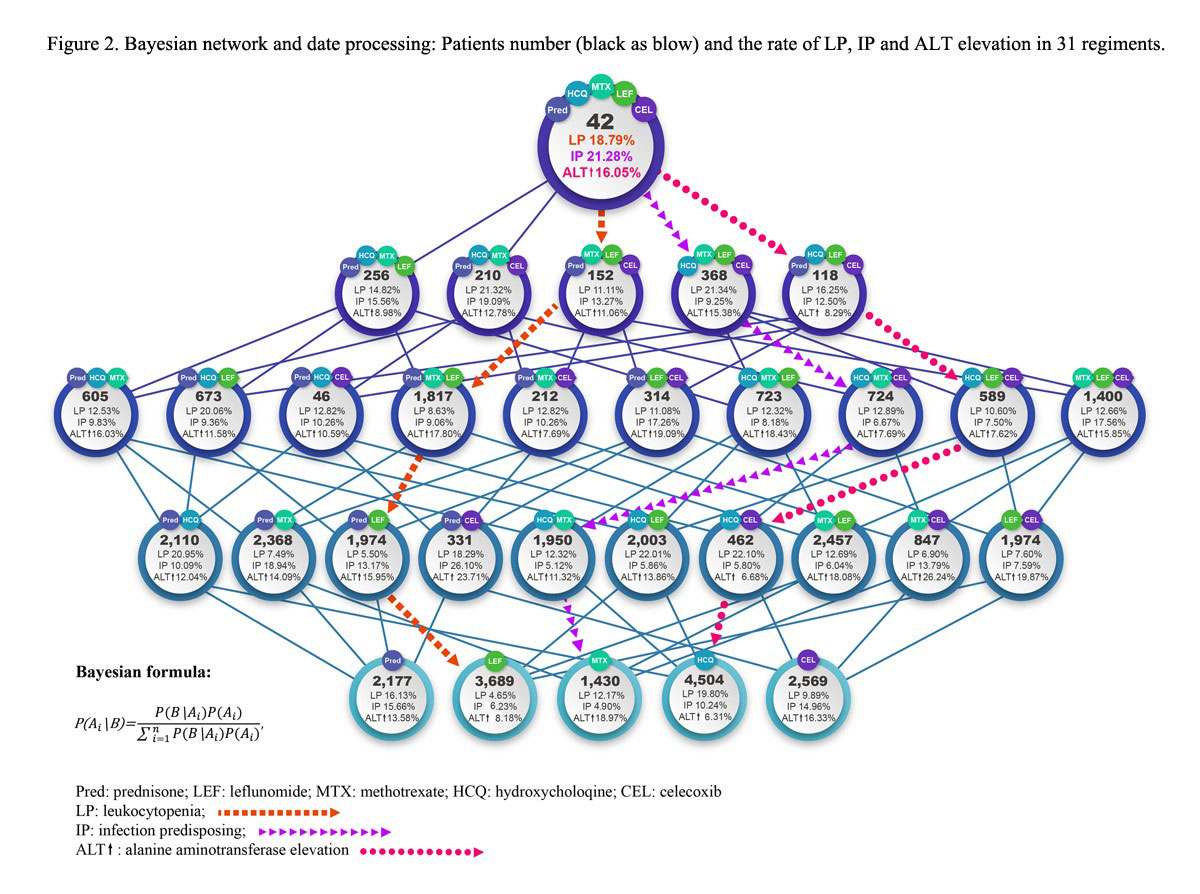
Fig.1 AE rate of combination regiment with that of MTX monotherapy

Fig.2 Bayesian network and date processing:Patients number -black as blow- and the rate of LP,IP and ALT elevation in 31 regiments.


Disclosure: Y. Zhao, None; X. Li, None; R. Mu, None; X. Zuo, None; H. Wei, None; L. Dong, None; S. Li, None; H. Sun, None; G. Gao, None; L. Wu, None; B. Wu, None; Y. Jia, None; H. Xiao, None; M. Xu, None; W. Zhou, None; A. Chu, None; L. Dong, None; H. Yang, None; M. Gui, None; W. Min, None; Z. Zhang, None; Y. Pan, None; J. Zhang, None; J. He, None; H. Chen, None; F. Xiao, None.

To cite this abstract in AMA style:

Zhao Y, Li X, Mu R, Zuo X, Wei H, Dong L, Li S, Sun H, Gao G, Wu L, Wu B, Jia Y, Xiao H, Xu M, Zhou W, Chu A, Dong L, Yang H, Gui M, Min W, Zhang Z, Pan Y, Zhang J, He J, Chen H, Xiao F. Develop Risk Prediction Model and Drug Withdrawl Road Map Through Pattern Extraction and Data Mining: Create a Master Algorithm from the Smart System of Disease Management (SSDM) [abstract]. Arthritis Rheumatol. 2019; 71 (suppl 10). https://acrabstracts.org/abstract/develop-risk-prediction-model-and-drug-withdrawl-road-map-through-pattern-extraction-and-data-mining-create-a-master-algorithm-from-the-smart-system-of-disease-management-ssdm/. Accessed .
  • Tweet
  • Email a link to a friend (Opens in new window) Email
  • Print (Opens in new window) Print

« Back to ACR/ARP Annual Meeting 2019

ACR Meeting Abstracts - https://acrabstracts.org/abstract/develop-risk-prediction-model-and-drug-withdrawl-road-map-through-pattern-extraction-and-data-mining-create-a-master-algorithm-from-the-smart-system-of-disease-management-ssdm/

Advanced Search

My Favorites

Save and print abstracts during your browser session by clicking the “Favorite” button at the bottom of any abstract (must have cookies enabled in browser). See saved favorites.

Abstract Policies

  • ACR Convergence Abstract Embargo Policies
  • ACR Convergence Abstract Permissions & Reprints
  • PRSYM Abstract Policies

ACR Convergence. Where Rheumatology Meets

ACR Convergence 2026

Join us November 6-11 in Orlando, Florida.
See Registration Information

  • Contact ACR
  • Privacy Policy
  • ACR Policies
  • Cookie Preferences

© Copyright 2026 American College of Rheumatology