
Session Information
Date: Sunday, November 13, 2022
Title: Spondyloarthritis Including PsA – Diagnosis, Manifestations, and Outcomes Poster II
Session Type: Poster Session B
Session Time: 9:00AM-10:30AM
Background/Purpose: Psoriatic arthritis (PsA) is a complex immune-mediated disease. Beyond its deleterious effects in the skin and joints, PsA can lead to decreased quality of life, increased psychosocial stress, and is associated with high levels of depression and anxiety. However, little is known about the effects of mental health on disease activity and severity. This may be especially important in PsA where up to half of patients have residual symptoms (i.e., pain, fatigue) despite effective immunomodulatory therapies. The objective of this study was to characterize the prevalence of psychiatric comorbidities and their impact on PsA outcomes in an urban, academic, combined clinic setting.
Methods: Consecutive adult patients meeting CASPAR criteria (n=537) were prospectively recruited at the NYU Psoriatic Arthritis Center and followed for up to 2 years. All data was obtained from clinical visits using a standardized EPIC template. Depression was defined as patient-reported depression and/or use of anti-depressant medications.
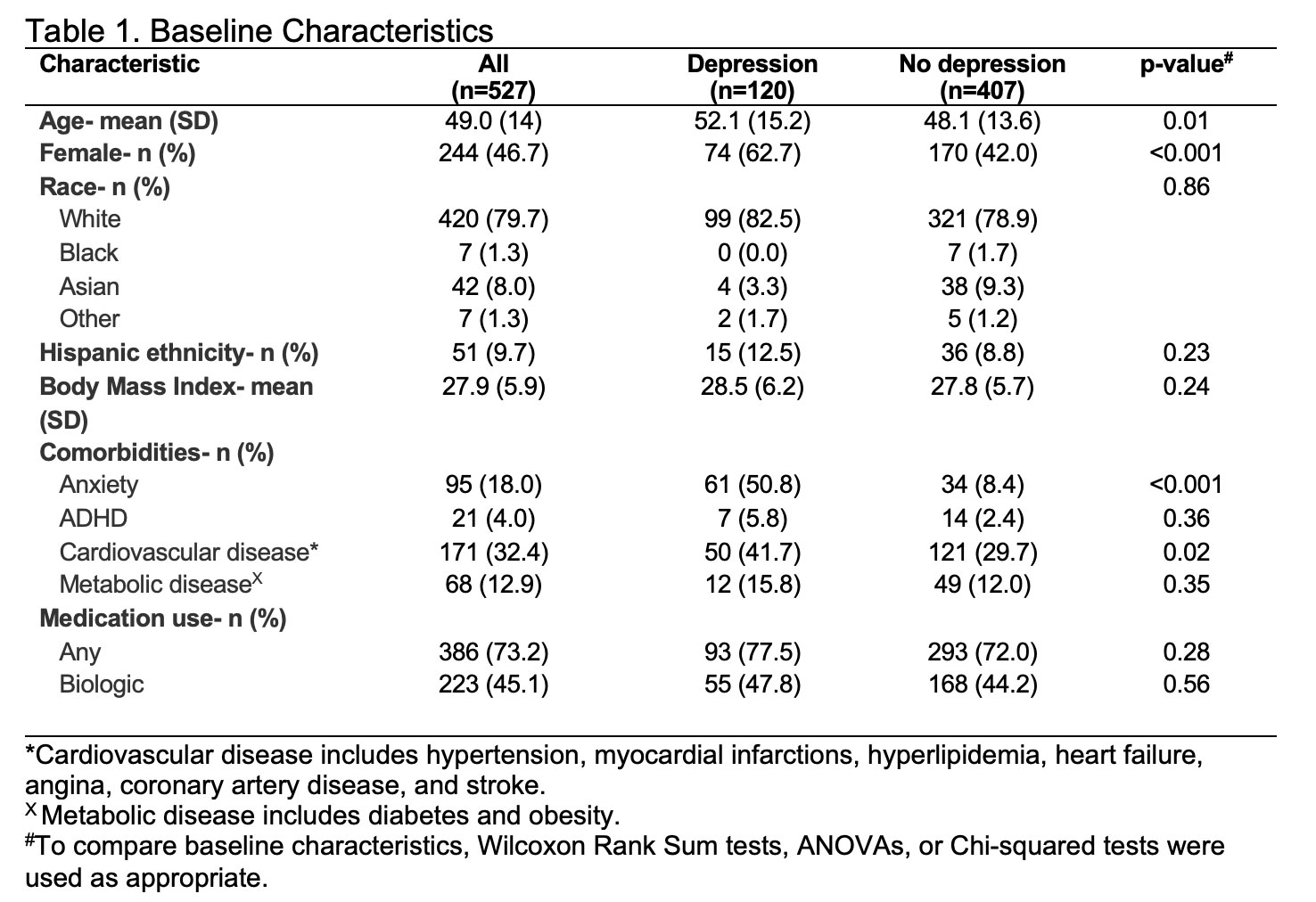
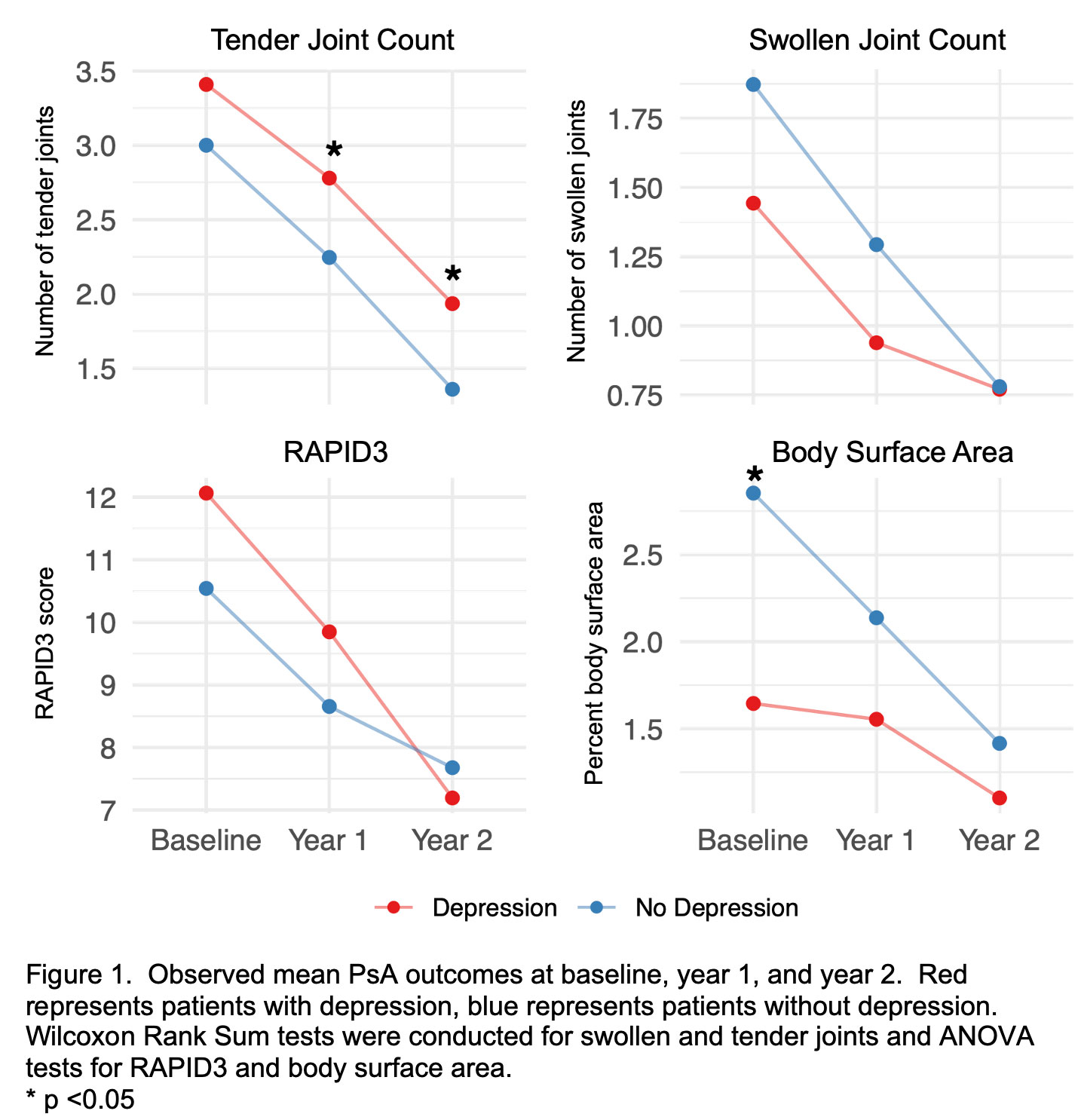
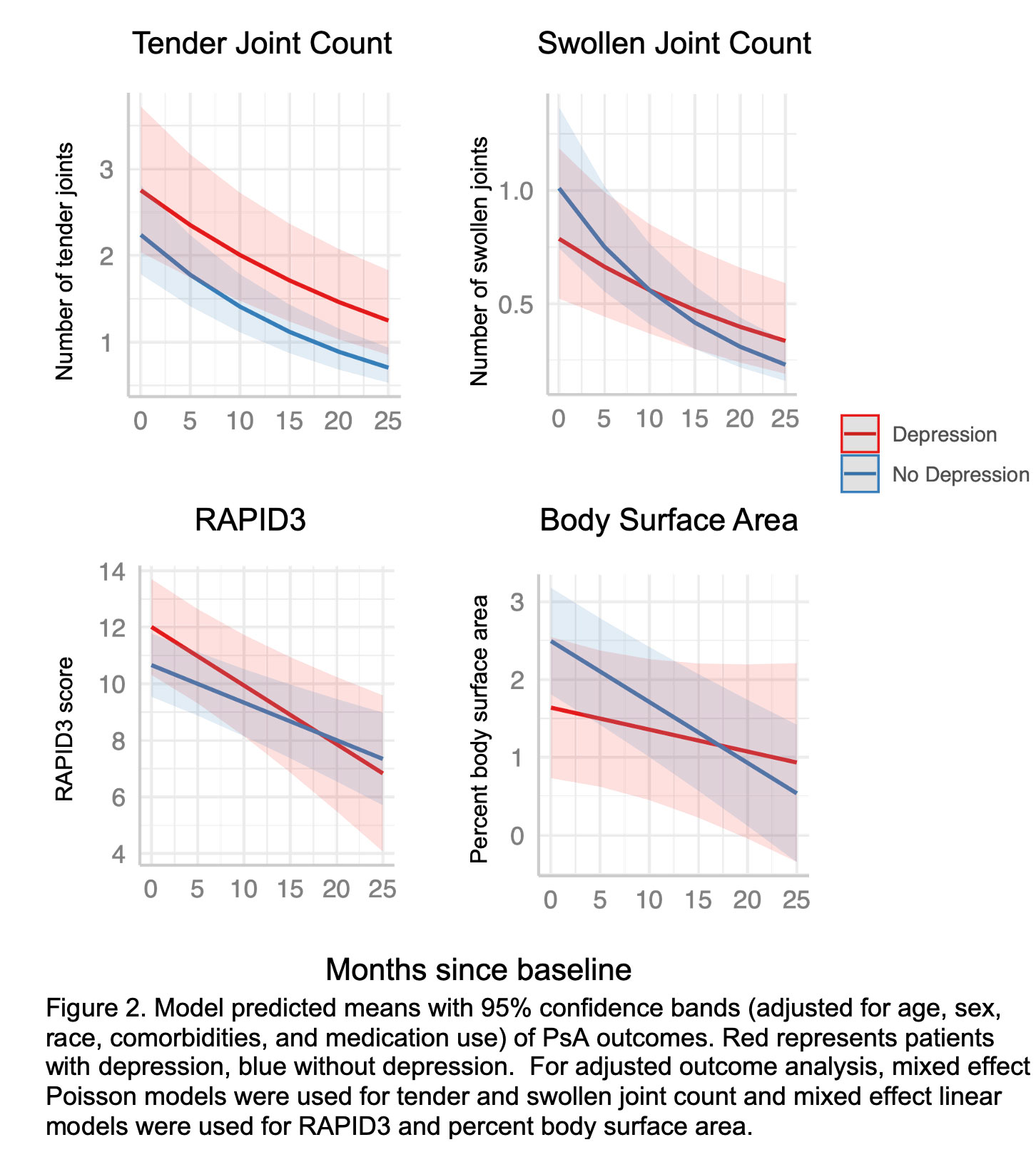
Results: The cohort was 53% male, mostly Caucasian (79.7%) and had an average age of 49 years. Within our population, 23% had depression, 18% anxiety, and 4% ADHD (Table 1). At the initial visit, patients with depression were more likely to be female, older, and have concomitant anxiety compared to those without depression. Moreover, compared to their non-depressed counterparts, patients with depression had similar swollen joint counts (SJCs), tender joint counts (TJCs) and RAPID3 scores, as well as a lower percent body surface area (BSA). However, at the subsequent timepoints, while other outcomes remained similar between the groups, patients with depression had a higher TJC (Figure 1). When adjusting for age, sex, race, medication use, and comorbidities, the rate ratio (RR) of TJC in patients with depression vs. without depression was 1.23 (95%CI 0.78, 1.94, p=0.79) at baseline (Figure 2). This ratio was even higher at year 1 (RR 1.47, 95%CI 0.91, 2.35, p=0.19) and year 2 (RR 1.75, 95%CI 0.97, 3.14, p=0.07), nearing significance. In the adjusted models for SJC, BSA, and RAPID3, this pattern was not seen.
Conclusion: High rates of depression and anxiety in this cohort expand upon previously reported data. While most patients improve over time, TJC is significantly higher in those who carry a diagnosis of depression whereas SJC and BSA are similar in patients with and without depression. This may reflect differences in how patients with depression perceive their disease and may lead to difficulty in achieving low disease activity/remission by composite score measures. Therefore, addressing depression, along with inflammatory symptoms, should be considered, especially in those with residual pain. Further work is needed to understand if intervening on depression could help improve PsA outcomes.
To cite this abstract in AMA style:
Haberman R, Um S, Catron S, Lydon E, Attur M, Neimann A, Reddy S, Troxel A, Adhikari S, Scher J. Depression as a Modulator of Patient Reported, but Not Physician Observed, Outcomes in Psoriatic Arthritis [abstract]. Arthritis Rheumatol. 2022; 74 (suppl 9). https://acrabstracts.org/abstract/depression-as-a-modulator-of-patient-reported-but-not-physician-observed-outcomes-in-psoriatic-arthritis/. Accessed .« Back to ACR Convergence 2022
ACR Meeting Abstracts - https://acrabstracts.org/abstract/depression-as-a-modulator-of-patient-reported-but-not-physician-observed-outcomes-in-psoriatic-arthritis/