
Session Information
Session Type: Poster Session (Tuesday)
Session Time: 9:00AM-11:00AM
Background/Purpose: Despite increased awareness related to the diagnosis and treatment of Undifferentiated Connective Tissue Disease (UCTD), there is a dearth of research on the psychosocial impact of the disease. The objective of this qualitative pilot study was to better understand the psychosocial impact of UCTD on patient well-being.
Methods: We identified UCTD patients using the newly established Undifferentiated Connective Tissue Disease (UCTD) and Overlap Registry and the electronic medical record (EMR) clinic schedule of our specialty hospital. We recruited, consented and assembled for participation a convenience sample of patients diagnosed with UCTD, based on the presence of persistent antinuclear antibodies and CTD symptoms not meeting other classification criteria (Mosca et al, Clin Exp Rheumatol 1999;17:615). Baseline data on race and ethnicity, education level and disease duration were collected. A licensed clinical social worker administered a 30-minute structured interview by telephone. The standardized questionnaire consisted of demographic and 14 open-ended questions related to understanding and experiences related to UCTD. Grounded Theory was utilized to analyze the qualitative data and identify themes with a team of physicians, research coordinators and a social worker.
Results: We contacted 20 UCTD patients, of whom 14 participated (100% female, mean age 58 ± 13y [age range 27-74]). All patients had at least a Bachelor’s degree and were predominantly white (64%), with other races included (21% African American, 7% Hispanic/Latina, and 7% Asian). Patients tended to have relatively long mean disease duration (12 ± 14yrs), and over half (64%) were currently engaged in counseling or mindfulness training. Nine specific psychosocial themes and categories emerged (Table), guided by data saturation. Patients expressed that professional guidance and support for themselves, peers and family are necessary to increase awareness, reduce isolation and promote self-efficacy. They voiced a desire to “create support groups to connect to others”, with “patient education material” and to “have caregivers involved.”
Conclusion: This pilot study describes nine psychosocial themes expressed in structural interviews by women with UCTD at a major academic center, reflecting issues that may not be currently appreciated by health-care providers. Future studies will aim to recruit a larger, more diverse UCTD patient population, including those with recently diagnosed disease, to explore themes that may inform best practices for psychosocial interventions (e.g. patient support groups, educational materials, peer counselors) to support UCTD patients in better managing and coping with their illness.
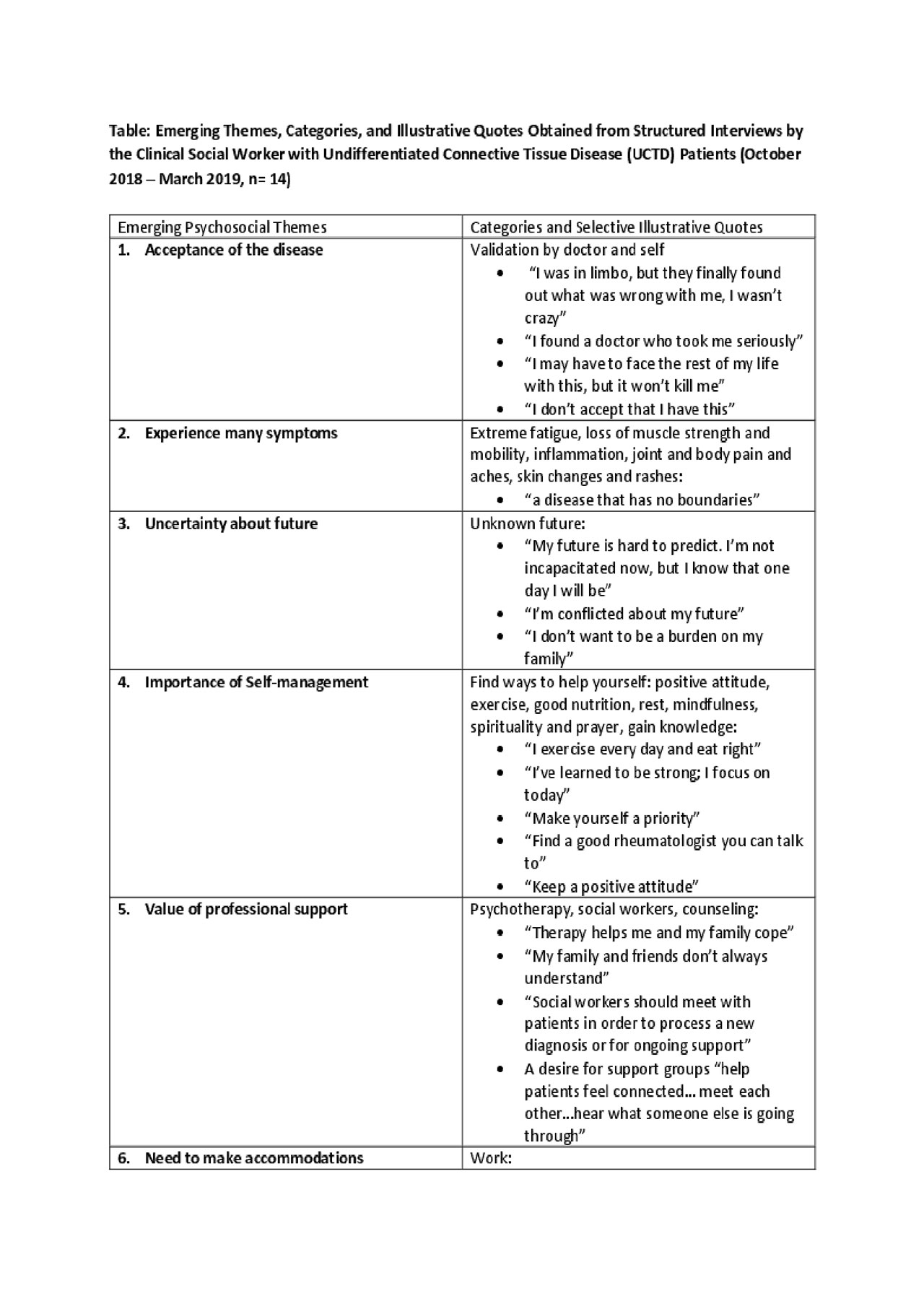
Table- Pilot study UCTD
To cite this abstract in AMA style:
Kleinman J, Sevim E, Barbhaiya M, Vega J, Mancuso C, Lockshin M, Sammaritano L. A Pilot Study of the Psychosocial Impact of Undifferentiated Connective Tissue Disease [abstract]. Arthritis Rheumatol. 2019; 71 (suppl 10). https://acrabstracts.org/abstract/a-pilot-study-of-the-psychosocial-impact-of-undifferentiated-connective-tissue-disease/. Accessed .« Back to 2019 ACR/ARP Annual Meeting
ACR Meeting Abstracts - https://acrabstracts.org/abstract/a-pilot-study-of-the-psychosocial-impact-of-undifferentiated-connective-tissue-disease/