ACR Meeting Abstracts

ACR Meeting Abstracts

  • Meetings
    • 2026 ACR/ARP PRSYM
    • ACR Convergence 2025
    • ACR Convergence 2024
    • ACR Convergence 2023
    • 2023 ACR/ARP PRSYM
    • ACR Convergence 2022
    • ACR Convergence 2021
    • 2020-2009 Meetings
    • Download Abstracts
  • Keyword Index
  • Advanced Search
  • Your Favorites
    • Favorites
    • Login
    • View and print all favorites
    • Clear all your favorites
  • ACR Meetings

Abstract Number: 126

Unmet Social Needs in Pediatric Rheumatic Disease: A Study of Disparities

Hana Moosa1, Kristina Ciaglia2, Yuhan Ma3 and Elizabeth Sloan1, 1UT Southwestern, TX, 2UT Southwestern, Dallas, TX, 3Texas Scottish Rite for Children, TX

Meeting: 2026 Pediatric Rheumatology Symposium

  • Tweet
  • Email a link to a friend (Opens in new window) Email
  • Print (Opens in new window) Print
Session Information

Date: Friday, March 20, 2026

Title: Abstracts: Quality, Health Services, and Education Research

Session Time: 4:31PM-4:36PM

Background/Purpose:
Children with rheumatic diseases often face social determinants of health (SDoH) that affect access and outcomes, yet data in pediatric rheumatology remain limited. We aimed to characterize caregiver-reported SDoH in juvenile idiopathic arthritis (JIA), systemic lupus erythematosus (SLE), and juvenile dermatomyositis (JDM), and to assess disparities by diagnosis, language, race, ethnicity, insurance, and neighborhood deprivation. 

Methods: We conducted a cross-sectional study of caregiver-reported SDoH collected at routine pediatric rheumatology clinic visits from February to May 2023. Of 862 surveys, 562 surveys from unique caregivers met inclusion criteria; duplicates and surveys from ineligible diagnoses were excluded, leaving 417 surveys eligible. Surveys assessed caregiver education, health literacy, food security, housing stability, transportation, and social work support. Neighborhood deprivation was measured using the Area Deprivation Index (ADI). Associations between SDoH and sociodemographic and economic factors were examined using univariate and post-hoc tests with complete case analysis. 

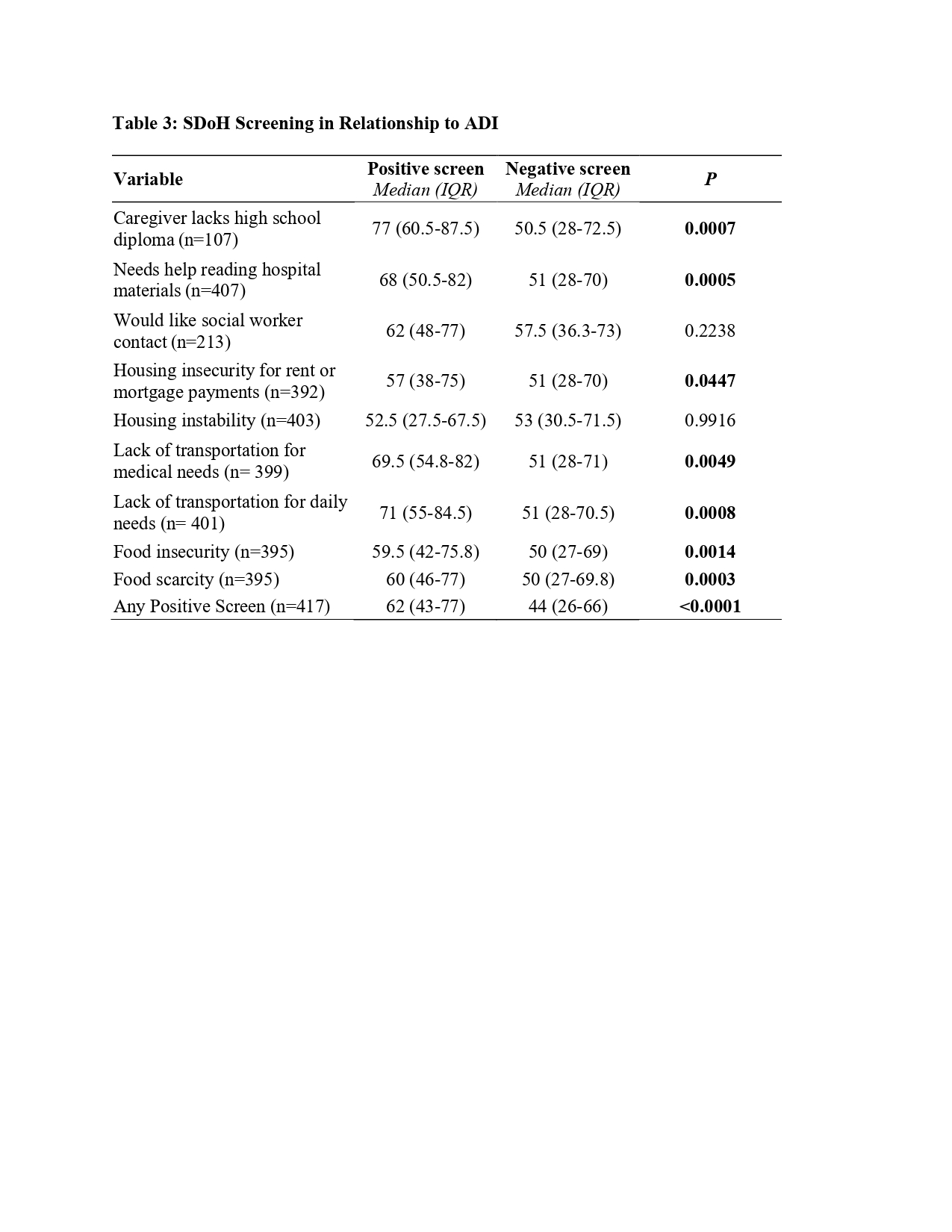
Results: The cohort (mean age 12.1 years; 73.1% JIA, 15.1% SLE; 11.8% JDM (Table 1) revealed that 39% of caregivers reported ≥1 unmet social need, yet only 9% requested social work support. SLE and JDM caregivers reported higher rates of food insecurity and health literacy challenges compared to those with JIA (Table 2). Spanish-speaking, Hispanic/Latino, and publicly- or uninsured families reported disproportionately more unmet needs. Higher ADI was associated with lower caregiver education, difficulty reading hospital materials, housing instability, transportation barriers, and food insecurity (Table 3).

Conclusion:
Children with rheumatic diseases face substantial inequities linked to SDoH, particularly those with SLE or JDM, Hispanic/Latino ethnicity, Spanish-speaking caregivers, or public or no insurance. Incorporating ADI-informed SDoH screening into pediatric rheumatology may help identify high-risk families and guide targeted, equity-focused interventions to improve access and outcomes. 

Demographic Characteristics of Pediatric Rheumatology Patients with Responses to Social Determinants of Health QuestionnaireSupporting image 1
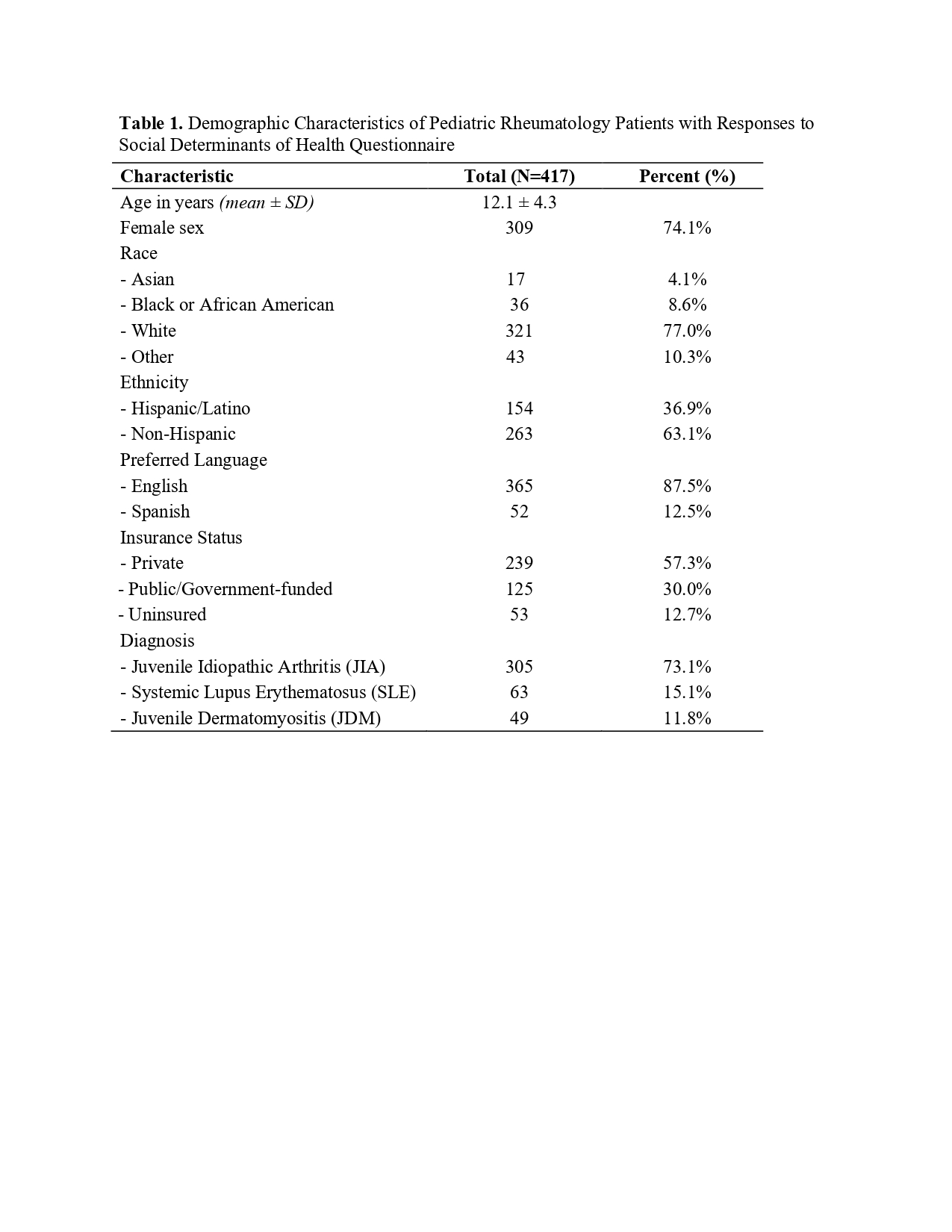
Analysis of Caregiver Responses to Social Determinants of Health QuestionnaireSupporting image 2
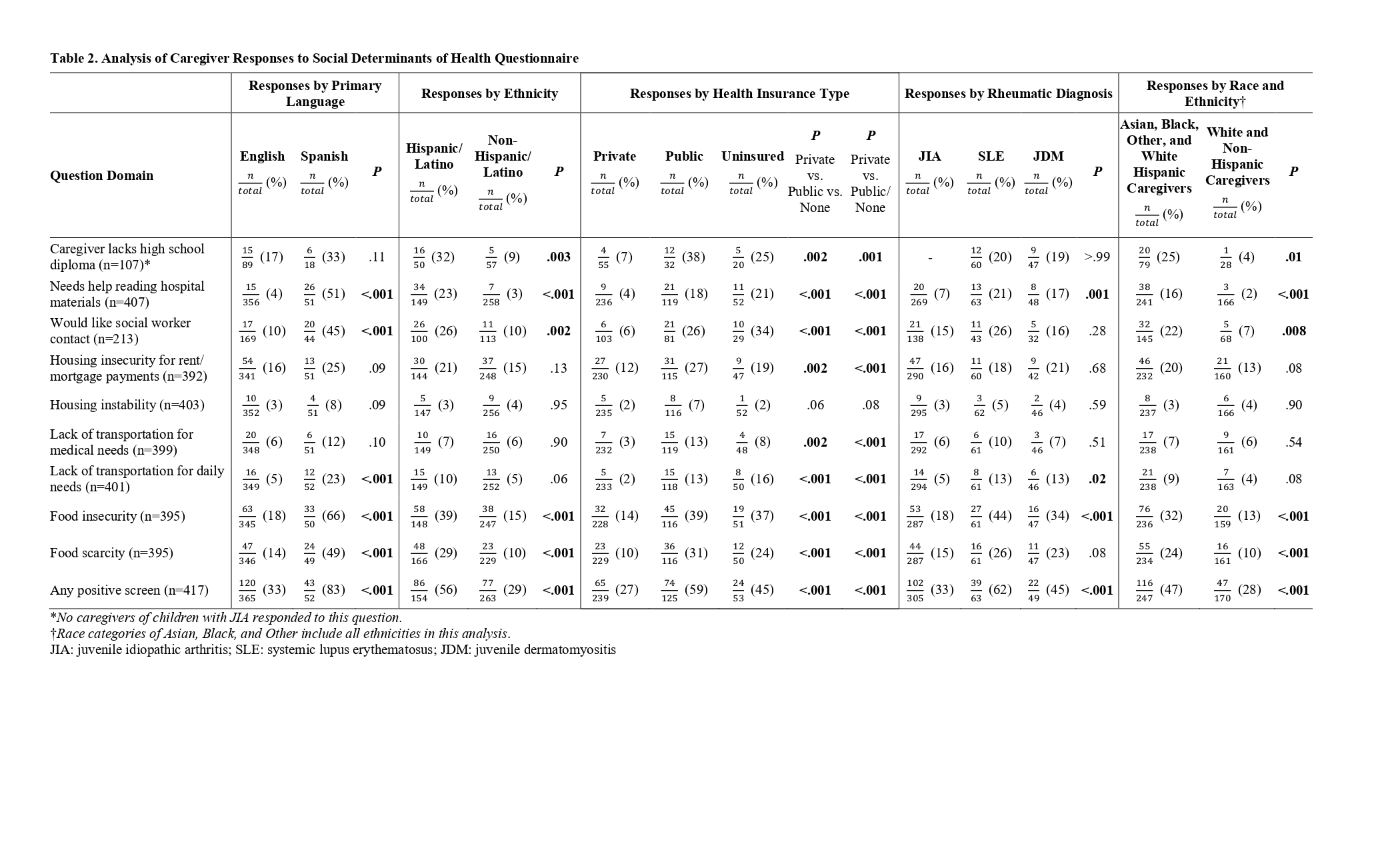
SDoH Screening in Relationship to ADISupporting image 3


Disclosures: H. Moosa: None; K. Ciaglia: None; Y. Ma: None; E. Sloan: None.

To cite this abstract in AMA style:

Moosa H, Ciaglia K, Ma Y, Sloan E. Unmet Social Needs in Pediatric Rheumatic Disease: A Study of Disparities [abstract]. Arthritis Rheumatol. 2026; 78 (suppl 3). https://acrabstracts.org/abstract/unmet-social-needs-in-pediatric-rheumatic-disease-a-study-of-disparities/. Accessed .
  • Tweet
  • Email a link to a friend (Opens in new window) Email
  • Print (Opens in new window) Print

« Back to 2026 Pediatric Rheumatology Symposium

ACR Meeting Abstracts - https://acrabstracts.org/abstract/unmet-social-needs-in-pediatric-rheumatic-disease-a-study-of-disparities/

Advanced Search

Your Favorites

You can save and print a list of your favorite abstracts during your browser session by clicking the “Favorite” button at the bottom of any abstract. View your favorites »

Embargo Policy

All abstracts accepted to PRYSM are under media embargo once the ACR has notified presenters of their abstract’s acceptance. They may be presented at other meetings or published as manuscripts after this time but should not be discussed in non-scholarly venues or outlets. The following embargo policies are strictly enforced by the ACR.

Accepted abstracts are made available to the public online in advance of the meeting and are published in a special online supplement of our scientific journal, Arthritis & Rheumatology. Information contained in those abstracts may not be released until the abstracts appear online. In an exception to the media embargo, academic institutions, private organizations, and companies with products whose value may be influenced by information contained in an abstract may issue a press release to coincide with the availability of an ACR abstract on the ACR website. However, the ACR continues to require that information that goes beyond that contained in the abstract (e.g., discussion of the abstract done as part of editorial news coverage) is under media embargo until 6:00 PM CT on March 18. Journalists with access to embargoed information cannot release articles or editorial news coverage before this time. Editorial news coverage is considered original articles/videos developed by employed journalists to report facts, commentary, and subject matter expert quotes in a narrative form using a variety of sources (e.g., research, announcements, press releases, events, etc.).

Violation of this policy may result in the abstract being withdrawn from the meeting and other measures deemed appropriate. Authors are responsible for notifying colleagues, institutions, communications firms, and all other stakeholders related to the development or promotion of the abstract about this policy. If you have questions about the ACR abstract embargo policy, please contact ACR abstracts staff at [email protected].

Wiley

  • Online Journal
  • Privacy Policy
  • Permissions Policies
  • Cookie Preferences

© Copyright 2026 American College of Rheumatology