
Session Information
Session Time: 5:00PM-6:00PM
Background/Purpose: Childhood onset rheumatic diseases are rare and potentially life-threatening. Skin rash may be one of the first outward signs that can signal disease and studies have demonstrated that there are disparities in clinicians’ ability to identify diseases in patients with SOC compared to white/lighter skin tones (1). This can lead to diagnostic delay and worse outcomes for patients with SOC (2). Inequitable representation of skin tones in educational materials is a form of structural racism in medicine. Achieving equitable representation is crucial to improve clinical skills and mitigate bias when identifying skin disease in patients with a range of skin tones.
Methods: We reviewed all images within the ACR Image Bank collections of childhood rheumatic diseases. Three raters independently scored skin tone using the National Immigrant Survey Skin Color Scale (1 to 10, 10 being the darkest tone) (3). Scores were grouped accordingly: 1-2 as light/white, 3-5 as medium/brown, 6-10 as dark/black (4). For images categorized differently between raters, we grouped them as light-medium and medium-dark. Interrater reliability was assessed using kappa coefficient based on initial skin color grouping where >0.75 is excellent, 0.4-0.75 is good, and < 0.4 is marginal.
Results: We identified 122 images: of these, 40 were excluded due to insufficient visible skin. Initial skin color scores for all raters ranged from 1-8. There was overall good interrater reliability between skin scores. Ultimately, almost three quarters (72%) of the images were rated as light or light medium. Approximately one in ten (11%) were rated as medium-dark or dark.
Conclusion: Our study demonstrated a lack of representation of dark skin tones compared to light/white skin. This lack of representation in a national photo bank perpetuates disparities in the education of physicians and may lead to delays in the identification of rheumatic skin disease among patients with SOC. We encourage all pediatric rheumatologists to ensure there is adequate representation of all skin tones across educational materials.
Comparison of Rater Scores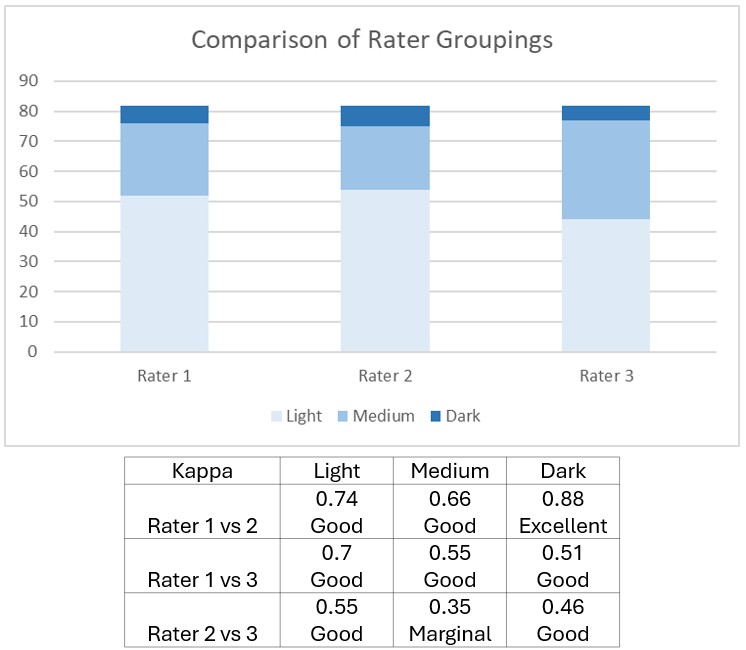 Interrater reliability (K) was interpreted as >0.75 is excellent, 0.4-0.75 is good, and < 0.4 is marginal. There was overall good interrater reliability between skin scores.
Combined Rater Results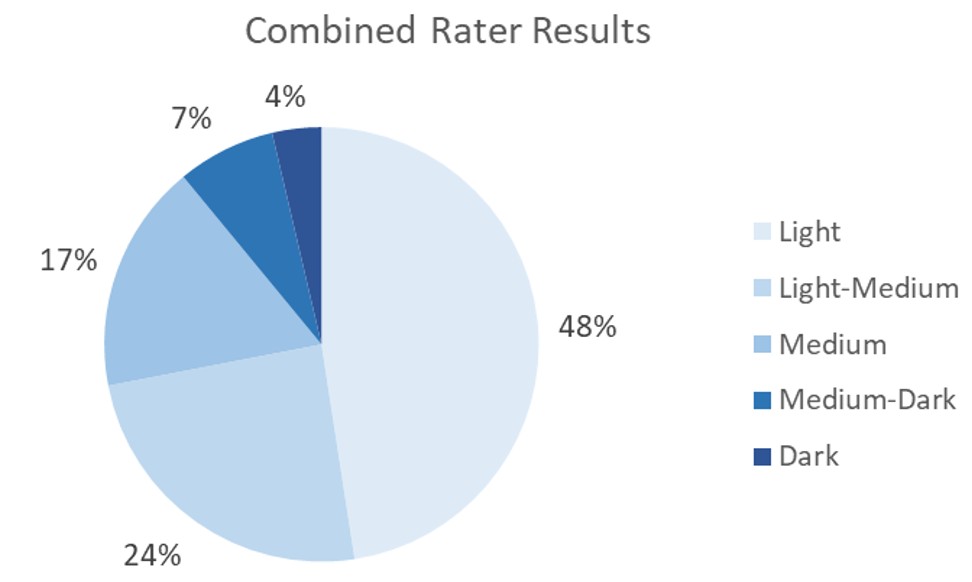 72% of the images were rated as light or light medium and approximately one in ten (11%) were rated as medium-dark or dark.
Diseases and Diagnoses associated with image in ACR library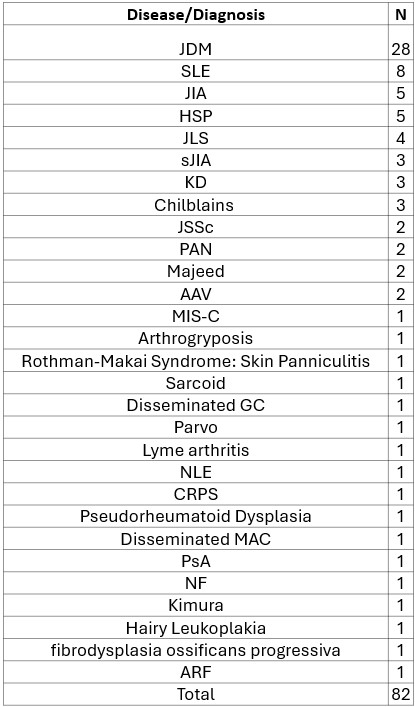
To cite this abstract in AMA style:
Ashe B, Li J, Gagne S. Representation of Skin of Color Among Pediatric Images in ACR Image Library [abstract]. Arthritis Rheumatol. 2026; 78 (suppl 3). https://acrabstracts.org/abstract/representation-of-skin-of-color-among-pediatric-images-in-acr-image-library/. Accessed .« Back to 2026 Pediatric Rheumatology Symposium
ACR Meeting Abstracts - https://acrabstracts.org/abstract/representation-of-skin-of-color-among-pediatric-images-in-acr-image-library/