
Session Information
Session Time: 5:00PM-6:00PM
Background/Purpose: Juvenile-onset systemic sclerosis (jSSc) is a rare but serious autoimmune condition causing both inflammation and fibrosis across several organ systems in children, as with adult SSc. As a result of its rarity, the psychological and emotional impact on quality of life has been understudied in children. Given the severity of disease and its documented impact on physical health and function, we hypothesize that there is a significant number of children with jSSc experiencing negative psychological and social symptoms.
Methods: Children and young adults with jSSc enrolled in the National Registry for Childhood Onset Scleroderma (NRCOS), a prospective observational cohort, with completed PedQL 4.0 Generic Core and Rheumatology Modules were included. These patient reported outcomes (PROs) are validated and standardized assessments that measure health-associated quality of life outcomes. Domains representing psychological and social impact were analyzed: emotional and social functioning (Generic Core) and worry (Rheumatology Module). Suboptimal outcomes in each domain were defined as scores of ≤90. Demographic, clinical, and PRO measures were extracted from the registry and descriptive statistics were generated.
Results: A total of 89 patients with jSSc ranging in age from 6-24 were included, with demographic information reported in Table 1. Each patient completed the PedQL 4.0 Generic Core questionnaires across 267 visits, and 212 visits with the Rheumatology modules. There was a median of two visits per patient. Across all domains analyzed, the majority of visits yielded suboptimal scores (less than 90) (Table 2). Over two-thirds of visits demonstrated impaired outcomes in emotional functioning (e.g., sadness, anger, worry, sleep disturbance) and psychological/social domains (e.g., difficulty keeping up with peers, feeling sad or blue) (Table 2).
Conclusion: Juvenile systemic sclerosis substantially affects the emotional well-being and social functioning in the majority of children and young adults with SSc. Clinicians should recognize and address these challenges during routine clinical care. Future studies should incorporate validated mental health assessments to guide screening and interventions aimed at mitigating the psychosocial burden of jSSc.
Table 1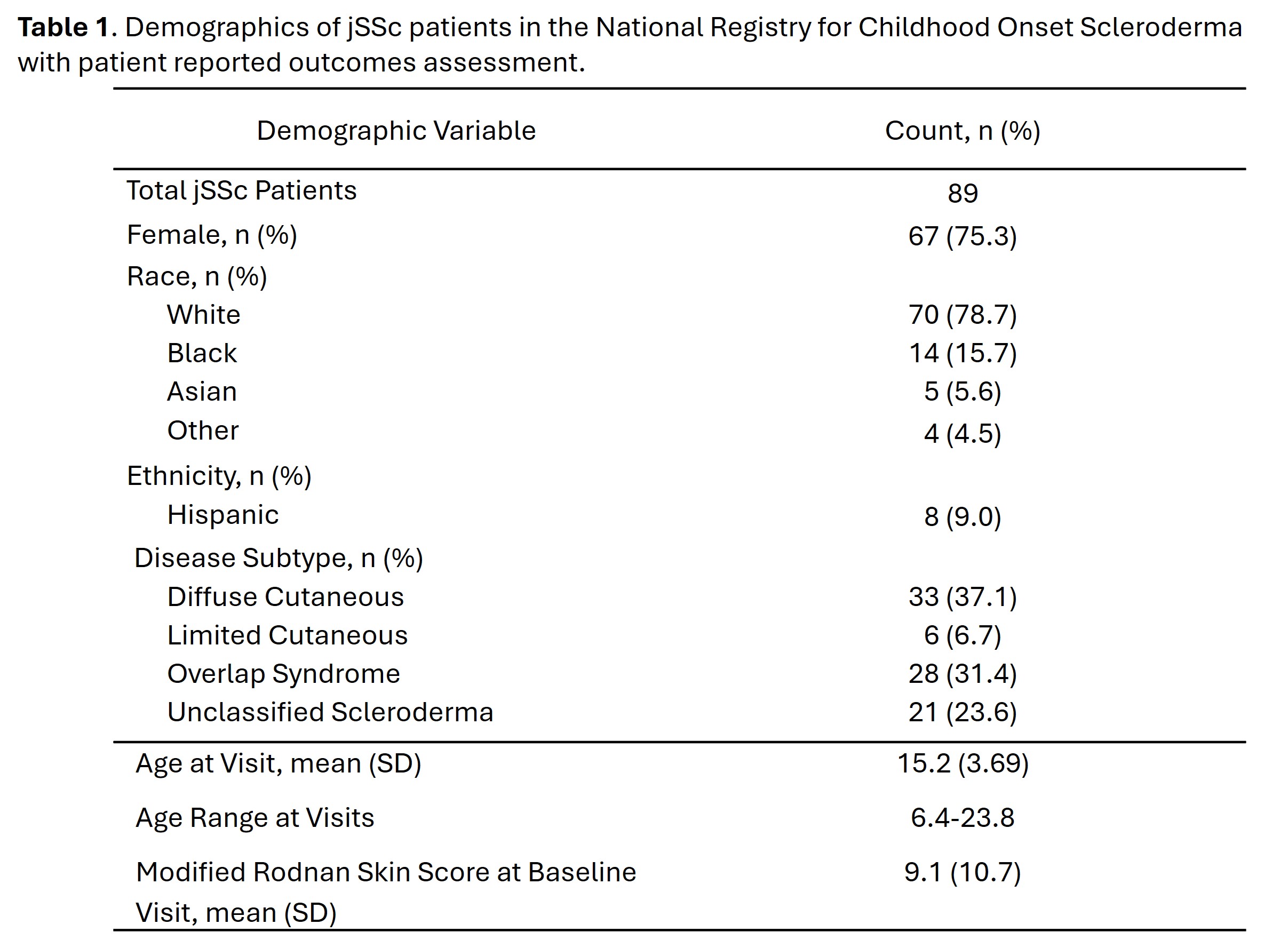 Table 1. Demographics of jSSc patients in the National Registry for Childhood Onset Scleroderma with patient reported outcomes assessment.
Table 2.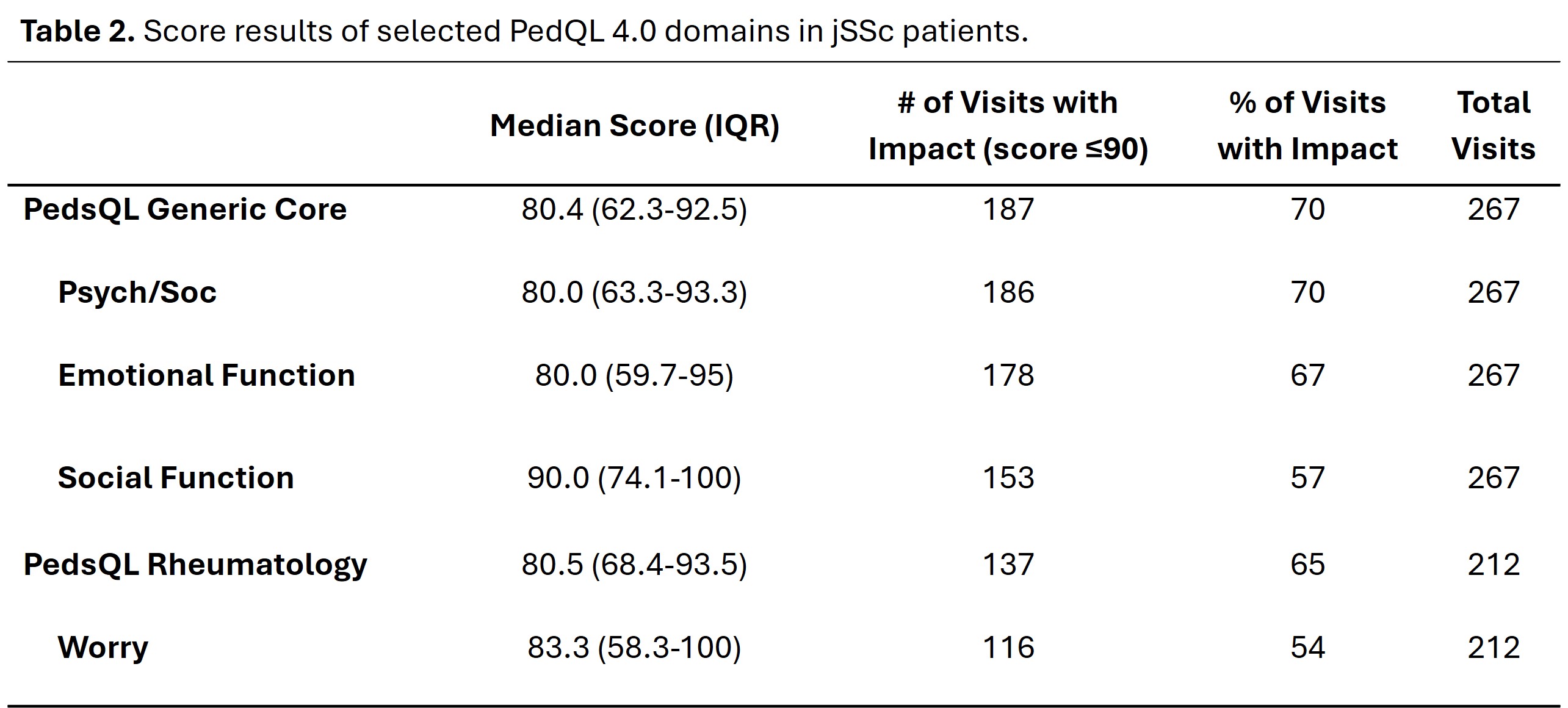 Table 2. Score results of selected PedQL 4.0 domains in jSSc patients.
Figure 1.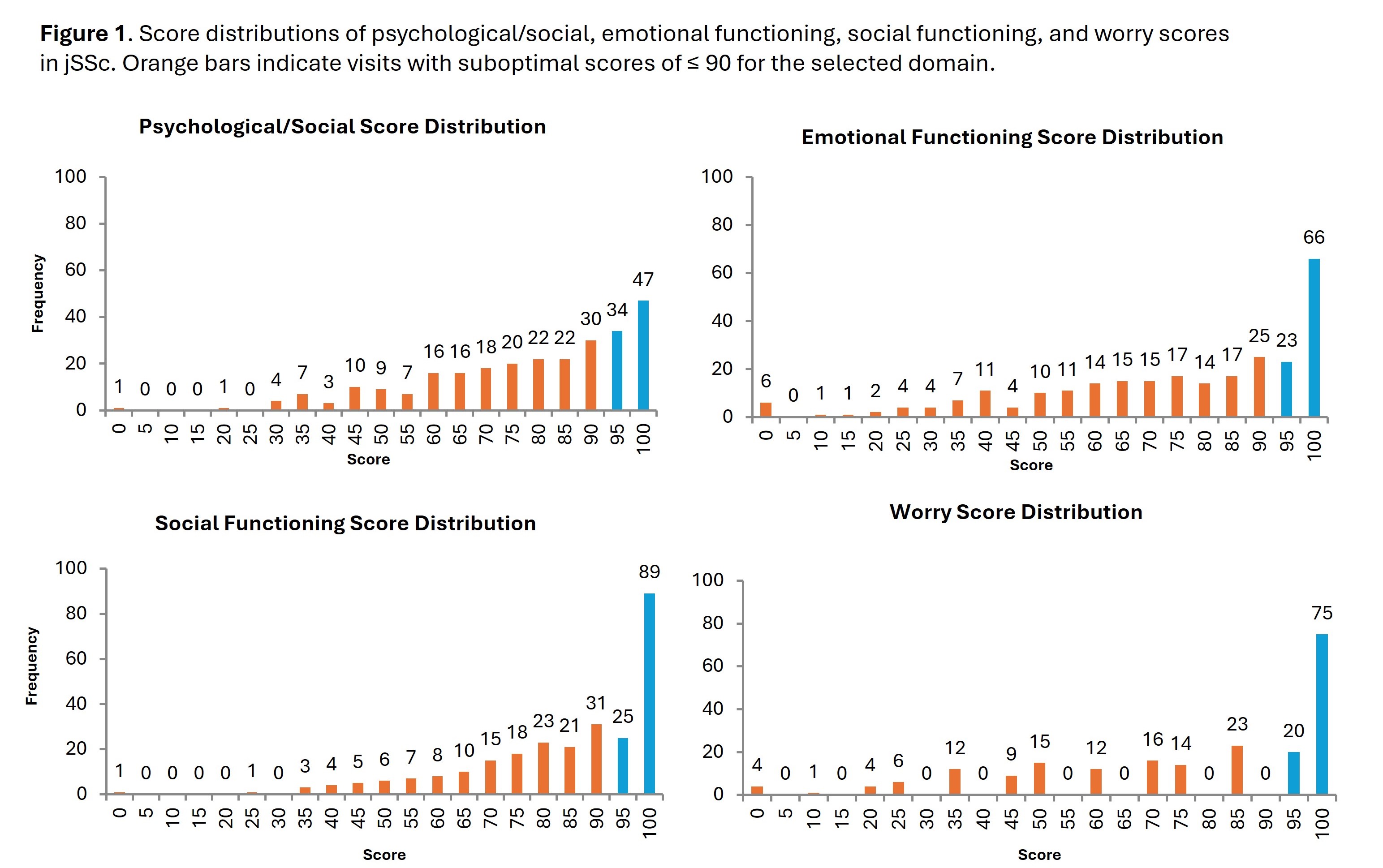 Figure 1. Score distributions of psychological/social, emotional functioning, and worry scores in jSSc. Orange bars indicate visits with suboptimal scores of less than or equal to 90 for the selected domain.
To cite this abstract in AMA style:
deRosas E, Torok K. Psychosocial Burden in Juvenile Systemic Sclerosis: Insights from PedQL Outcomes [abstract]. Arthritis Rheumatol. 2026; 78 (suppl 3). https://acrabstracts.org/abstract/psychosocial-burden-in-juvenile-systemic-sclerosis-insights-from-pedql-outcomes/. Accessed .« Back to 2026 Pediatric Rheumatology Symposium
ACR Meeting Abstracts - https://acrabstracts.org/abstract/psychosocial-burden-in-juvenile-systemic-sclerosis-insights-from-pedql-outcomes/