ACR Meeting Abstracts

ACR Meeting Abstracts

  • Meetings
    • 2026 ACR/ARP PRSYM
    • ACR Convergence 2025
    • ACR Convergence 2024
    • ACR Convergence 2023
    • 2023 ACR/ARP PRSYM
    • ACR Convergence 2022
    • ACR Convergence 2021
    • 2020-2009 Meetings
    • Download Abstracts
  • Keyword Index
  • Advanced Search
  • Your Favorites
    • Favorites
    • Login
    • View and print all favorites
    • Clear all your favorites
  • ACR Meetings

Abstract Number: 012

Prevalence and Impact of Adverse Childhood Experiences in Pediatric Systemic Lupus Erythematosus

Anita Dhanrajani1, Rhea Bhargava2 and Alfred Kim3, 1Manning Family Children's Hospital, Tulane University, 2Tulane University Medicine, New Orleans, LA, 3Washington University School of Medicine, Saint Louis, MO

Meeting: 2026 Pediatric Rheumatology Symposium

  • Tweet
  • Email a link to a friend (Opens in new window) Email
  • Print (Opens in new window) Print
Session Information

Date: Thursday, March 19, 2026

Title: Abstracts: Systemic Lupus Erythematosus

Session Time: 5:35PM-5:40PM

Background/Purpose: Adverse childhood experiences (ACEs) have been linked to incident childhood-onset SLE (cSLE) and poorer patient-reported outcomes, raising the possibility that early-life stress may contribute to worse cSLE trajectories. This study characterizes ACE exposure in a predominantly African American cSLE cohort and examines its association with physician-assessed and patient-reported outcomes, alongside pilot single-cell transcriptomic data exploring biological pathways related to ACE-related differences.

Methods: Potential participants aged 12–21 years with a rheumatologist-confirmed diagnosis of cSLE and attending a rheumatology clinic visit at a referral center in Louisiana were recruited for this study. Following consent, ACEs were gathered using the Pediatric ACEs and related life events screener (PEARLS), clinical data were obtained through medical record review, and patients completed the PHQ-9 and GAD-7 questionnaires during the same visit. Blood samples were collected from participants, and PBMCs were isolated for downstream single-cell RNA-seq and single-nuclei ATAC-seq. Clinical data are reported for 27 patients, and pilot transcriptomic findings are presented for a subset of 8 patients. Clinical analyses were conducted using GraphPad Prism, and transcriptomic data were analyzed using Python. ACEs were categorized as low (0–1), medium (2–3), and high (≥4).

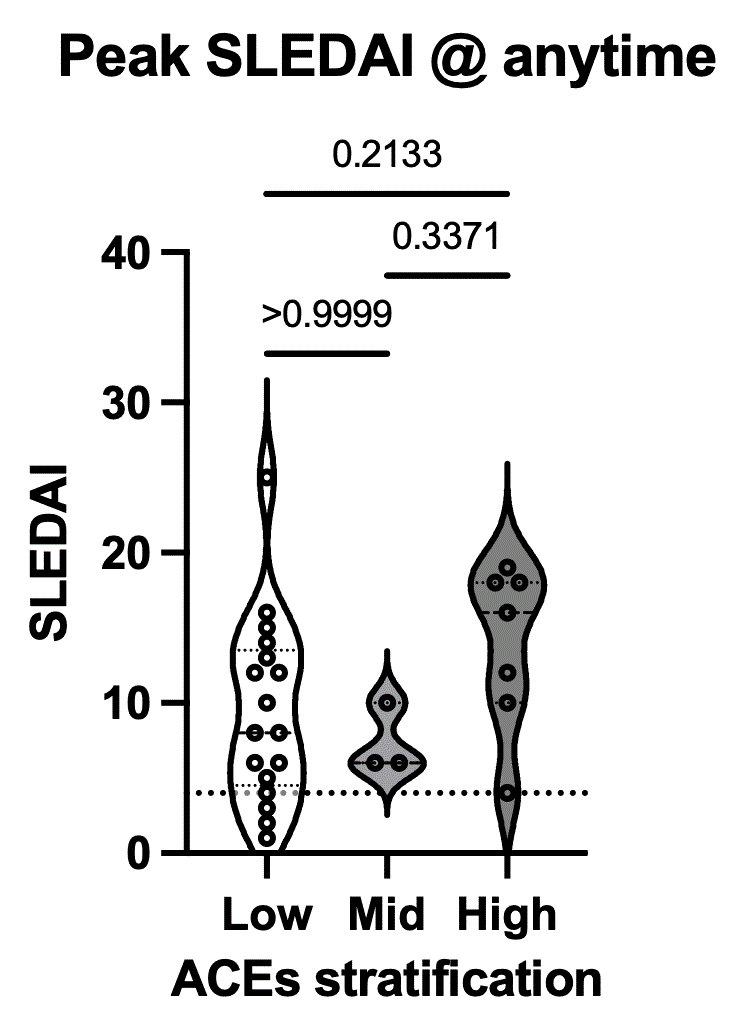
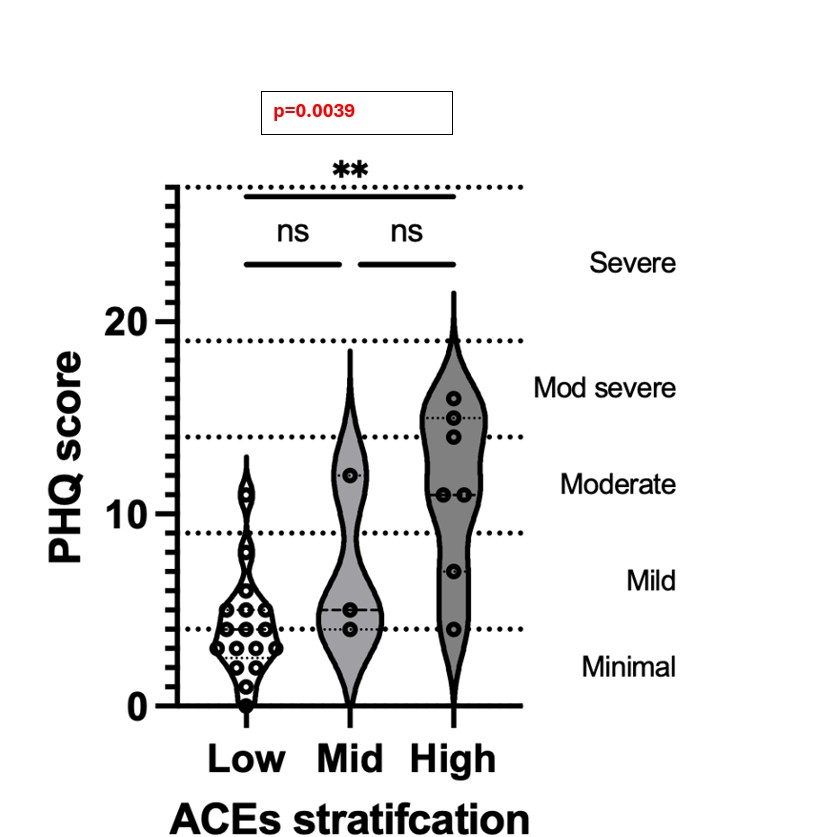
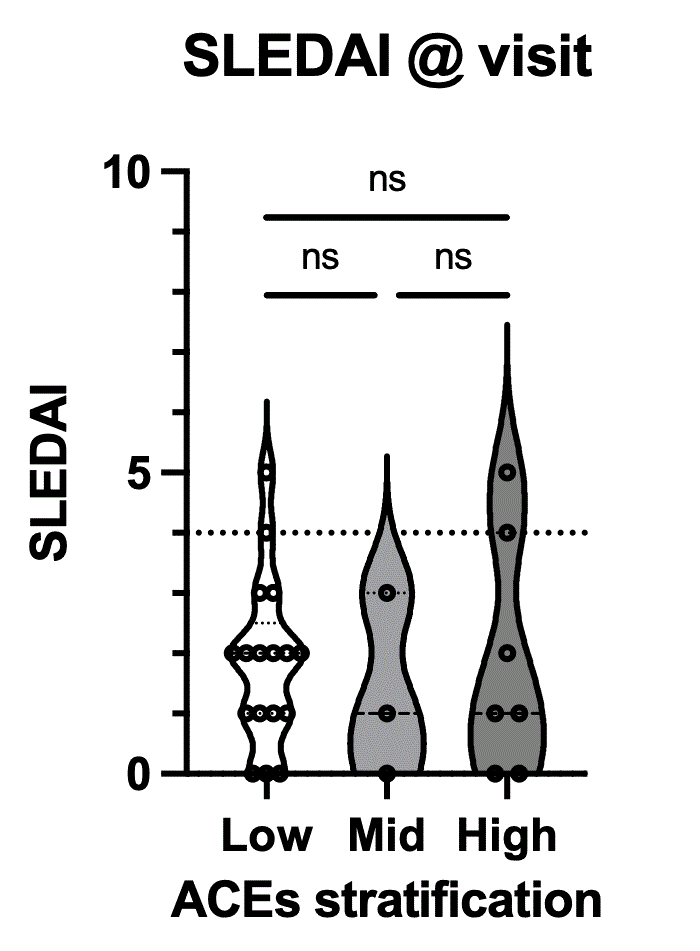
Results: 24/27 enrolled patients were female and 19 identified as African American. The mean age was 16.1 years (SD ±4.6). The mean SLICC score at diagnosis was 7.4 (SD ±5.35), and the mean SLEDAI at enrollment was 1.77 (SD ±3.0). Median highest lifetime SLEDAI recorded across the cohort was 10 (IQR 8.5). ACEs were reported in 12 of 27 patients, with 7 reporting an ACE score ≥4. No differences in median SLEDAI scores collected at time of ACE evaluation were observed between low, medium and high ACE groups (Fig 1). Patients in low ACE group demonstrated lower peak lifetime SLEDAI compared to the high ACE group (Fig 2) although the association did not reach statistical significance likely due to limited sample size at this early stage of this study. A statistically significant difference between ACEs groups and PHQ-9 scores was found (p< 0.039) (Fig 3), suggesting a link between ACE exposure and depressive symptoms. GO pathway analysis derived from scRNA-seq from eight patients revealed that interferon signaling was most enriched among patients with low ACE exposure, whereas negative regulation of DNA repair was most enriched among those with high ACE exposure.   

Conclusion: In this predominantly African American cohort of adolescents with cSLE, greater depressive symptomatology was observed in those with higher ACE burden. Although there was no difference between disease activity and ACEs at the same visit, a non-statistically significant increase in peak lifetime SLEDAI was observed in high versus low ACE group. Transcriptomic differences between low- and high-ACE groups suggest that psychosocial stress may influence distinct immunologic pathways. Ongoing analyses will assess medication effects, particularly cumulative corticosteroid exposure, as key confounders. 
 

SLEDAI at enrollment visitSupporting image 1
Worst lifetime SLEDAISupporting image 2

PHQ9Supporting image 3


Disclosures: A. Dhanrajani: GlaxoSmithKlein(GSK), 6; R. Bhargava: None; A. Kim: AbbVie/Abbott, 2, AstraZeneca, 2, 5, 6, Aurinia, 2, 7, Biogen, 2, 7, Bristol-Myers Squibb(BMS), 5, CRISPR Therapeutics, 5, Exagen Diagnostics, 2, 6, Genentech, 2, GlaxoSmithKlein(GSK), 2, 6, Hinge Bio, 2, Invivyd, 2, 6, Johnson & Johnson, 2, Kymera Therapeutics, 2, Kypha Inc., 2, 10, Miltenyi Biomedicine, 2, Novartis, 2, 5, Zenas BioPharma, 2.

To cite this abstract in AMA style:

Dhanrajani A, Bhargava R, Kim A. Prevalence and Impact of Adverse Childhood Experiences in Pediatric Systemic Lupus Erythematosus [abstract]. Arthritis Rheumatol. 2026; 78 (suppl 3). https://acrabstracts.org/abstract/prevalence-and-impact-of-adverse-childhood-experiences-in-pediatric-systemic-lupus-erythematosus/. Accessed .
  • Tweet
  • Email a link to a friend (Opens in new window) Email
  • Print (Opens in new window) Print

« Back to 2026 Pediatric Rheumatology Symposium

ACR Meeting Abstracts - https://acrabstracts.org/abstract/prevalence-and-impact-of-adverse-childhood-experiences-in-pediatric-systemic-lupus-erythematosus/

Advanced Search

Your Favorites

You can save and print a list of your favorite abstracts during your browser session by clicking the “Favorite” button at the bottom of any abstract. View your favorites »

Embargo Policy

All abstracts accepted to PRYSM are under media embargo once the ACR has notified presenters of their abstract’s acceptance. They may be presented at other meetings or published as manuscripts after this time but should not be discussed in non-scholarly venues or outlets. The following embargo policies are strictly enforced by the ACR.

Accepted abstracts are made available to the public online in advance of the meeting and are published in a special online supplement of our scientific journal, Arthritis & Rheumatology. Information contained in those abstracts may not be released until the abstracts appear online. In an exception to the media embargo, academic institutions, private organizations, and companies with products whose value may be influenced by information contained in an abstract may issue a press release to coincide with the availability of an ACR abstract on the ACR website. However, the ACR continues to require that information that goes beyond that contained in the abstract (e.g., discussion of the abstract done as part of editorial news coverage) is under media embargo until 6:00 PM CT on March 18. Journalists with access to embargoed information cannot release articles or editorial news coverage before this time. Editorial news coverage is considered original articles/videos developed by employed journalists to report facts, commentary, and subject matter expert quotes in a narrative form using a variety of sources (e.g., research, announcements, press releases, events, etc.).

Violation of this policy may result in the abstract being withdrawn from the meeting and other measures deemed appropriate. Authors are responsible for notifying colleagues, institutions, communications firms, and all other stakeholders related to the development or promotion of the abstract about this policy. If you have questions about the ACR abstract embargo policy, please contact ACR abstracts staff at [email protected].

Wiley

  • Online Journal
  • Privacy Policy
  • Permissions Policies
  • Cookie Preferences

© Copyright 2026 American College of Rheumatology