
Session Information
Session Time: 6:00PM-7:00PM
Background/Purpose: Managing a 6-year-old’s pain from Systemic Juvenile Idiopathic Arthritis is challenging, particularly in accurately understanding and communicating it. My (JSM) daughter, ASM has experienced symptoms since 18 months of age and has had a complex, refractory disease course. While she can express pain to her parents, communicating with teachers, therapists, and healthcare providers is challenging, limiting accurate assessment and treatment. In addition, existing pain tools lacked capability in including anatomical sites, which could have different pain severity. Children’s ability to describe pain location develops later than communication of the pain itself, and pain location assessment tools have been successful in identifying postoperative pain location in children ages 3-9 years (Emerson ND, Bursch B Children Basel. 2020;7(10):184)
To address this, JSM developed the Pain Wheel, a child-centered anatomical visual tool that lets ASM indicate pain location and rate intensity, promoting age-appropriate communication, self-advocacy, emotional comfort, and collaboration among patients, caregivers, educators, and healthcare providers.
Methods: The Pain Wheel was developed collaboratively by a parent-patient-dyad (JSM and ASM) in June 2025, prioritizing visual engagement, self-expression, and autonomy (Figure 1). The goal was to create a tool that a child could use independently to describe pain experiences across anatomical sites meaningfully to healthcare providers.
The Pain Wheel consists of a circular diagram divided into sections representing major joints and body areas. Arrows can be moved to indicate the locations. At the bottom of the graphic is the pain Visual Analogue Scale with the Wong-Baker FACES, which is commonly used in rheumatology clinics.
ASM used the Pain Wheel in multiple settings: therapy sessions, office visits, at school and at home. Observations focused on her ability to effectively communicate the location and intensity of her pain, and qualitative feedback was gathered from caregivers, teachers, and healthcare providers regarding the tool’s usability, clarity, and impact on communication.
Results: Over 5 months, ASM demonstrated subjectively improved ability to communicate pain location and intensity. Caregivers noted increased independence and minimal prompting (Figure 2: Table ). She effectively shared symptoms with teachers. Providers found pain reports clearer and more actionable, enabling focused discussions and guiding treatment decisions. The circular design and arrow-based interaction facilitated precise identification of pain locations, while the numeric scale supported intensity reporting. Overall, the tool enhanced collaboration and reduced frustration during interactions about her pain.
Conclusion: The Pain Wheel is a parent-led instrument that helps children with juvenile arthritis report pain location and severity, supporting autonomy and better collaboration with caregivers and providers. It will soon be implemented and evaluated in a quality improvement project to boost outcome documentation in JIA at Albany Med Pediatric Rheumatology Clinics (Figure 3: Key Driver Diagram).
Figure 1: The Pain Wheel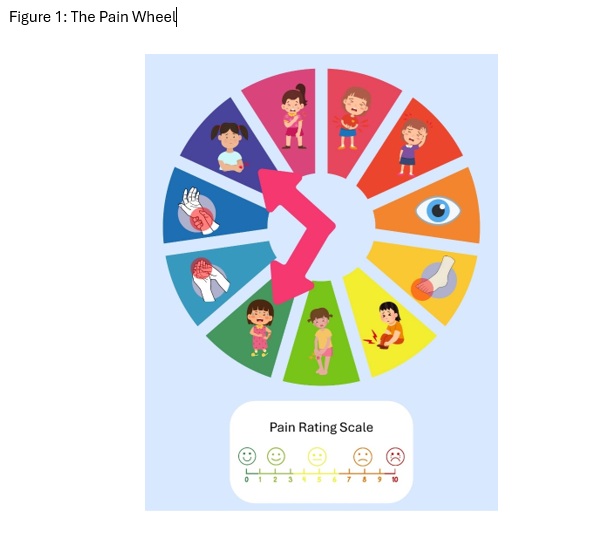
Figure 2: Table with Feedback Source, Theme, Comment and Outcomes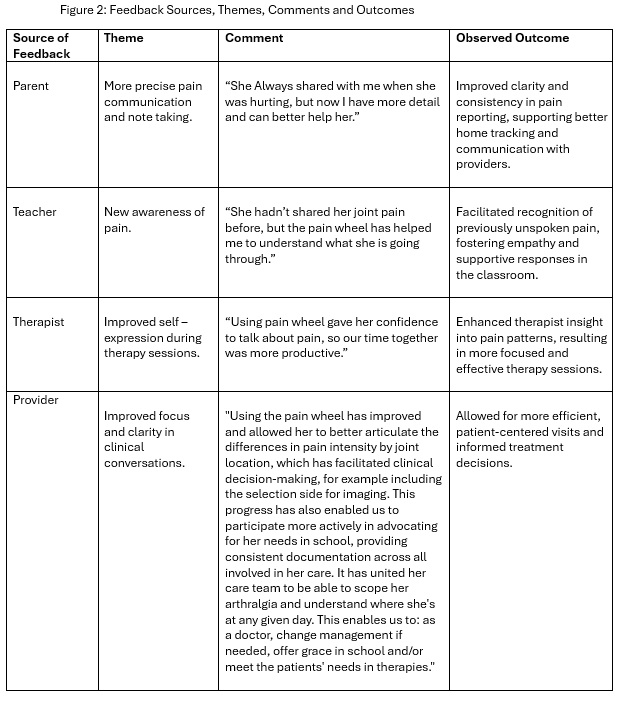
Figure 3: The Key Driver Diagram 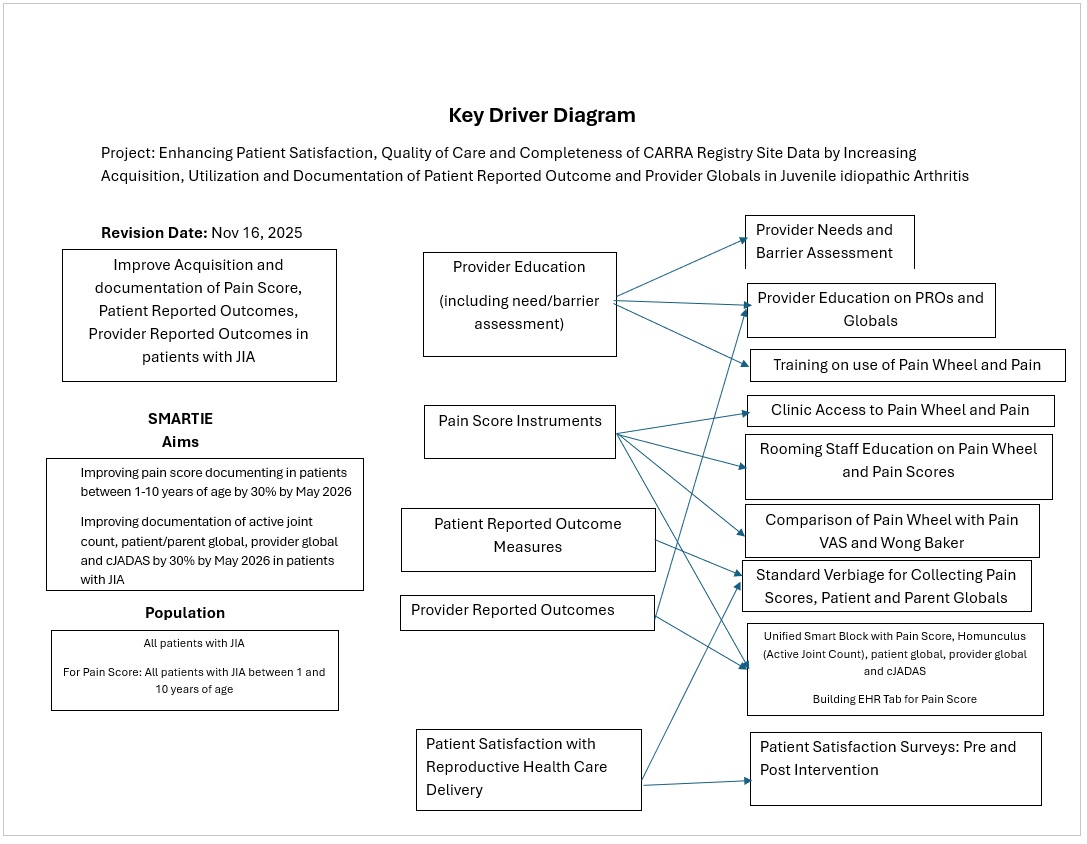 Enhancing Patient Satisfaction, Quality of Care and Completeness of CARRA Registry Site Data by Increasing Acquisition, Utilization and Documentation of Patient Reported Outcome and Provider Globals in Juvenile idiopathic Arthritis
To cite this abstract in AMA style:
St Martin J, Ganguli S, Sanghvi A, Sutherland A, Allen B, Bermudez-Santiago L. Empowering Voices: Inception of a Parent Led Anatomical Visual Pain Assessment Tool for Juvenile Arthritis [abstract]. Arthritis Rheumatol. 2026; 78 (suppl 3). https://acrabstracts.org/abstract/empowering-voices-inception-of-a-parent-led-anatomical-visual-pain-assessment-tool-for-juvenile-arthritis/. Accessed .« Back to 2026 Pediatric Rheumatology Symposium
ACR Meeting Abstracts - https://acrabstracts.org/abstract/empowering-voices-inception-of-a-parent-led-anatomical-visual-pain-assessment-tool-for-juvenile-arthritis/