
Session Information
Session Time: 6:00PM-7:00PM
Background/Purpose: Cognitive dysfunction (CD) occurs in 30-60% of youth with childhood-onset systemic lupus erythematosus (cSLE), and negatively impacts medical care, socioeconomic achievement, and quality of life. However, CD remains under-recognized in clinical practice. Understanding current approaches to screening for CD and formal neuropsychological evaluation in this population and the challenges or barriers to assessment will inform actionable targeted interventions to improve recognition and outcomes.
Methods: This was a cross-sectional study assessing current clinical practice and barriers to screening and evaluation of CD. Our electronic survey was distributed to rheumatologists and trainees of the Childhood Arthritis and Rheumatology Research Alliance (CARRA) who cared for individuals with cSLE under 21 years old.
Results: Of 443 eligible CARRA members, 109 (25%) completed the survey. Only 61% routinely asked about or screened for cognitive concerns during clinic visits, and only 27% used a standardized method for screening at any frequency. Challenges in performing cognitive screening included uncertainty with administration, interpreting results, billing, and time available to complete. Formal neuropsychological evaluation was rare (8%) and primarily obtained for patients with an already known history of a neuropsychiatric lupus syndrome. More than half of respondents (54%) rarely or never had neuropsychological evaluations performed for their patients. The most common challenges to neuropsychological evaluation included difficulty accessing these services and assessment duration. Only 28% of providers felt able to adequately address cognition concerns in their patients. Despite this, the large majority thought that cognitive dysfunction was common in cSLE (94%), had long-term impacts on a patient’s health (100%), and that the medical literature supported routine screening of cognition (93%).
Conclusion: Currently, standardized screening methods and neuropsychological evaluation are infrequently used for evaluation of CD in cSLE. While rheumatologists understand that cognitive screening and neuropsychological evaluation are important components of care for youth with cSLE, they face multiple barriers related to guidance on optimal screening frequency/approaches, limited training, time and access to appropriate services. Future work addressing these challenges will support these providers and improve care for patients with cSLE.
Participant and clinical practice characteristics (Nf120)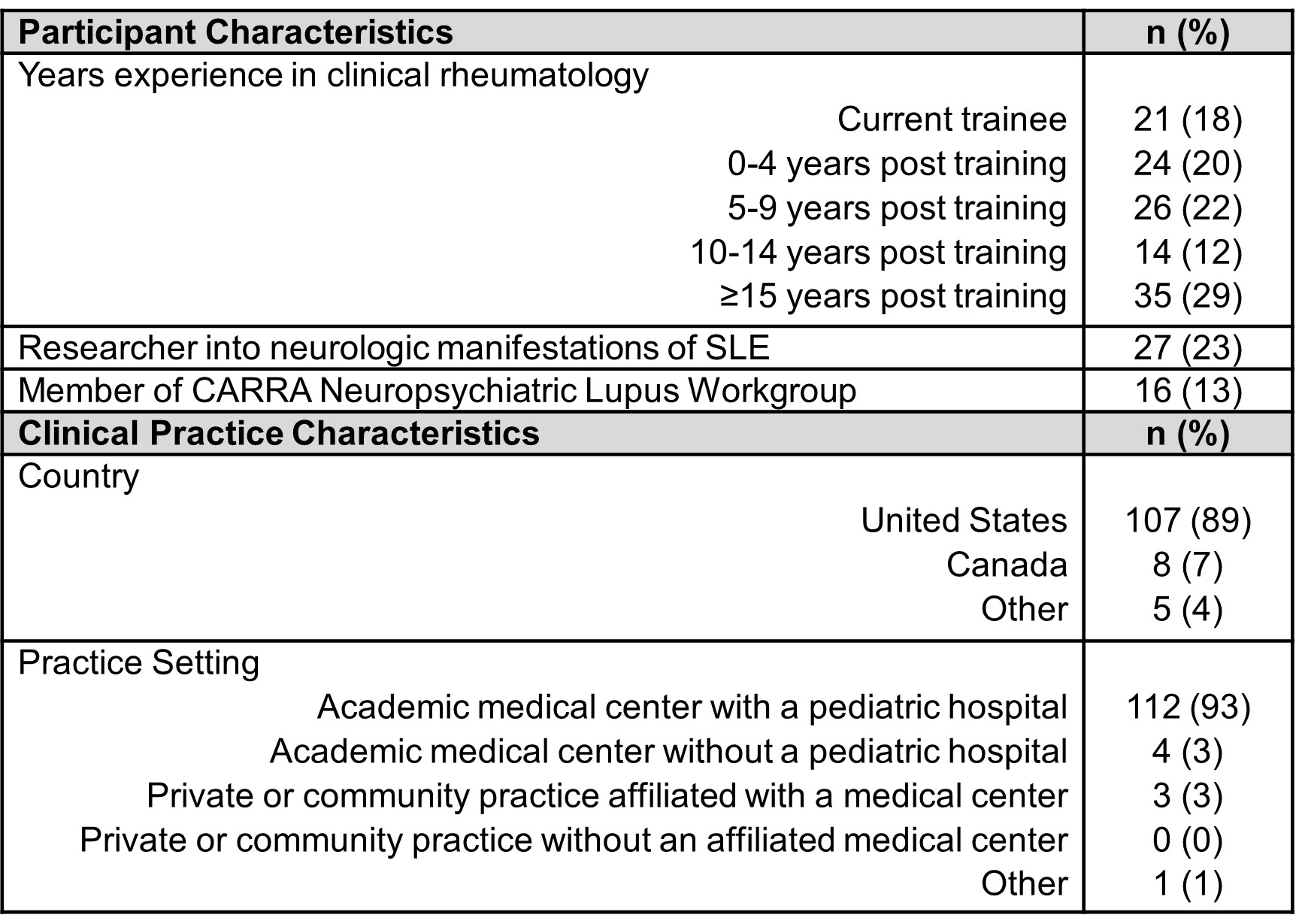
Current clinical practice and barriers to cognitive screening (Nf112)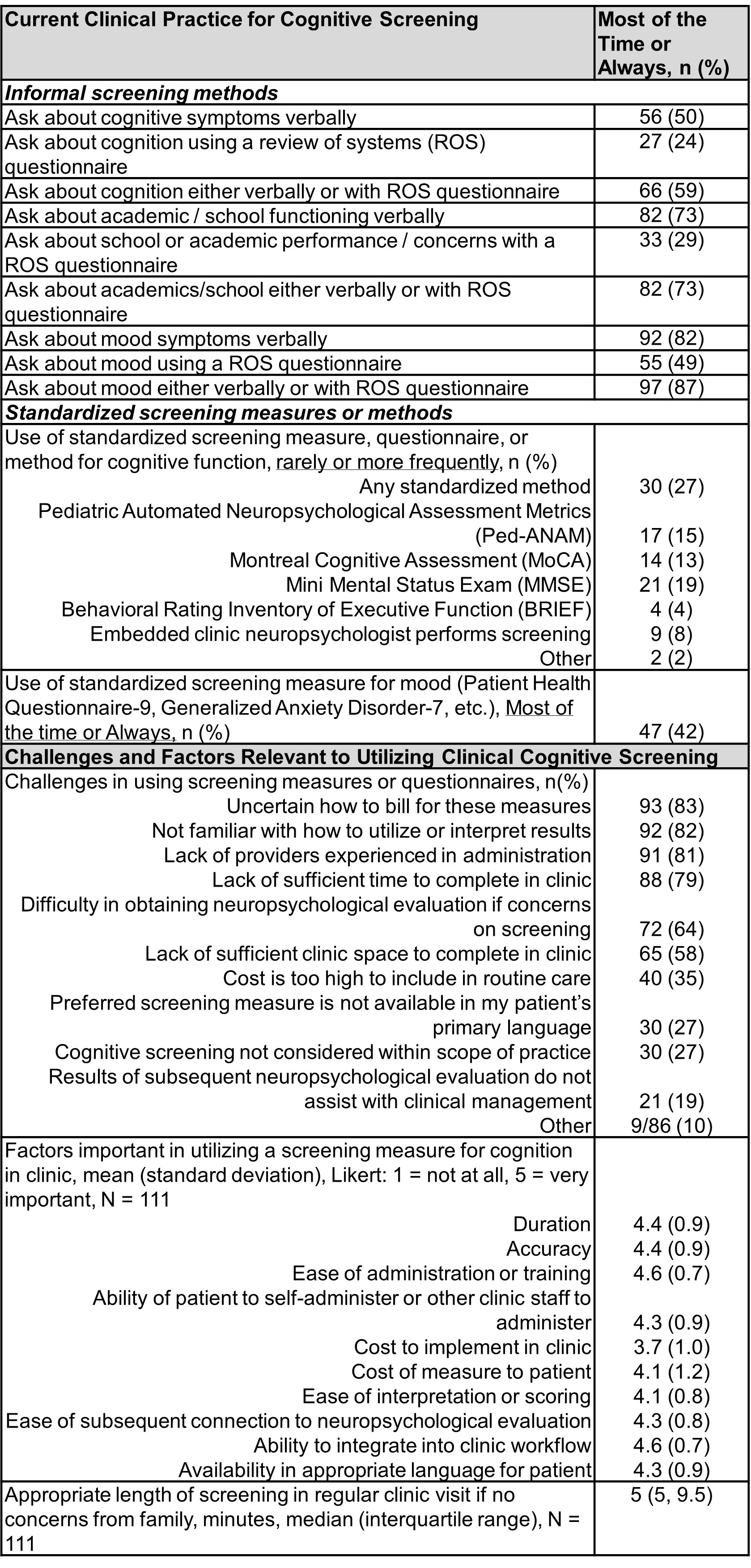
Current clinical practice and challenges to utilizing standardized formal neuropsychological evaluations (N = 109)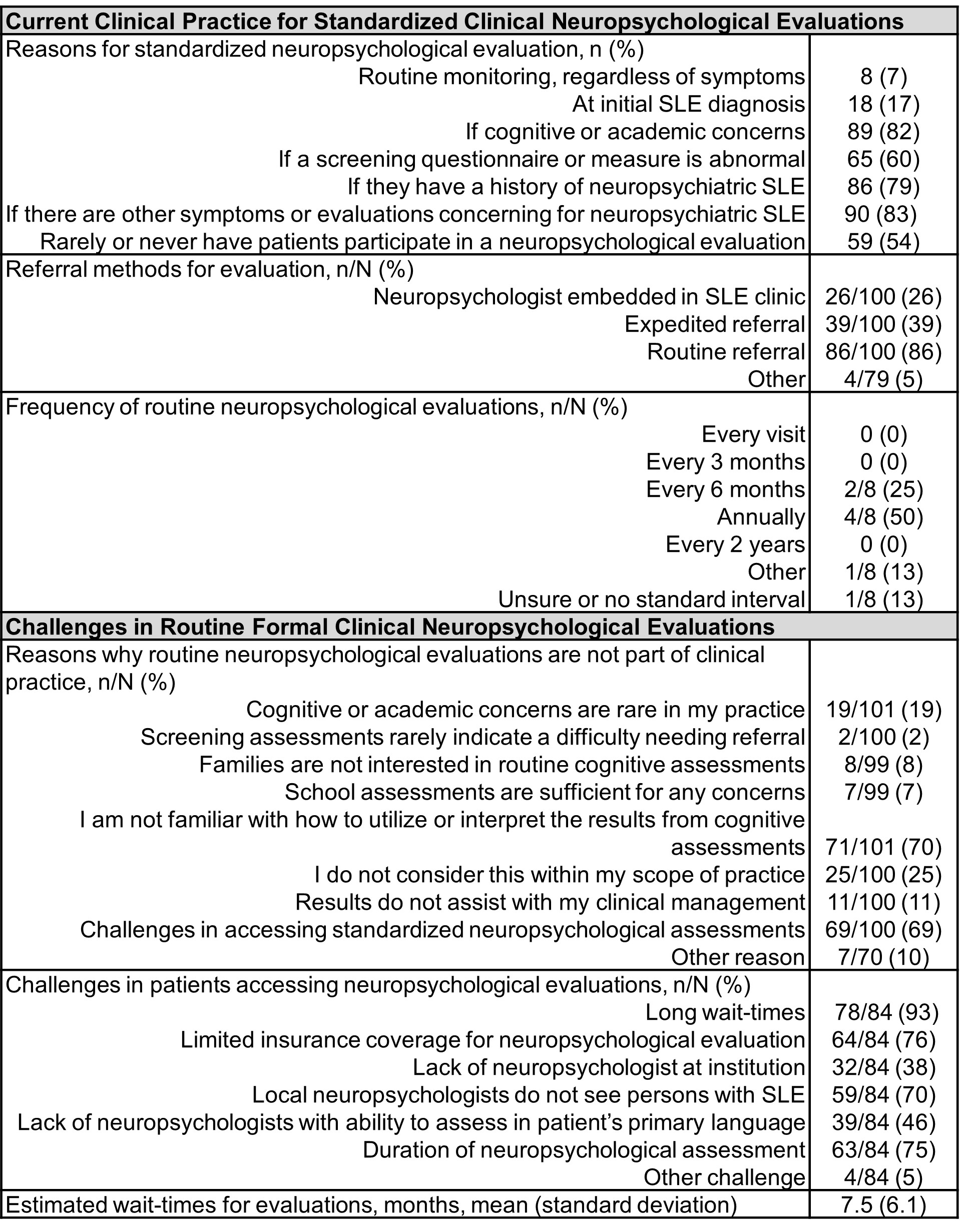
To cite this abstract in AMA style:
Kammeyer R, Rodriguez M, Knight A, Sadun R, Bennett J, Fuhlbrigge R, Hutaff-Lee C, Ogbu E. Challenges of Cognitive Screening and Formal Neuropsychological Evaluation in Youth with Childhood-Onset Systemic Lupus Erythematosus: A Survey of CARRA Providers [abstract]. Arthritis Rheumatol. 2026; 78 (suppl 3). https://acrabstracts.org/abstract/challenges-of-cognitive-screening-and-formal-neuropsychological-evaluation-in-youth-with-childhood-onset-systemic-lupus-erythematosus-a-survey-of-carra-providers/. Accessed .« Back to 2026 Pediatric Rheumatology Symposium
ACR Meeting Abstracts - https://acrabstracts.org/abstract/challenges-of-cognitive-screening-and-formal-neuropsychological-evaluation-in-youth-with-childhood-onset-systemic-lupus-erythematosus-a-survey-of-carra-providers/