ACR Meeting Abstracts

ACR Meeting Abstracts

  • Meetings
    • 2026 ACR/ARP PRSYM
    • ACR Convergence 2025
    • ACR Convergence 2024
    • ACR Convergence 2023
    • 2023 ACR/ARP PRSYM
    • ACR Convergence 2022
    • ACR Convergence 2021
    • 2020-2009 Meetings
    • Download Abstracts
  • Keyword Index
  • Advanced Search
  • Your Favorites
    • Favorites
    • Login
    • View and print all favorites
    • Clear all your favorites
  • ACR Meetings

Abstract Number: 116

Pilot of Adalimumab Withdrawal (PAW): Preliminary Analysis of Feasibility and Acceptability of Self-Collected Capillary Blood Samples

Ruud Verstegen1, Alicia Iizuka2, Chetna Godiwala3, Matthew Iozzio4, Melanie Kohlheim5, Karin Park6, Alan Russell7, marc Sudman8, Anna Sutton9, Erin Balay-Dustrude10, jennifer Cooper11, Joanne Drew12, A. Carmela Sagcal-Gironella13, Y. Ingrid Goh14, Olha Halyabar15, Kyle McBrearty16, L. Nandini Moorthy17, Amanda Nowakowski18, Ryan Oakes19, Edward oberle20, Mary Ellen Riordan13, Marinka twilt21, Christina Varghese22 and Daniel Horton23, 1The Hospital for Sick Children, Toronto, ON, Canada, 2Rutgers Center for Pharmacoepidemiology and Treatment Science, North Brunswick, NJ, 3Duke Clinical Research Institute, 4Rutgers Center for Pharmacoepidemiology and Treatment Science, 5Self, Granville, OH, 6Childhood Arthritis and Rheumatology Research Alliance, 7Duke Clinical Research Institute, NC, 8Cincinnati Children's Hospital Medical Center, Cincinnati, OH, 9University of Washington, Woodinville, WA, 10University of Washington, Seattle, WA, 11University of Colorado, Department of Pediatrics, San Francisco, CA, 12Nationwide Childrens' Hospital, Columbus, OH, 13Hackensack University Medical Center, Hackensack, NJ, 14The Hospital for Sick Children, 15Boston Children's Hospital, 16Boston Children's Hospital, Boston, MA, 17Rutgers Robert Wood Johnson Medical School, New Brunswick, NJ, 18Joseph M. Sanzari Children's Hospital, Hackensack Meridian Health, 19University of Colorado School of Medicine, Denver, CO, 20Divsion of Rheumatology, Department of Pediatrics, Nationwide Children's Hospital, Columbus, OH, USA, Columbus, OH, 21Alberta Children’s Hospital, 22Rutgers Robert Wood Johnson Medical School, 23Rutgers Robert Wood Johnson Medical School, Rutgers Center for Pharmacoepidemiology and Treatment Science, New Brunswick, NJ

Meeting: 2026 Pediatric Rheumatology Symposium

  • Tweet
  • Email a link to a friend (Opens in new window) Email
  • Print (Opens in new window) Print
Session Information

Date: Friday, March 20, 2026

Title: Abstracts: Technology

Session Time: 4:55PM-5:00PM

Background/Purpose: Strategies to facilitate blood collection outside of clinical spaces may enhance the participation and satisfaction of participants in clinical and translational research studies. We examined the feasibility, acceptability, and reliability of self-/caregiver-collected capillary blood samples via a button device (Tasso) in individuals with JIA on adalimumab.

Methods: Pilot of Adalimumab Withdrawal (PAW) is a prospective observational study conducted within the CARRA Registry. Selected registry participants with JIA on adalimumab consented to participate in the PAW study, where they provided venous and capillary blood samples at a baseline visit in clinic (PAW baseline). A second capillary blood sample was collected 4-8 weeks later at participants’ homes. Participants or their caregivers completed questionnaires about their acceptability of the Tasso devices after each use. To examine the feasibility of lower-cost shipping, capillary blood samples were sent to the CARRA Biobank from sites and homes via regular postal service. Serum volumes obtained from devices and viability were described, and questionnaire responses were analyzed using median and interquartile range (IQR).

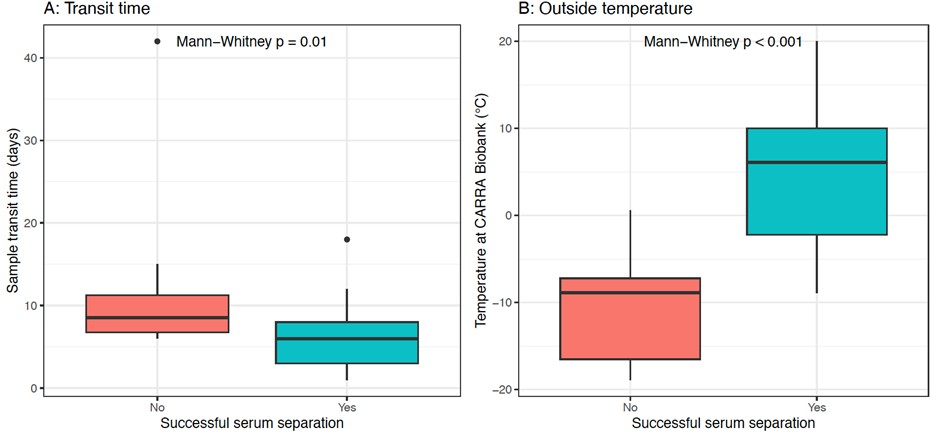
Results: Between May 2023 and May 2025, 30 individuals enrolled in PAW (Table 1) and underwent 54 capillary blood sample collections; 6 participants missed follow-up sampling. The devices collected a median of 200 µL serum/sample (IQR 90-300 µL, min-max 0-430 µL). 41 of 54 sample collection attempts yielded adequate serum samples (75.9%). Device failure (i.e., inability to obtain any blood) occurred in 4 instances (7.4%), and one sample went missing in the postal service (1.9%). In addition, serum separations were unsuccessful in 8 samples (14.8%), which were associated with longer sample transit times (median 8.5 vs 6 days, p=0.01) and lower minimum temperatures at the day of arrival at the CARRA Biobank (Cincinnati, OH; median -8.9 vs 6.1 °C, p< 0.001; Figure 1). Overall, most participants and families reported minimal pain and high acceptability of Tasso devices at baseline and during the at-home collection (Table 2). However, higher pain scores were reported by children < 11 years old compared to older participants (Kruskal-Wallis Test, p< 0.001).

Conclusion: The feasibility and acceptability of Tasso devices appear promising. However, several limitations were identified in this pilot study, including device failures in nearly 1 in 10 attempts, negative effects on sample separation caused by colder weather and prolonged transit times, and higher levels of pain among younger children. More data are needed to understand whether laboratory measurements within serum are comparable between capillary (Tasso) and venous blood samples.

Table 1. Baseline characteristics of enrolled PAW participants.Supporting image 1IQR, interquartile range. 1, Two participants without data collected from baseline visit. 2, At PAW enrollment.
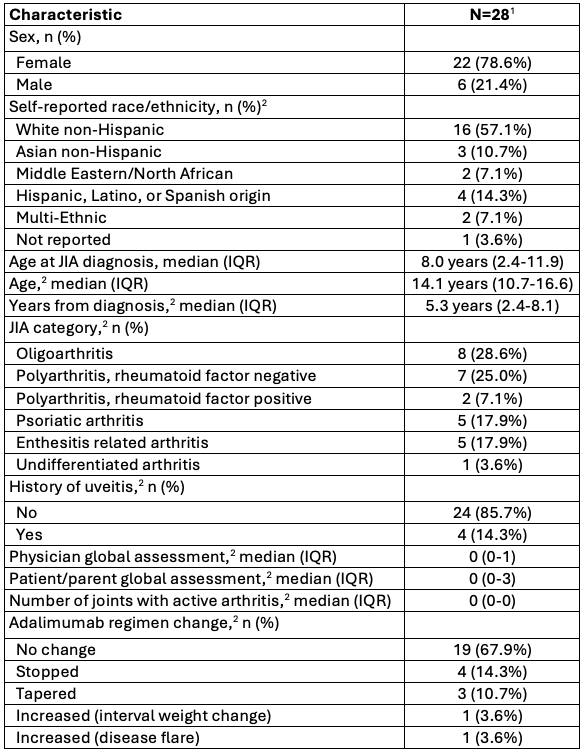
Table 2. PAW acceptability questionnaire results by visit and age group.Supporting image 21, Number of assessments. 2, Range from (1) no pain to (5) severe pain. 3, Range from (1) completely disagree to (5) completely agree.
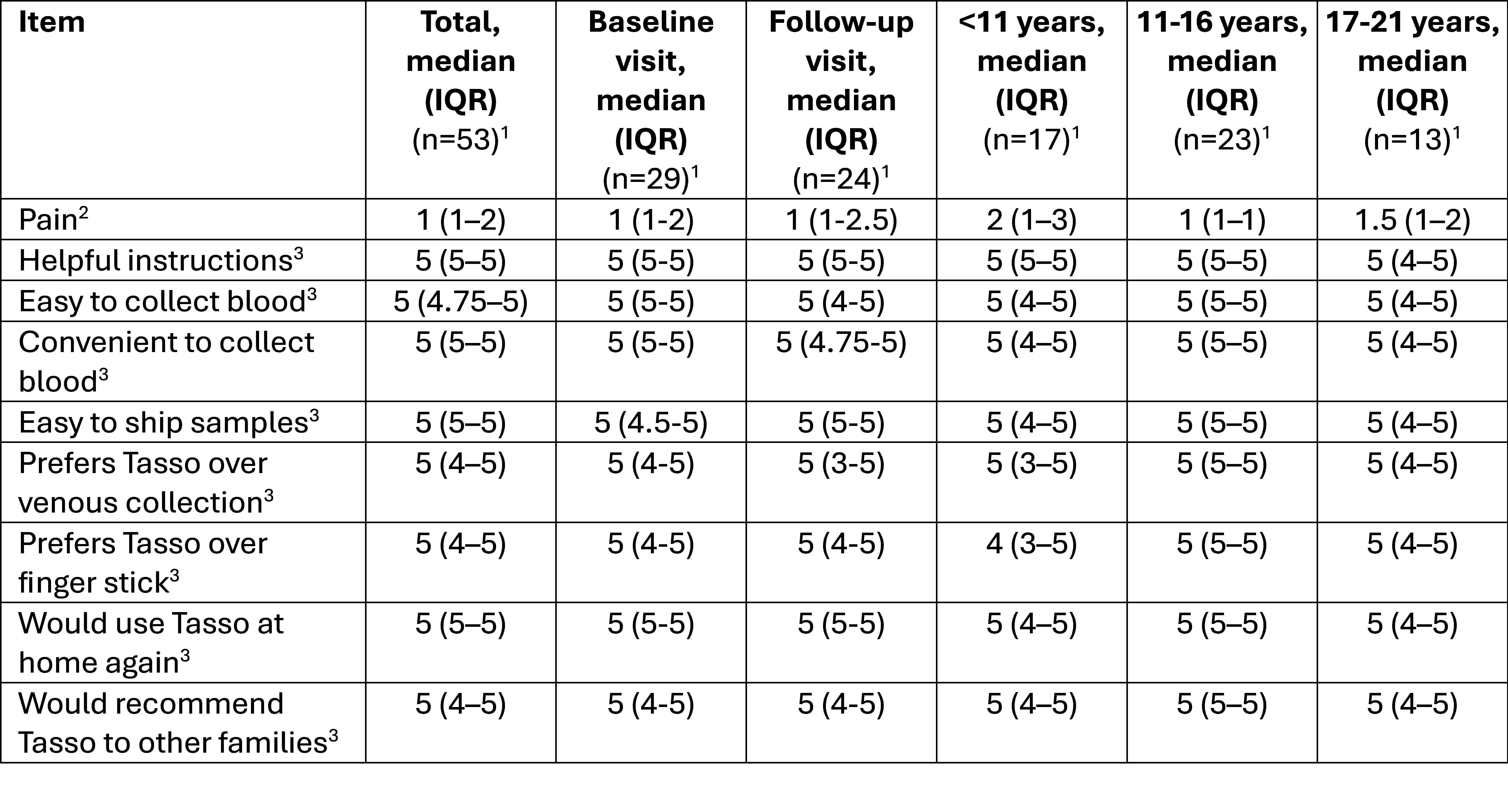
Figure 1: Effect of transit time and outside temperature on successful serum separation.Supporting image 3Boxplots show the effect of (A) sample transit time (days) and (B) outside temperature (°C) on successful serum separation. Red: No successful separation; Green: Successful separation. Mann–Whitney p-values indicate statistical significance.

Disclosures: R. Verstegen: None; A. Iizuka: None; C. Godiwala: None; M. Iozzio: None; M. Kohlheim: None; K. Park: None; A. Russell: None; m. Sudman: None; A. Sutton: None; E. Balay-Dustrude: None; j. Cooper: Bristol-Myers Squibb(BMS), 1, Hinge Bio, 3, Sana BIotechnology, 2, Synthekine, 2; J. Drew: None; A. Sagcal-Gironella: None; Y. Goh: None; O. Halyabar: None; K. McBrearty: None; L. Moorthy: None; A. Nowakowski: None; R. Oakes: None; E. oberle: None; M. Riordan: None; M. twilt: None; C. Varghese: None; D. Horton: None.

To cite this abstract in AMA style:

Verstegen R, Iizuka A, Godiwala C, Iozzio M, Kohlheim M, Park K, Russell A, Sudman m, Sutton A, Balay-Dustrude E, Cooper j, Drew J, Sagcal-Gironella A, Goh Y, Halyabar O, McBrearty K, Moorthy L, Nowakowski A, Oakes R, oberle E, Riordan M, twilt M, Varghese C, Horton D. Pilot of Adalimumab Withdrawal (PAW): Preliminary Analysis of Feasibility and Acceptability of Self-Collected Capillary Blood Samples [abstract]. Arthritis Rheumatol. 2026; 78 (suppl 3). https://acrabstracts.org/abstract/pilot-of-adalimumab-withdrawal-paw-preliminary-analysis-of-feasibility-and-acceptability-of-self-collected-capillary-blood-samples/. Accessed .
  • Tweet
  • Email a link to a friend (Opens in new window) Email
  • Print (Opens in new window) Print

« Back to 2026 Pediatric Rheumatology Symposium

ACR Meeting Abstracts - https://acrabstracts.org/abstract/pilot-of-adalimumab-withdrawal-paw-preliminary-analysis-of-feasibility-and-acceptability-of-self-collected-capillary-blood-samples/

Advanced Search

Your Favorites

You can save and print a list of your favorite abstracts during your browser session by clicking the “Favorite” button at the bottom of any abstract. View your favorites »

Embargo Policy

All abstracts accepted to PRYSM are under media embargo once the ACR has notified presenters of their abstract’s acceptance. They may be presented at other meetings or published as manuscripts after this time but should not be discussed in non-scholarly venues or outlets. The following embargo policies are strictly enforced by the ACR.

Accepted abstracts are made available to the public online in advance of the meeting and are published in a special online supplement of our scientific journal, Arthritis & Rheumatology. Information contained in those abstracts may not be released until the abstracts appear online. In an exception to the media embargo, academic institutions, private organizations, and companies with products whose value may be influenced by information contained in an abstract may issue a press release to coincide with the availability of an ACR abstract on the ACR website. However, the ACR continues to require that information that goes beyond that contained in the abstract (e.g., discussion of the abstract done as part of editorial news coverage) is under media embargo until 6:00 PM CT on March 18. Journalists with access to embargoed information cannot release articles or editorial news coverage before this time. Editorial news coverage is considered original articles/videos developed by employed journalists to report facts, commentary, and subject matter expert quotes in a narrative form using a variety of sources (e.g., research, announcements, press releases, events, etc.).

Violation of this policy may result in the abstract being withdrawn from the meeting and other measures deemed appropriate. Authors are responsible for notifying colleagues, institutions, communications firms, and all other stakeholders related to the development or promotion of the abstract about this policy. If you have questions about the ACR abstract embargo policy, please contact ACR abstracts staff at [email protected].

Wiley

  • Online Journal
  • Privacy Policy
  • Permissions Policies
  • Cookie Preferences

© Copyright 2026 American College of Rheumatology