ACR Meeting Abstracts

ACR Meeting Abstracts

  • Meetings
    • 2026 ACR/ARP PRSYM
    • ACR Convergence 2025
    • ACR Convergence 2024
    • ACR Convergence 2023
    • 2023 ACR/ARP PRSYM
    • ACR Convergence 2022
    • ACR Convergence 2021
    • 2020-2009 Meetings
    • Download Abstracts
  • Keyword Index
  • Advanced Search
  • Your Favorites
    • Favorites
    • Login
    • View and print all favorites
    • Clear all your favorites
  • ACR Meetings

Abstract Number: 069

The Biologic Abatement and Capturing Kids’ Outcomes and Flare Frequency in Juvenile Spondyloarthritis trial: Baseline cohort characteristics and importance of stakeholder partner-informed knowledge translation and exchange

Cora Sears1, Kelly Baradziej2, Timothy Brandon1, Polly Ferguson3, Colleen Correll4, Margalit Rosenkranz5, Kevin Baszis6, Tzielan Lee7, Edward oberle8, Matthew Stoll9, Kathryn Cook10, Eyal Muscal11, Sangeeta Sule12, Daniel Lovell13, Katharine Moore14, Sampath Prahalad15, Michal Cidon16, Evan Mulvihill17, Marisa Klein-Gitelman18, Daniel Kingsbury19, Natalie Rosenwasser20, Erin Treemarcki21, Stacey Tarvin22, Joyce Chang23, Heather Walters24, Michael Shishov25, Lisa Buckley26, Mary Toth27, ashley cooper28, Tracey Wright29, Shirley M. Tse30, Atiye Bilgic Dagci31, Karen Onel32, Rui Xiao33, Emily Neu34, Melanie Kohlheim35, Jenny Leal34, Kweli Archie36, English Holland34, Miles Holland37, Aamena Hameed38, Asad Khan39, Lynn Murphy34, Sean Murphy40, Justin Neu37, Dylan Suplee37, Theresa Suplee34, Dawn Wiley34 and Pamela Weiss41, 1Children's Hospital of Philadelphia, Philadelphia, PA, 2Children's Hospital of Philadelphia, PA, 3University of Iowa Carver College of Medicine, Iowa City, IA, 4University of Minnesota, Minneapolis, MN, 5UPMC Children's Hospital of Pittsburgh, Pittsburgh, PA, 6Washington Univ in St. Louis School of Medicine, Pediatric Rheumatology, St Louis, MO, 7Stanford University School of Medicine, Palo Alto, CA, 8Divsion of Rheumatology, Department of Pediatrics, Nationwide Children's Hospital, Columbus, OH, USA, Columbus, OH, 9University of Alabama at Birmingham, Birmingham, AL, 10Akron Children's Hospital, Copley, OH, 11Baylor College of Medicine, houston, TX, 12Children's National Hospital, Washington, DC, 13Cincinnati Children's Hospital Medical Center, Cincinnati, OH, 14University of Colorado / Children's Hospital Colorado, Aurora, CO, 15Emory + Children's Pediatric Institute, Atlanta, GA, 16Children's Hospital of Los Angeles, Los Angeles, CA, 17Nemours/A.I.duPont Hospital for Children, Wilmington, DE, 18Ann & Robert H. Lurie Children's Hospital Chicago, Chicago, IL, 19Legacy Health, Portland, OR, 20Seattle Children's Hospital, seattle, WA, 21University of Utah, Salt Lake City, UT, 22Riley Hospital for Children at Indiana University, Indianapolis, IN, 23Boston Children's Hospital, Boston, MA, 24Northwell Health, New Hyde Park, NY, 25Phoenix Children's Hospital, Phoenix, AZ, 26Vanderbilt University Medical Center, Nashville, TN, 27Nemours Foundation, Orlando, FL, 28Children's Mercy Kansas City, Kansas City, MO, 29UT Southwestern, Plano, TX, 30The Hospital for Sick Children, Toronto, ON, Canada, 31University of Michigan, 32HSS, New York, NY, 33University of Pennsylvania, 34Parent Partner, 35Childhood Arthritis & Rheumatology Research Alliance (CARRA), 36Public Health Management Corporation, 37Patient Partner, 38n/a, 39NA, 40Patient Parnter, 41Childrens Hospital of Philadelphia, Philadelphia, PA

Meeting: 2026 Pediatric Rheumatology Symposium

  • Tweet
  • Email a link to a friend (Opens in new window) Email
  • Print (Opens in new window) Print
Session Information

Date: Thursday, March 19, 2026

Title: Posters: Special Category: Patient Engagement

Session Time: 6:00PM-7:00PM

Background/Purpose: Many children with juvenile spondyloarthritis (JSpA) express interest in discontinuing medication once inactive disease is achieved. The BACK-OFF JSpA Trial evaluates flare risk and patient experiences across TNFi de-escalation strategies. This report summarizes the impact of stakeholder-designed recruitment materials, the baseline characteristics of enrolled participants, and their preferences for sharing study results once available.

Methods: BACK-OFF JSpA trial enrolled children with JSpA on TNFi therapy and sustained inactive disease for ≥6 months. Participants were randomized to continue standard TNFi dosing, extend the TNFi dosing interval, or discontinue TNFi therapy. Trial participation lasts 12 months or until a protocol-defined disease flare occurs, whichever comes first. Patient and parent stakeholder partners collaborated on the study design and creation of recruitment materials. Participants were asked how they would prefer to receive information about the study results once they became available, via a REDCap questionnaire.

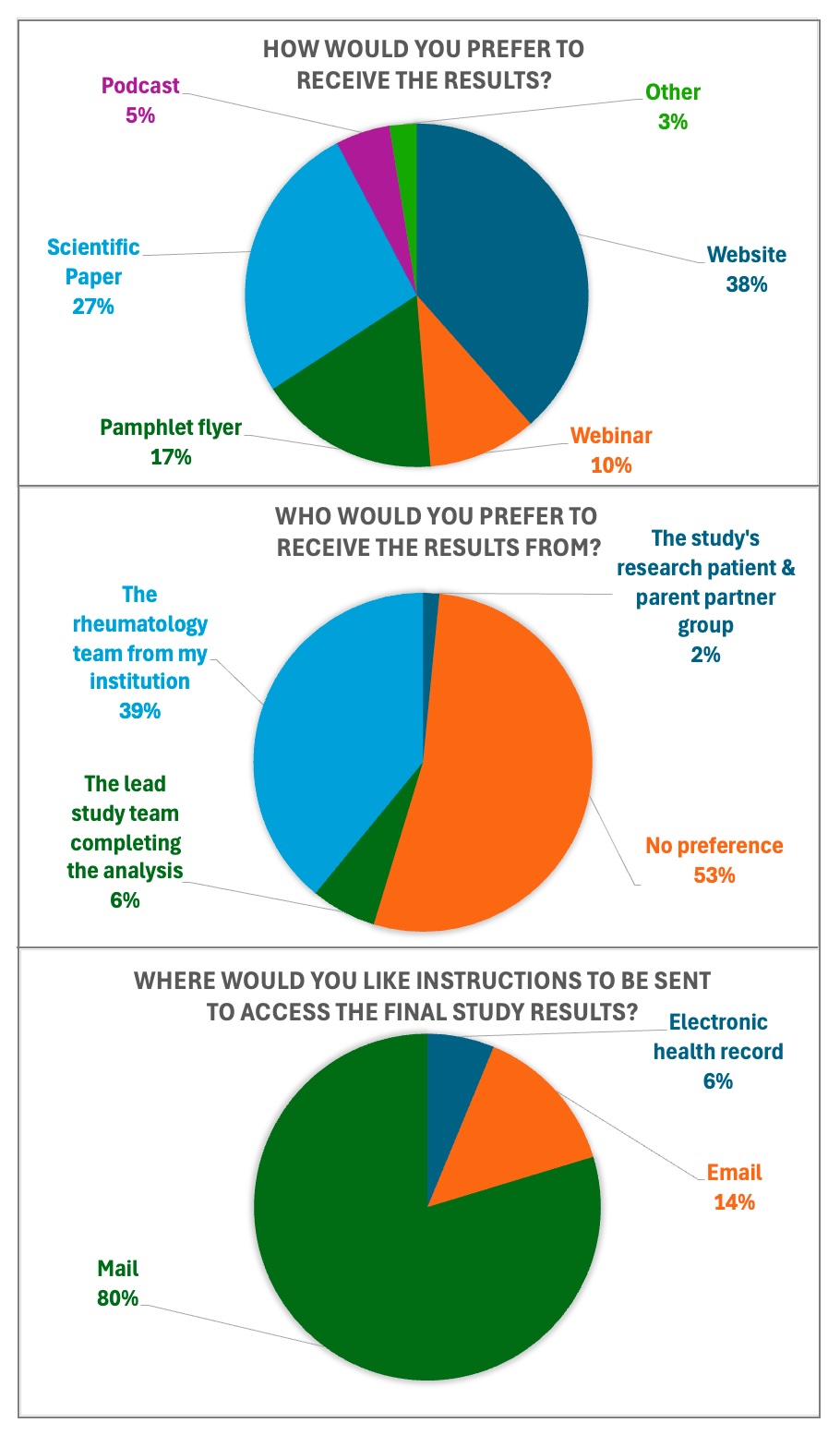
Results: Enrollment in the BACK-OFF JSpA trial is now complete, with 164 participants enrolled across 31 sites. All participating sites enrolled at least one participant, and over half enrolled four or more. 52% of participants were enrolled at the first approach. Among enrolled participants, 64% acknowledged reviewing stakeholder-developed recruitment materials before or at the time of enrollment (Table 1). 66% rated the impact of these materials as positive, with 29% and 27% indicating that the materials influenced their decision to enroll “a little” or “a lot”, respectively. Table 2 shows that the baseline cohort consisted of 71% males, with a median age of 16.5 years; 56% of the cohort were HLA-B27 positive. At enrollment, the median disease duration was 30 months, and the median duration of inactive disease was 12.2 months. 15% of participants previously attempted TNFi de-escalation. 88% of participants expressed interest in hearing about the study results as soon as they became available. Participant preferences for results-sharing formats were as follows: website (38%), scientific paper (27%), pamphlet or flyer (17%), webinar (10%), podcast (5%), and other (3%) (Figure 1). 53% of the respondents reported no preference regarding who should communicate the results, while 39%, 6%, and 2% preferred to hear about the results from the local rheumatology team, the core study team, or the stakeholder panel, respectively.

Conclusion: Enrollment in the BACK-OFF JSpA trial is complete, with strong engagement across sites. Stakeholder-developed recruitment materials were well-received and influenced enrollment decisions for many participants, supporting the value of stakeholder partner involvement in trial design. Most participants expressed interest in timely access to study results, favoring digital formats such as websites and scientific papers, with no strong preference for who shared the results. These findings underscore the importance of stakeholder-partner-informed communication strategies in enhancing engagement throughout the research process.

Table 1: Efficacy of Recruitment MaterialsSupporting image 1Legend. ^Missing for 5 enrolled subjects
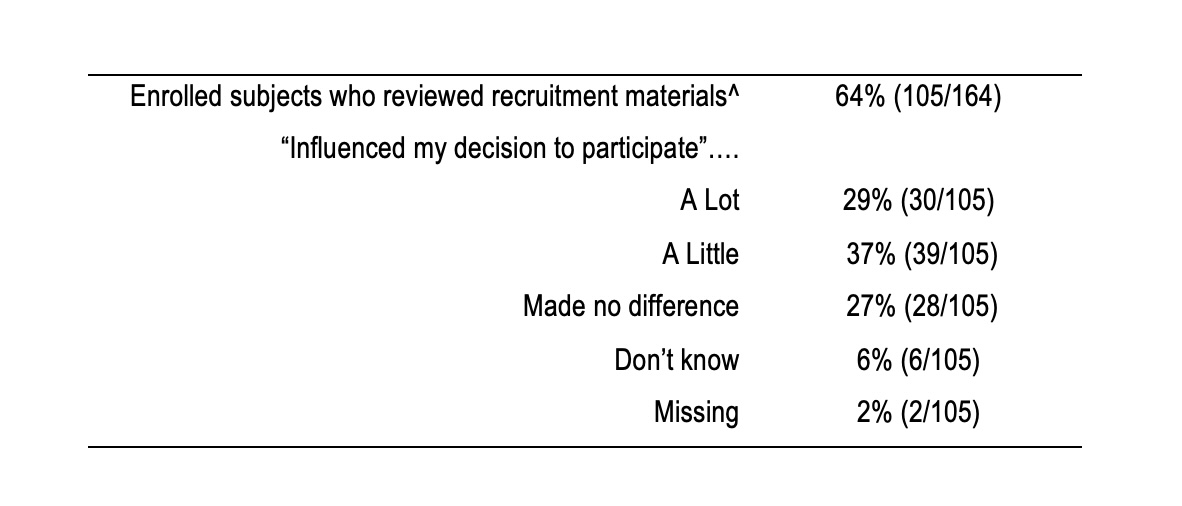
Table 2. ParticipantsSupporting image 2Legend. Participants randomized to one of 3 arms at enrollment- continuation of standard dosing, less frequent dosing, or stopping TNFi. ^Acute anterior uveitis. #Disease-modifying antirheumatic drug which includes methotrexate, sulfasalazine, or leflunomide. * TNFi de-escalation included reducing the dose, change in dose frequency, or stopping drug.
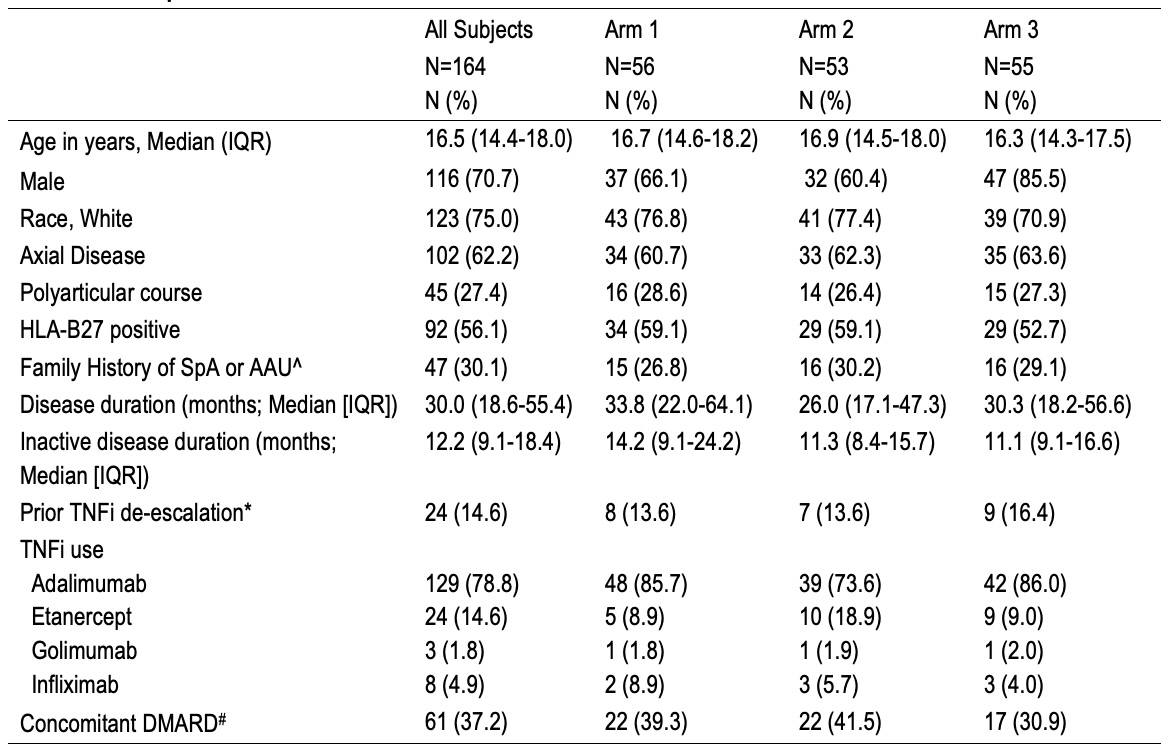
Figure 1. Dissemination Preferences of ParticipantsSupporting image 3N&#3f 64 participants.

Disclosures: C. Sears: None; K. Baradziej: None; T. Brandon: None; P. Ferguson: None; C. Correll: None; M. Rosenkranz: None; K. Baszis: None; T. Lee: None; E. oberle: None; M. Stoll: None; K. Cook: None; E. Muscal: Sobi, 1; S. Sule: None; D. Lovell: None; K. Moore: None; S. Prahalad: None; M. Cidon: None; E. Mulvihill: None; M. Klein-Gitelman: AstraZeneca, 2; D. Kingsbury: None; N. Rosenwasser: None; E. Treemarcki: None; S. Tarvin: AbbVie/Abbott, 5, Amgen, 5, Roche, 5, UCB, 5; J. Chang: Century Therapeutics, 2; H. Walters: None; M. Shishov: None; L. Buckley: None; M. Toth: None; a. cooper: None; T. Wright: None; S. Tse: None; A. Bilgic Dagci: None; K. Onel: None; R. Xiao: None; E. Neu: None; M. Kohlheim: None; J. Leal: None; K. Archie: None; E. Holland: None; M. Holland: None; A. Hameed: None; A. Khan: None; L. Murphy: None; S. Murphy: None; J. Neu: None; D. Suplee: None; T. Suplee: None; D. Wiley: None; P. Weiss: Bristol-Myers Squibb(BMS), 1, Novartis, 12, Publication support, Pfizer, 1, 6, Up to Date, 9.

To cite this abstract in AMA style:

Sears C, Baradziej K, Brandon T, Ferguson P, Correll C, Rosenkranz M, Baszis K, Lee T, oberle E, Stoll M, Cook K, Muscal E, Sule S, Lovell D, Moore K, Prahalad S, Cidon M, Mulvihill E, Klein-Gitelman M, Kingsbury D, Rosenwasser N, Treemarcki E, Tarvin S, Chang J, Walters H, Shishov M, Buckley L, Toth M, cooper a, Wright T, Tse S, Bilgic Dagci A, Onel K, Xiao R, Neu E, Kohlheim M, Leal J, Archie K, Holland E, Holland M, Hameed A, Khan A, Murphy L, Murphy S, Neu J, Suplee D, Suplee T, Wiley D, Weiss P. The Biologic Abatement and Capturing Kids’ Outcomes and Flare Frequency in Juvenile Spondyloarthritis trial: Baseline cohort characteristics and importance of stakeholder partner-informed knowledge translation and exchange [abstract]. Arthritis Rheumatol. 2026; 78 (suppl 3). https://acrabstracts.org/abstract/the-biologic-abatement-and-capturing-kids-outcomes-and-flare-frequency-in-juvenile-spondyloarthritis-trial-baseline-cohort-characteristics-and-importance-of-stakeholder-partner-informed-kno/. Accessed .
  • Tweet
  • Email a link to a friend (Opens in new window) Email
  • Print (Opens in new window) Print

« Back to 2026 Pediatric Rheumatology Symposium

ACR Meeting Abstracts - https://acrabstracts.org/abstract/the-biologic-abatement-and-capturing-kids-outcomes-and-flare-frequency-in-juvenile-spondyloarthritis-trial-baseline-cohort-characteristics-and-importance-of-stakeholder-partner-informed-kno/

Advanced Search

Your Favorites

You can save and print a list of your favorite abstracts during your browser session by clicking the “Favorite” button at the bottom of any abstract. View your favorites »

Embargo Policy

All abstracts accepted to PRYSM are under media embargo once the ACR has notified presenters of their abstract’s acceptance. They may be presented at other meetings or published as manuscripts after this time but should not be discussed in non-scholarly venues or outlets. The following embargo policies are strictly enforced by the ACR.

Accepted abstracts are made available to the public online in advance of the meeting and are published in a special online supplement of our scientific journal, Arthritis & Rheumatology. Information contained in those abstracts may not be released until the abstracts appear online. In an exception to the media embargo, academic institutions, private organizations, and companies with products whose value may be influenced by information contained in an abstract may issue a press release to coincide with the availability of an ACR abstract on the ACR website. However, the ACR continues to require that information that goes beyond that contained in the abstract (e.g., discussion of the abstract done as part of editorial news coverage) is under media embargo until 6:00 PM CT on March 18. Journalists with access to embargoed information cannot release articles or editorial news coverage before this time. Editorial news coverage is considered original articles/videos developed by employed journalists to report facts, commentary, and subject matter expert quotes in a narrative form using a variety of sources (e.g., research, announcements, press releases, events, etc.).

Violation of this policy may result in the abstract being withdrawn from the meeting and other measures deemed appropriate. Authors are responsible for notifying colleagues, institutions, communications firms, and all other stakeholders related to the development or promotion of the abstract about this policy. If you have questions about the ACR abstract embargo policy, please contact ACR abstracts staff at [email protected].

Wiley

  • Online Journal
  • Privacy Policy
  • Permissions Policies
  • Cookie Preferences

© Copyright 2026 American College of Rheumatology