
Session Information
Session Time: 6:00PM-7:00PM
Background/Purpose:
Social Determinants of Health (SDoH) are the conditions and environments in which people are born, grow, live, work, and play, and affect quality of life and health outcomes. SDoH are well described in the literature to either positively or negatively impact pediatric patients and their prognoses. Patients with chronic conditions, especially seen in rheumatology, require frequent medical visits that can present as opportunities for assessing patients’ SDoH. Insurance status is a proxy of socioeconomic status and varies greatly in New York. We aimed to identify differences between positive SDoH screening rates and differences of social unmet needs of patients with private and public insurance.
Methods:
We performed a single-center retrospective study of patients evaluated by the Pediatric Rheumatology Division at Hospital for Special Surgery (HSS) in New York, New York between 2023-2025. We assessed 5 categories of SDoH that included food insecurity, housing instability, transportation needs, utility difficulty, and employment difficulty. Our patient cohort was obtained from a SDoH quality improvement project at HSS. Our SDoH screener was adapted from WE CARE, PRAPARE, and AHC CMS Screening Tools and filled out by patients’ parents.
SDoH screening rate was calculated by dividing the number of patients screened (patients with any SDoH datapoints) by the number of patients given screeners. SDoH positive screening rate was calculated by dividing the number of patients with any positive (Yes) SDoH by the number of patients with any SDoH datapoints. Patients who screened positive were provided resources and social work intervention as appropriate. Pearson Chi Square test and Fisher Exact test were conducted to compare SDoH between private and public health insurance holders. In addition, SDoH screening and SDoH positive screening rates were compared across insurance types. All statistical analyses were performed in RStudio (version 2024.04.1). The significance level was set at 0.05.
Results:
Of 1336 eligible patients for SDoH screening, 371 (27.8%) had public insurance and 965 (72.2%) had private insurance. These patients had a mean age of 12 years old and predominantly attended follow-up visits (Table 1). The overall SDoH screening rate was 59.17%, but the overall positive SDoH screening rate was 7.63%. However, patients with public insurance had higher positive SDoH screening rates (Table 2). Furthermore, these higher positive screening rates were across all 5 SDoH categories (food insecurity [13.94% vs. 1.26%, p < 0.001], housing instability [12.50% vs. 1.77%, p < 0.001], transportation needs [6.48% vs. 0.88%, p < 0.001], utility difficulty [12.56% vs. 2.16%, p < 0.001], and employment difficulty [17.48% vs. 3.96%, p< 0.001]) (Table 3).
Conclusion:
Patients with public insurance showed higher positive SDoH screening rates compared to patients with private insurance within a single center. Employment difficulty was the highest unmet need across groups, followed by food insecurity in public insurance and utility difficulty in private insurance. Clinicians should be aware of these differences. Additional research is needed to understand how unmet needs affect outcomes in pediatric rheumatic disease.
Demographics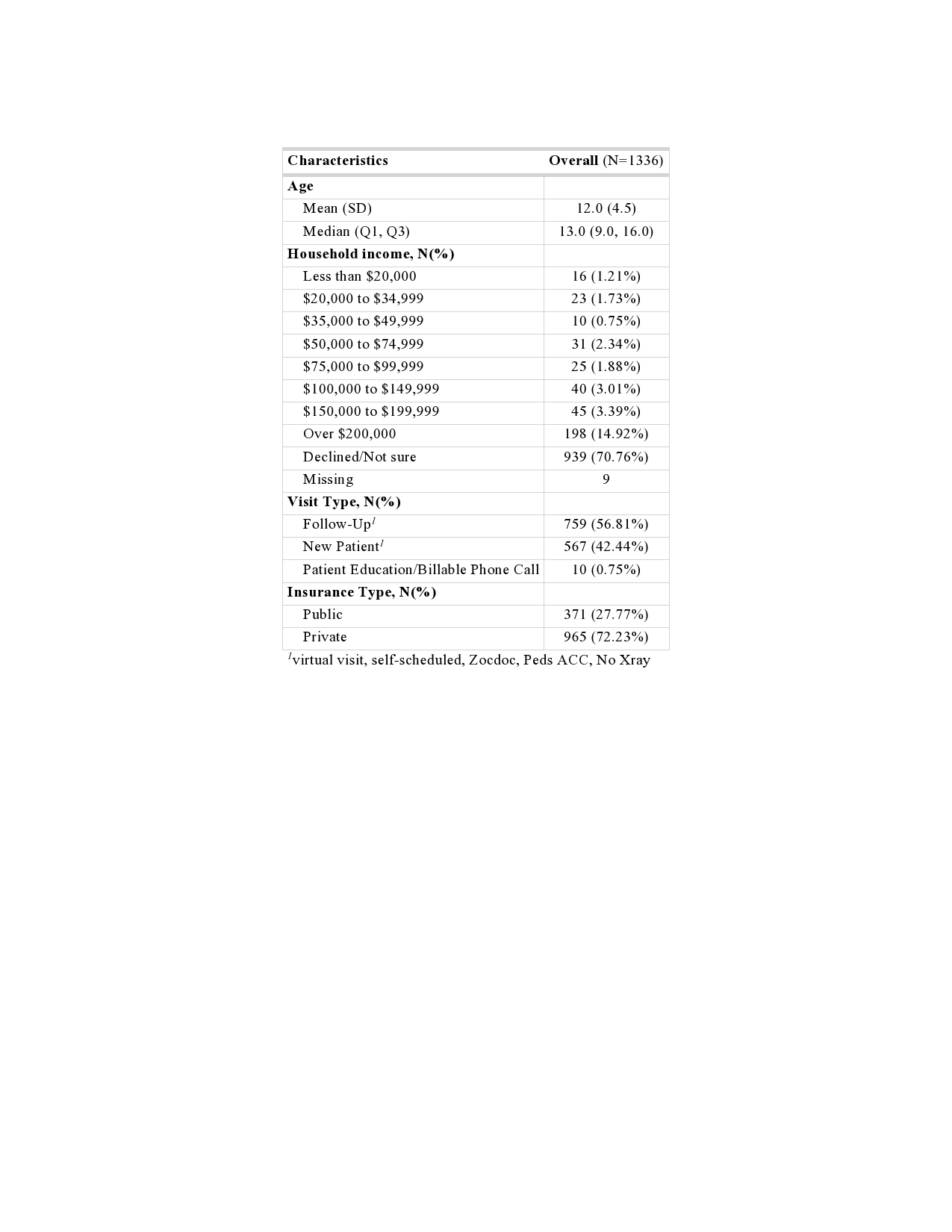
CMS Screening by Insurance Type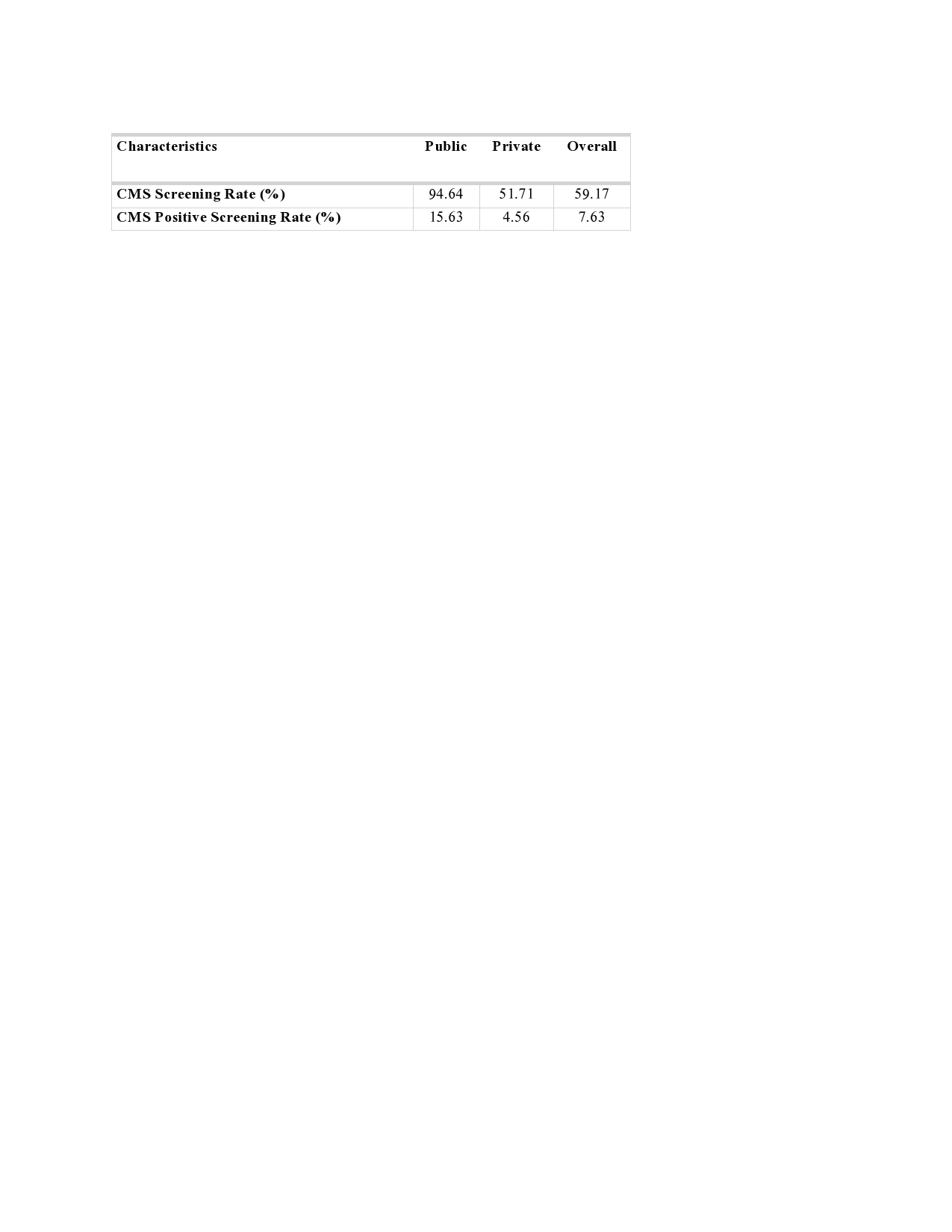
Social Determinants of Health by Insurance Type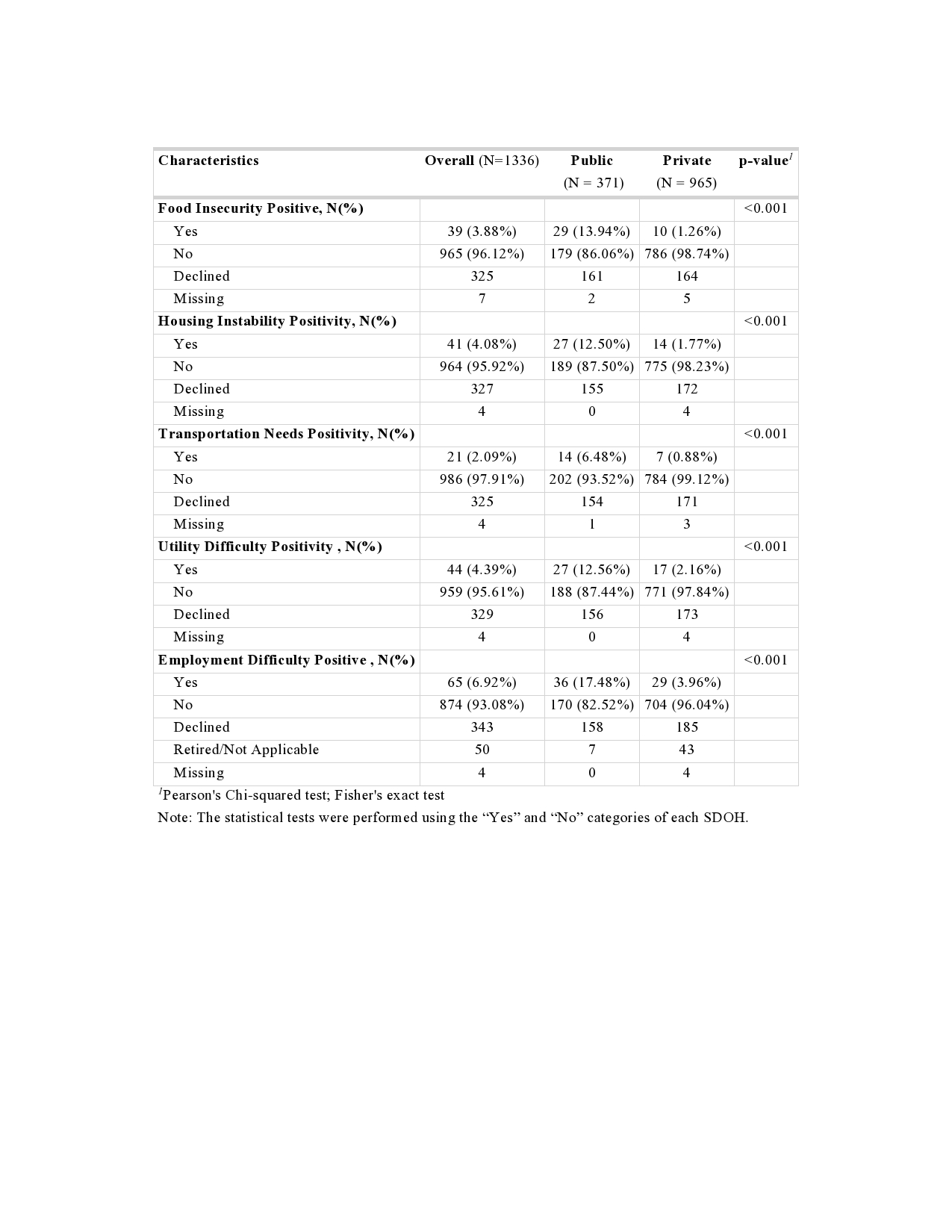
To cite this abstract in AMA style:
Hoffman P, Piatchou Donfack N, Jannat-Khah D, Flores M, Rose J, Akinsete A. Screening for Social Determinants of Health Identifies Differences Based on Insurance Types in a Single Pediatric Rheumatology Division [abstract]. Arthritis Rheumatol. 2026; 78 (suppl 3). https://acrabstracts.org/abstract/screening-for-social-determinants-of-health-identifies-differences-based-on-insurance-types-in-a-single-pediatric-rheumatology-division/. Accessed .« Back to 2026 Pediatric Rheumatology Symposium
ACR Meeting Abstracts - https://acrabstracts.org/abstract/screening-for-social-determinants-of-health-identifies-differences-based-on-insurance-types-in-a-single-pediatric-rheumatology-division/