
Session Information
Session Time: 6:00PM-7:00PM
Background/Purpose: Children arrive at a lupus diagnosis with varying physical, emotional, and cognitive maturity, which evolves throughout their time in pediatric care. These differences influence the information provided at diagnosis. For instance, reproductive health is rarely discussed with prepubertal patients, yet knowledge gaps often persist after menarche. Care responsibilities also shift over time: younger patients rely on caregivers for disease management, while young adults are expected to manage independently—a transition that can feel overwhelming if they lack understanding and tools for self-care. This may lead them to learn about their diagnosis through other means, like completing a school science project or their senior thesis. This study seeks to identify the essential information patients, caregivers, and healthcare providers believe should be included in comprehensive lupus education materials.
Methods: A needs assessment evaluating what information patients and caregivers should be provided was completed through discussion with families as well as rheumatology attendings, fellows, research coordinators, pharmacist, psychologist, and social work. Sample open-source education materials were curated, new local resources were developed, and patients and families were surveyed about the content.
Results: Key content areas themes include formatting, content, personalization/accessibility, and tone and approach (Table 1). Necessary content needed to include basic education, mediation adherence, symptom management, advocacy and research, holistic care, and transition resources. Content was obtained from our local institution and national organizations including a variety of national organization websites. The nearly 200-page binder also contained local resources like regional summer camp information, pictures with names of providers and staff, campus maps, and QR codes to our institution’s mentoring, financial, research, and logistical resources (Table 2). Families responded very positively to the binder, viewing it as a trusted source of information compared to the internet and appreciating materials tailored for different developmental levels, such as comics (Figure) and child-friendly books. While most preferred physical copies, they suggested offering a digital option and emphasized the importance of clear, easy-to-read content, multiple languages, and resources for teens. Additional considerations included reproductive health information and ensuring materials are comprehensive yet accessible.
Conclusion: We successfully created education binders in English and Spanish for patients and families with lupus based upon feedback from a multidisciplinary team, including patients and families. We plan to evaluate patient and parental knowledge before and after educational material dissemination during routine clinical care. Next steps may include additional ways to reinforce educational content utilizing a patient-centered approach.
Table 1: Summary of Major Themes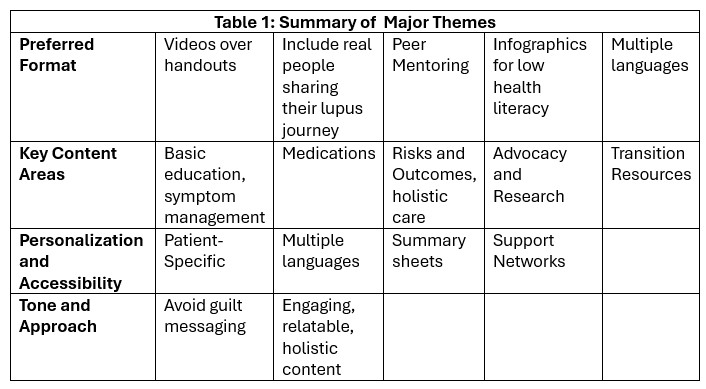 Summary of major themes identified by patients, caregivers, and care team members during needs assessment
Table 2: Summary of Lupus Educational Binder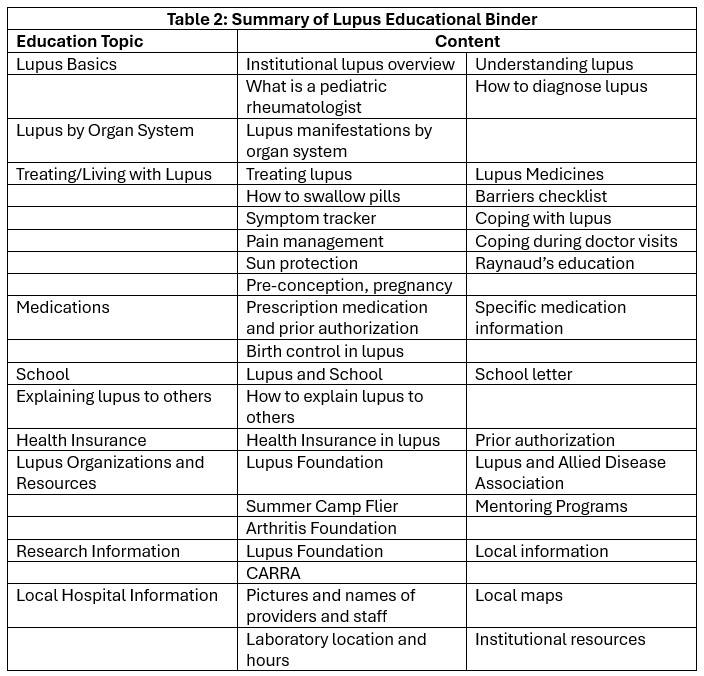 Educational topics and resource content recommended to be included in patient education materials.
Figure: Cover Page Comic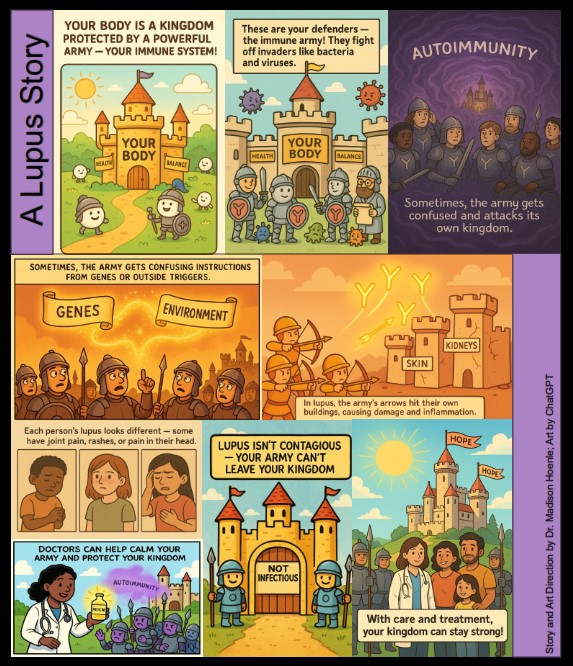 A cover page comic designed by a resident was appreciated by patients and caregivers to help understand and explain lupus.
To cite this abstract in AMA style:
Hoenle M, Argraves M, Taxter A. Improving Pediatric Lupus Patient Education: Patient and Provider Needs Assessment [abstract]. Arthritis Rheumatol. 2026; 78 (suppl 3). https://acrabstracts.org/abstract/improving-pediatric-lupus-patient-education-patient-and-provider-needs-assessment/. Accessed .« Back to 2026 Pediatric Rheumatology Symposium
ACR Meeting Abstracts - https://acrabstracts.org/abstract/improving-pediatric-lupus-patient-education-patient-and-provider-needs-assessment/